
Russia’s Su-35 Isn't Just an Air Superiority Fighter: A Look at the Flanker’s Multirole Configurations
Military Watch Magazine Editorial Staff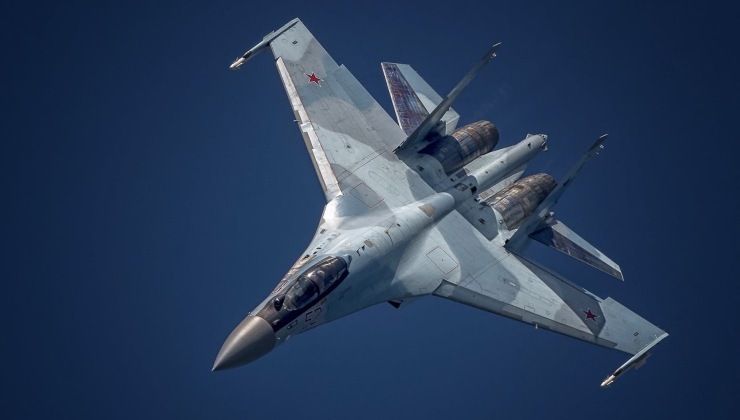
Entering service in the Russian Air Force from February 2014, the Su-35 was the fourth major Russian derivative of the Su-27 Flanker design and represented the first of a new generation of combat jets commonly dubbed the ‘4++ generation.’ Much as the Su-27 was designed purely for an air superiority role, a counter to the United States Air Force’s F-15C Eagle and gain control of the skies over the European theatre, the Su-35 and its predecessors the Su-30 and Su-33 all inherited highly sophisticated air to air combat capabilities.Until the entry of the American F-22 Raptor into service in 2005, these were unrivalled by any fighters worldwide. The Su-35 built on the extreme manoeuvrability and versatility of the Su-27 airframe and the two dimensional thrust vectoring engines pioneered by the Su-30, and later adopted by the American Raptor, with the introduction of the world's first operational three dimensional thrust vectoring engines. This provided what has come to be known as 'super manoeuvrability,' and the thrust vectoring technologies pioneered by the Su-35 have been applied to the next generation Su-57 in a more refined form. These technologies have also benefitted China's J-10C lightweight fighter, and are thought to have been sold to China as part of a technology transfer deal that accompanied its contract to acquire Su-35 fighters.
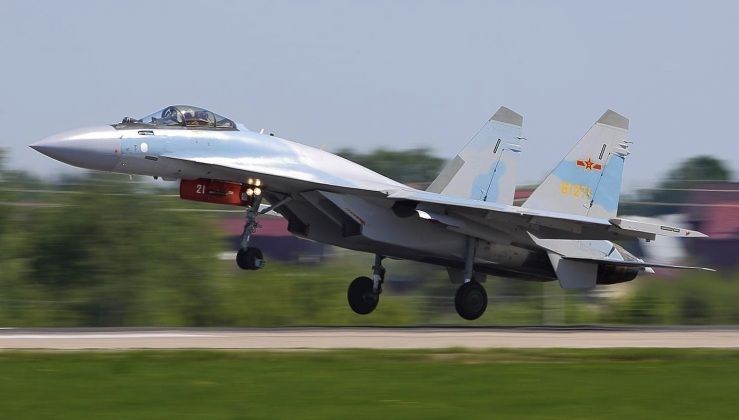
While the Su-35’s manoeuvrability is arguably its most impressive feature, the fighter’s range, sensors, electronic warfare systems, avionics, and its high weapons payload of up to 14 missiles all make it a highly impressive combat jet with few rivals in the world. The fighter’s airframe has also been modified extensively from the original Su-27 Flanker design, and makes greater use of composite materials for a lighter weight and greater strength and with a radar cross section a fraction of that of prior Flanker variants. The aircraft’s AL-41 engines are also considerably more powerful than the AL-31 powering older Flanker variants. These capabilities, and compatibility with high end Russian air to air missiles such as the R-37M and R-77, all serve to make the Su-35 a lethal air superiority fighter at all ranges. Beyond its improved air to air capabilities over the original Flanker design, the Su-35 has also benefited from drastically improved air to ground and anti ship capabilities - making it a relatively versatile multirole aircraft where aircraft such as the F-22 or the original Su-27 were much more specialised. Nevertheless, the Su-35 is primarily built for air to air combat with other roles being secondary - as opposed to the Su-30 which is more balanced or the Su-34 which is heavily specialised in strike and anti shipping roles. The Su-34 was a heavier Flanker derivative which entered service a few months after the Su-35.
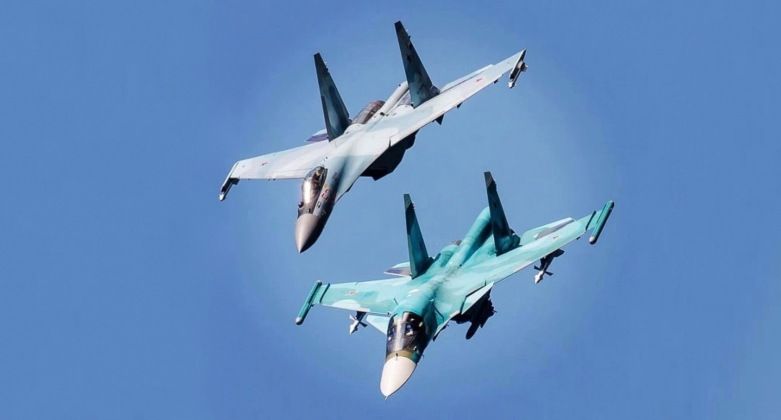
When the Su-35 made its debut in the Syrian conflict as part of the Russian Air Force deployment from late 2015, alongside the Su-30SM, Su-34 and the older Su-24M strike fighter, the aircraft was outfitted for both air to air and strike missions. Combat deployments in the theatre allowed the Russian military to refine the its new fighter designs, and while Russian fighters initially primarily deployed air to ground munitions such as the Kh-59 and a variety of guided bombs such as the KAB-500, they would later be deployed configured in part or in full for air to air engagements following the Turkish downing of an unprotected Russian Su-24M over Syria. The Su-35 notably did not deploy as part of the initial wave of Russian assets send to wage the air campaign, and their deployment was only announced fourth months into the campaign in January 2016. Alongside the deployment of the S-400 and S-300V4 air defence systems, the Su-35's deployment armed with R-77 missiles sent a strong signal to potential adversaries - as an aircraft designed primarily for anti aircraft warfare rather and deployed explicitly for this purpose.
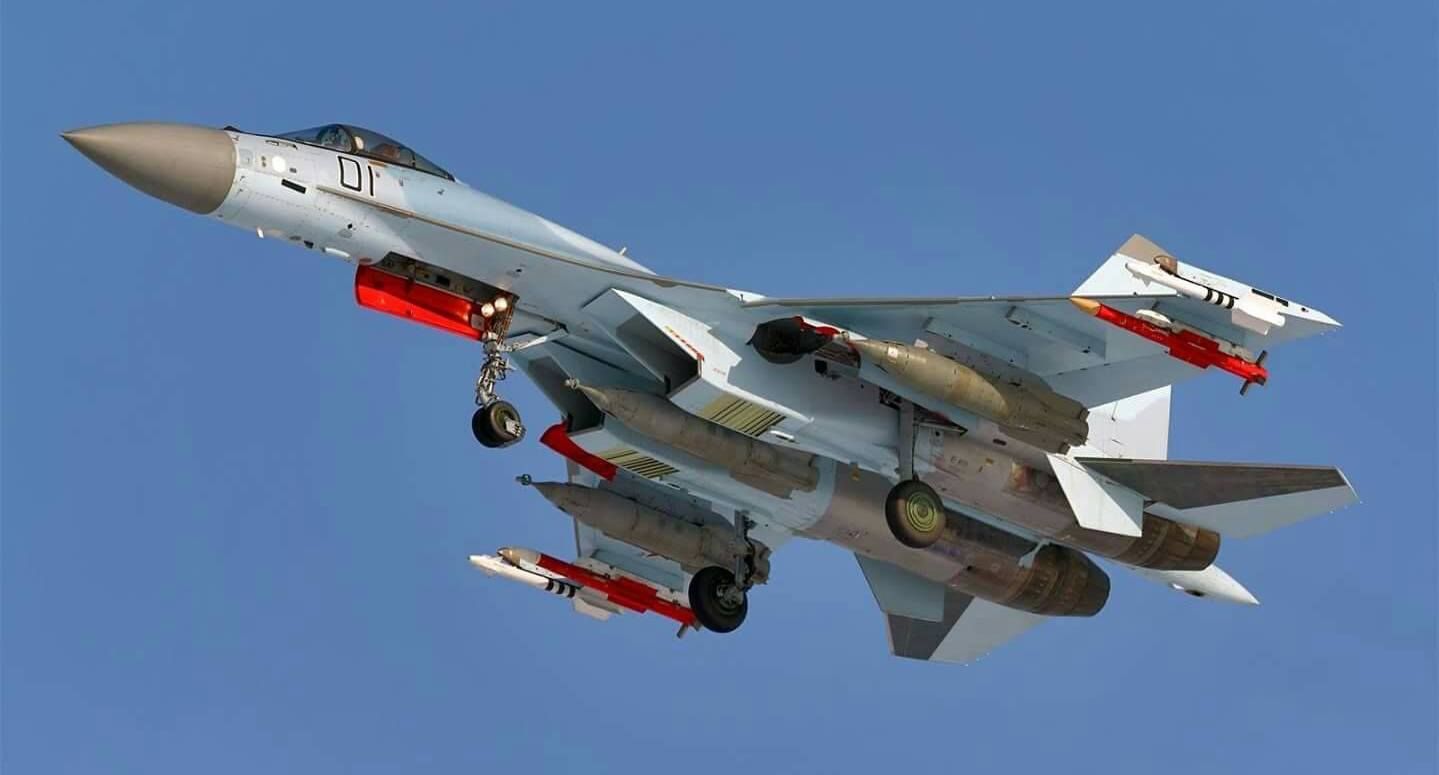
The growing number of standoff missiles deployed by the Su-35 since it entered service have allowed the fighter to pose a threat to Russia’s adversaries not only in the air, but also on land and at sea. The aircraft can carry a large payload half a dozen Kh-31 cruise missiles with speeds exceeding Mach 3, including variants for both anti shipping missions and suppression of enemy air defences. Combined with the fighter’s advanced electronic warfare systems, high endurance, formidable sensor suite and excellent manoeuvrability, this makes it a highly potent platform for taking out air defences. The kinds of missiles the fighter could deploy notably increased after it entered service, most notably with the introduction of the Kh-35 anti ship missile in 2017 which was seen to have greatly improved the Su-35's ability to conduct maritime strike operations.
