
U.S. Threatens Egypt Over Purchase of Russian Su-35 Fighter Jets - Seeks Greater Market Share For Western Suppliers
Military Watch Magazine Editorial Staff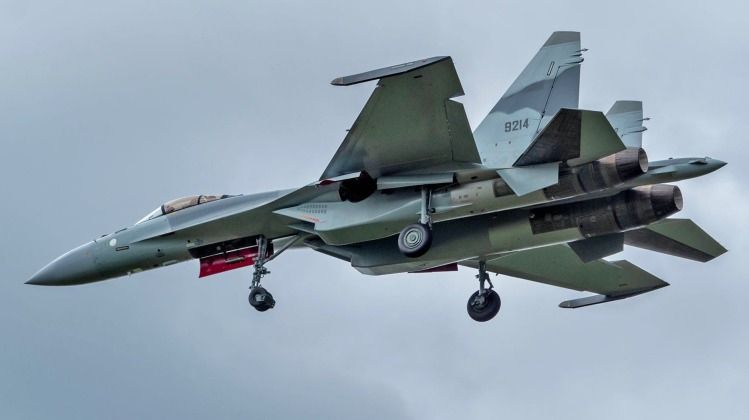
Egyptian Air Force Su-35 Heavyweight Fighter
The United States has continued to place pressure on Egypt over its purchase of Su-35 ‘4++ generation’ fighter jets from Russia, after the Egyptian Air Force began to receive its first of an estimated 26 airframes on order in 2020. The new U.S. Secretary of State Antony Blinken raised the issue with his Egyptian counterpart Sameh Shoukry during a phone call, after his predecessor Mike Pompeo had urged Cairo to “look to the West” and threatened it with economic sanctions for purchasing Russian armaments. The U.S. has sought to reduce Russia’s share on international arms markets with more aggressive measures since 2017, when the Countering America’s Adversaries Through Sanctions Act (CAATSA) was signed into law stipulating that clients for Russian arms should have their economies targeted by American sanctions. Reprisals for purchases of Russian arms have already been carried out against China and Turkey, with Indonesia, India and Vietnam being among several other countries threatened in order to deter them from making such purchases.
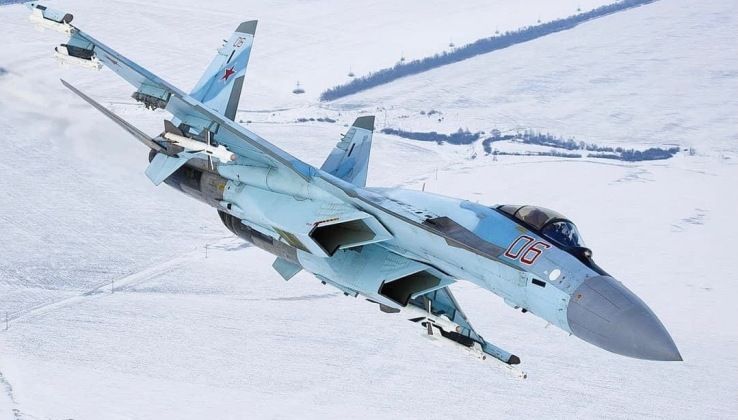
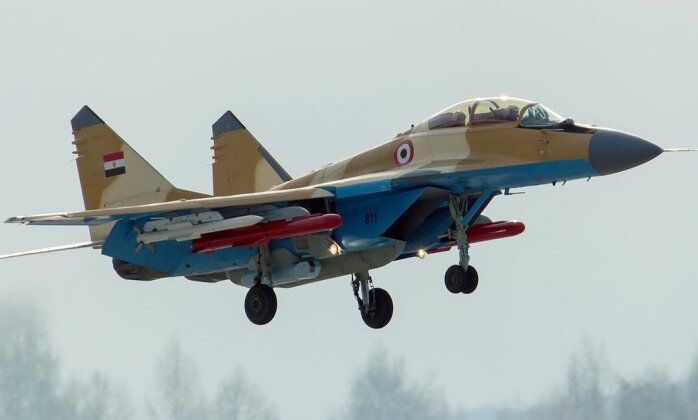
The Su-35 is the only heavyweight fighter in the Egyptian Air Force, and other than 46 MiG-29M jet purchased less than five years prior they represent the only fighters in the country’s inventory which are not on the ‘light’ weight range. The Su-35 and MiG-29M were both purchased following a coup against a Western-backed Islamist government in Cairo in 2013, and are the only fighters with modern air to air missiles in the Egyptian inventory. The country also purchased S-300V4 and BuK-M2 air defence systems, Ka-52 attack helicopters, an a range of other advanced Russian armaments before CAATSA was signed into law. Egypt more recently in 2020 signed a contract for the license production of 500 T-90MS battle tanks domestically, which will supersede its ageing American M1A1 and Soviet T-80 tanks in the country’s ground forces.
Egypt’s shift towards purchasing Russian arms has largely been influenced by the very poor terms it has been offered to acquire Western weaponry, with the U.S. having sold the country over 200 F-16 fighters under prior Egyptian administrations but refusing to equip these with any viable standoff weapons for either air to air or air to ground missions - making them effectively useless for a conflict against a near peer adversary. The U.S. has also severely restricted how its fighters can be used in combat, and refused to sell Egypt more capable F-15 heavyweight fighters. Egyptian aerial warfare capabilities have improved very considerably since 2013 as a result of a shift towards purchasing Russian arms, as unlike the U.S., Russia has not placed restrictions on what aircraft Egypt can purchase, how these aircraft can be equipped or how Egypt can use them.
The MiG-29M was previously considered Egypt's most capable fighter, and the newer Su-35 is considered the most capable fielded in Africa or the Arab world in terms of air to air performance. The heavyweight fighters are prized for the very high endurance, the size and power of their Irbis-E radars, their access to hypersonic very long ranged air to air missiles, and their near unrivalled flight performances and formidable electronic warfare systems. The fighters provide Egypt with an overall more capable fighter than neighbouring Israel's fleet of F-15C and F-15I Eagle jets in terms of air to air performance - after the country faced a significant disadvantage in the air against the F-15 for over four decades. Egypt is considered a leading potential client for Russia's MiG-35 fighter and is thought to be likely to consider followup batches of Su-35 jets.
