
Algeria Could Actually Save Money By Buying Su-57 Fighters: Current MiG-25 Foxbats Too Costly To Fly
Military Watch Magazine Editorial Staff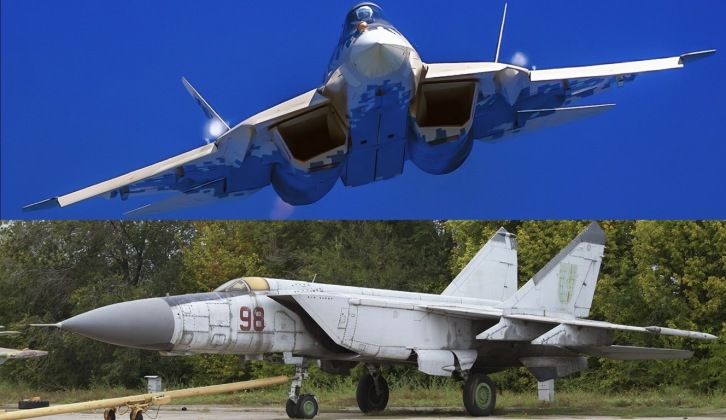
Su-57 Fighter (top) and MiG-25 Heavy Interceptor
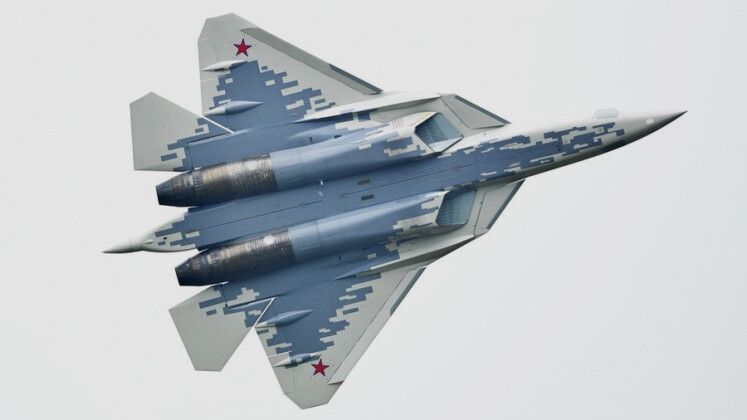
A number sources have reported that Algeria's Defence Ministry has signed a contract to acquire approximately 14 Su-57 next generation heavyweight fighters from Russia, making it the first foreign client for the new jets after they entered mass production in July 2019. The Russian Air Force notably expanded its orders for the new jets significantly that year, and is expected to field around 80 of the fighters by 2027. The Su-57 is currently considered a fifth generation fighter jet, although the design is considerably more ambitious than older Russian fifth generation airframes such as the MiG 1.44 and Su-47 and is intended to integrate sixth generation technologies in future - many of which are currently being tested on its airframe. The fighter benefits from a range of next generation technologies which have not been integrated onto any other fifth generation fighter as of yet, ranging from three dimensional thrust vectoring engines to cheek and rear mounted radars, laser defence systems and hypersonic air to air missiles. Algeria’s acquisition of the fighters is but the latest example of the country being a priority client for the most advanced Russian weapons systems, with prior examples ranging from S-400 and Pantsir-SM air defence systems to Iskander ballistic missiles and MiG-25 Foxbat interceptors.
The Algerian Air Force currently fields four classes of frontline combat jet, including the Su-30MKA heavyweight fighter, the MiG-29C medium fighter, and the Su-24M dedicated strike fighter as well as a single elite unit of heavily enhanced MiG-25 Foxbat interceptors. Algerian Foxbats are the most advanced variants of the design ever developed, and are equipped with fourth generation sensors and electronic warfare systems and specialised R-40 air to air missiles which carry massive 100kg warheads. The Su-57 is reportedly being acquired to replace the MiG-25 in frontline service, with the Foxbat expected to have been phased out of service by 2028. Although the Su-57 is Russia’s most costly fighter class in production by a significant margin, costing an estimated $125 million per fighter including training, maintenance infrastructure, spare parts and armaments, acquiring the aircraft could overall reduce costs for the Algerian Air Force. This is due to the new fighter’s much lower operational cost relative to the MiG-25, with the Soviet era interceptor not only manufactured with much older techniques, making maintenance more difficult, but also being much heavier an requiring more fuel to operate.
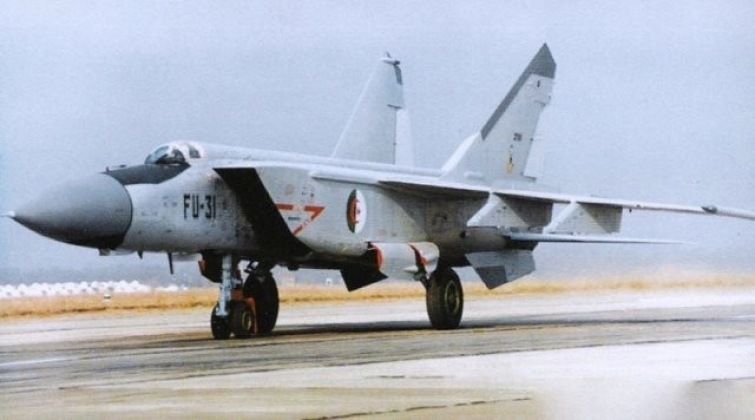
The difference in operational costs between the 30,000kg Su-57 and the 34,000kg MiG-25, combined with the more worn out state of the Foxbat airframes, means the savings on operational costs by replacing the interceptors with the newer and more efficient stealth fighters will be significant, and could ultimately cover much of the Su-57’s acquisition costs over the fighters’ lifetime. Indeed, the MiG-25’s operational cost was so high that the USSR only ever built under 1,200 airframes - including reconnaissance, electronic attack, interceptor and bomber variants and hundreds of jets marketed for export, with even the very well funded Soviet Air Force only affording to operate a few hundred of the jets at a time despite their unrivalled combat capabilities in their day. The Russian Air Force, seeking to reduce operational costs, retired its last Foxbats in late 2013, although after the Soviet collapse investments in upgrading the airframes had been very limited meaning Algerian variants today have superior capabilities due to greater funding.
It remains to be seen whether Algeria will acquire more Su-57 airframes, but such purchases are likely sometime in the coming 15 years as NATO member states move to field more fifth and sixth generation fighters of their own - which will leave Algerian MiG-29s and Su-30 jets increasingly obsolete. If Algeria does not heavily upgrade its Su-30 fighters, with Russia currently offering an enhancement package to bring the jets up to the ‘4++ generation’ Su-30SM2 standard, then it is likely that the Su-57 or one of its more advanced successor possible designated ’Su-60’ or something similar, could eventually replace the fighters in frontline service as well as the Foxbats.
