
Africa’s Most Dangerous Offensive Weapon: Algeria Confirms Deployment of Iskander Hypersonic Ballistic Missiles
Military Watch Magazine Editorial Staff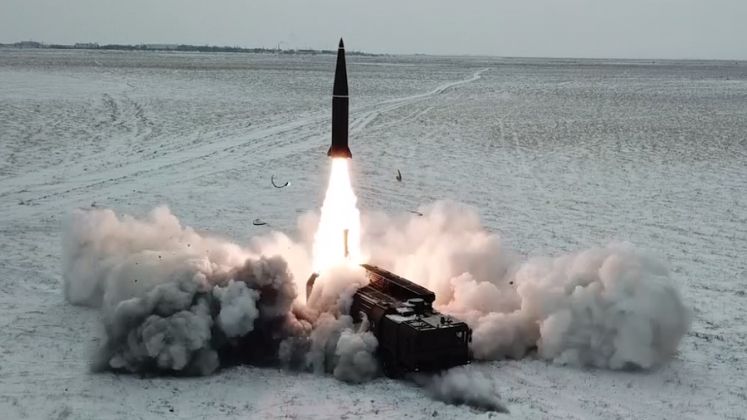
Firing of Iskander Hypersonic Missile
The Algerian Military has for the first time confirmed its deployment of Iskander hypersonic ballistic missiles with the release of footage of a firing during exercises. The missile is thought to have served in the country's armed forces for many years, although the prior lack of confirmation represents a broader trend in the Algerian military of not announcing new weapons purchases. The Iskander is widely considered the world’s most capable class of tactical ballistic missile and is only known to have been exported to Armenia and Algeria - with both North and South Korea fielding highly similar missiles which are thought to have benefitted from Russian technology transfers. The missile has a 500km range and is prized for extremely high precision and manoeuvrability, and its ability to adopt unusual trajectories and to travel at high speeds exceeding Mach 5 despite its relatively short range make it almost impossible to intercept.
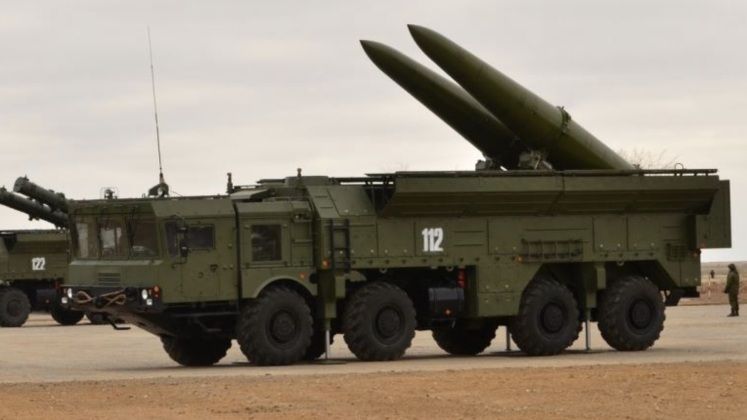
The unveiling of the Iskander notably followed the outbreak of low level hostilities between the Moroccan Army and various insurgent groups, with footage broadcast on public television. The Iskander represents by the most modern and sophisticated class of ballistic missile in Africa or the Arab world, and is one of several high profile weapons systems acquired in recent years primarily from Russia. These have included S-400 long range surface to air missile systems, several hundred T-90 tanks, Patnsir-SM air defence combat vehicles, Improved Kilo Class attack submarines and Chinese CX-1 cruise missiles - among others. Algeria is also thought to have signed a contract for the acquisition of Su-57 next generation fighter jets from Russia, although as usual with Africa’s largest country the prolific weapons purchase will not be officially confirmed until delivery. Algeria’s arms buildup notably escalated after wholly unexpected NATO attacks on neighbouring Libya in 2011, which had neglected modernisation of its air force or air defences and paid a heavy price for doing so when this weakness was exploited. This led both Algeria and Egypt to invest heavily in such capabilities most likely in order to deter any similar potential Western attacks.
