
A Look at Every Major Variant of Russia’s MiG-29 Fulcrum Fighter: How Capably Can They Perform?
Military Watch Magazine Editorial Staff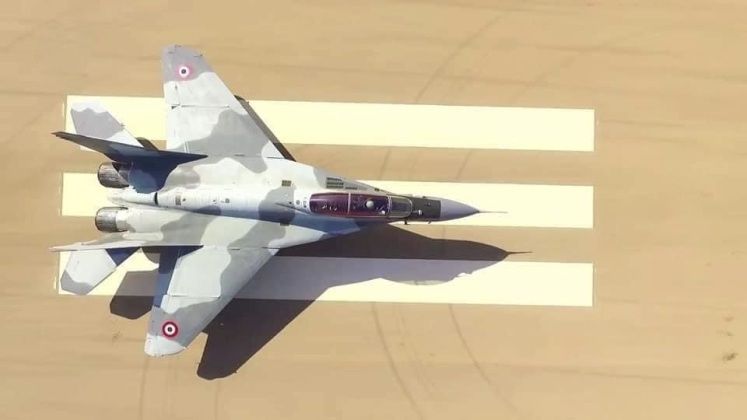
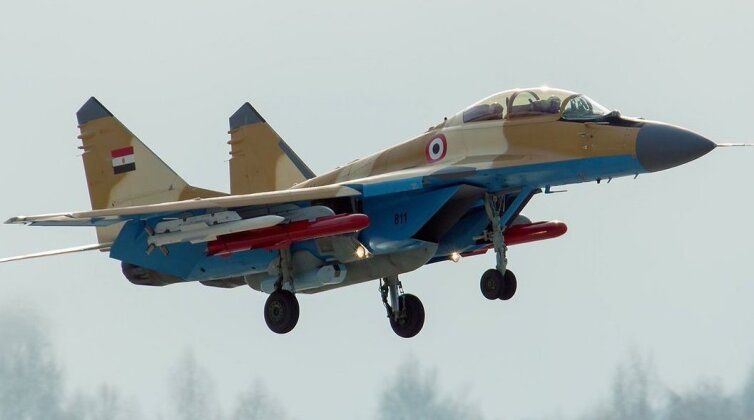
Egyptian Air Force MiG-29M
The MiG-29 Fulcrum entered service in the Soviet Air Force from 1982, and was the first fourth generation fighter jet fielded by the country. The aircraft was from the medium weight range much like the U.S. Navy’s F-18C Hornet, and used a similar twin engine configuration. Designed with combat against American F-16 and F-15 fighters in mind, the aircraft was for a long time considered to have an unmatched flight performance with its manoeuvrability remaining without compare particularly at low speeds. The fighter benefitted from a new generation of air to air missiles including the R-27 and R-73 for respective long and short ranged engagements, both of which were widely assessed to be more capable than their Western counterparts at the time. This led the U.S. to eventually introduce the more capable AIM-120 and AIM-9X to restore its advantage after the Cold War ended. The MiG-29 was also the first fighter produced in large numbers with an infra red search and track system - a feature American aircraft would only begin to widely introduce three decades later which allowed it to operate without any radar signature at medium ranges. Despite its advanced capabilities, the MiG-29 was the cheapest Soviet fighter in production by the end of the 1980s. Its introduction had followed on from the much heavier and more costly MiG-31 Foxhound fourth generation interceptor a year prior, and preceded the introduction of the Su-27 Flanker which was a heavyweight air superiority fighter from the same weight range as the American F-15 Eagle.
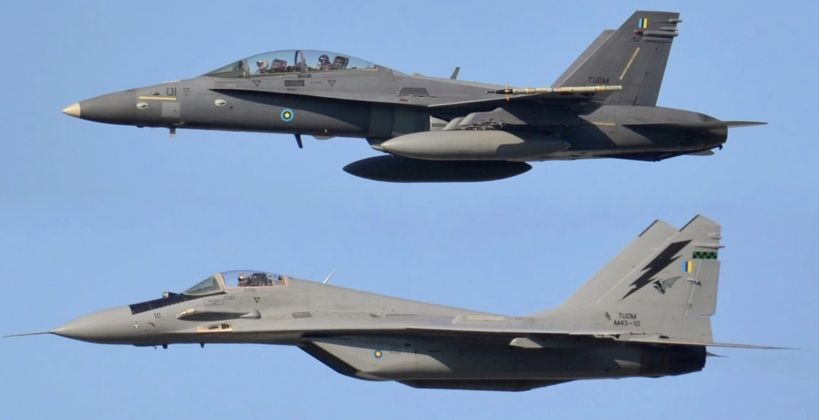
MiG-29 production would decline considerably following the collapse of the Soviet Union, as the Russian Air Force contracted sharply and demand from the former Warsaw Pact states of Eastern Europe effectively ended. Post Soviet Russia also ceased to offer MiG-29s in exchange for payment in loans, meaning countries such as Cuba and Syria which would not have otherwise been able to afford the aircraft had to curb their plans to acquire them. The collapse of the Iraqi economy and UN arms embargo on the country, and Western pressure to cease MiG-29 sales to Iran, also ended prospects for further sales to the two oil rich Middle Eastern states which had been leading clients for the jets and were expected to purchase many more in the 1990s. The MiG-29 was nevertheless widely exported, with North Korea producing the fighters under license and the aircraft gaining contracts for sale across Asia as well as in Latin America and much of Africa. Although fielded in only limited number in the Russian Air Force, the MiG-29 has been extensively modernised over time with multiple advanced variants produced primarily for the needs of export clients. An enhanced next generation fighter, the MiG-35, also entered service from 2019 and was closely based on the MiG-29 design.
A brief assessment of the capabilities of the six most prominent variants of the MiG-29, as well as those of the MiG-35, is given below:
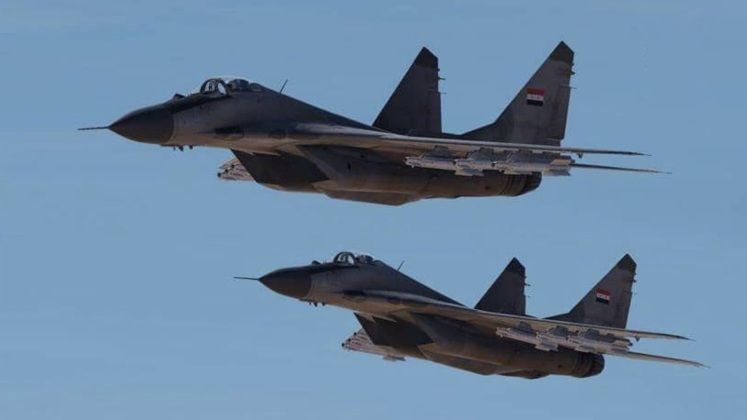
MiG-29A
The MiG-29A was original baseline variant of the Fulcrum fighter, and by the time of the Soviet collapse approximately 1000 had been produced with around 700 operating in the Soviet Air Force alone. Other operators included North Korea, Cuba, Syria, India, Iran and Iraq, as well as the Eastern European states Bulgaria, Czechoslovakia, East Germany, Hungary, Romania and Yugoslavia. Although Russia no longer fields original MiG-29A airframes, and those in service abroad in many countries such as India and North Korea have been modernised, baseline MiG-29A jets with few major enhancements continue to serve in countries such as Syria, Serbia, Eritrea and Cuba as well as several Soviet successor states. The fighters boasted an impressive flight performance but were limited by their data sharing capabilities and by a relatively weak radar. While the MiG-29A's radar was much more powerful than that of the American F-16A which they were built to compete against, it was increasingly mediocre as radar technologies improved in the 1990s and 2000s. The aircraft’s range was also relatively limited due to the high fuel consumption of its twin engines. This led Russia to invest heavily in improving the fighters with new sensors and more fuel efficient engines as well as a higher internal fuel capacity.
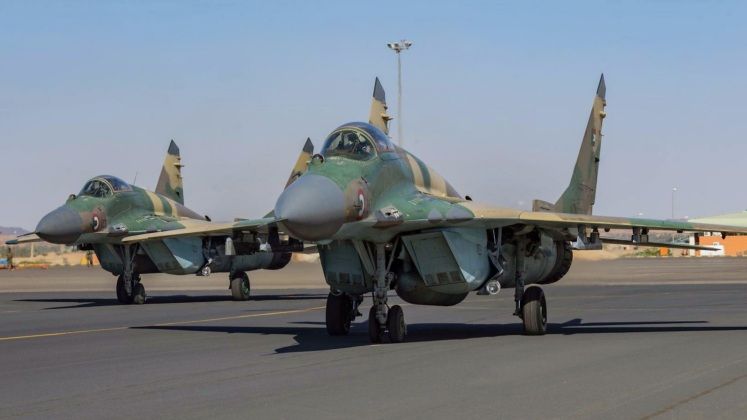
MiG-29S/SE
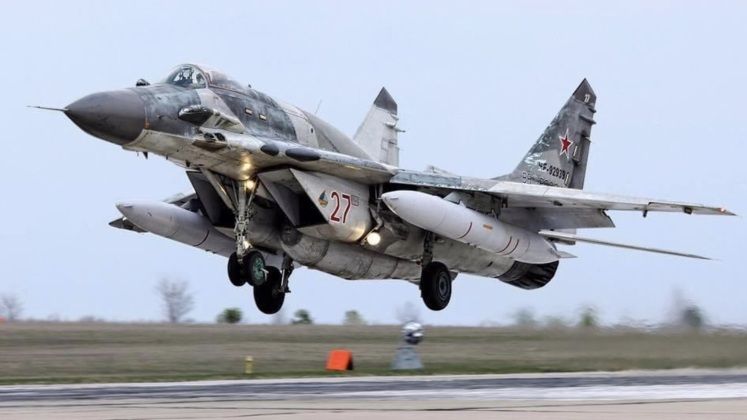
An early relatively conservative early upgrade to the MiG-29 design, the MiG-29S was widely used by Peru, Sudan and Algeria among others. The fighters boast four new computers and a new flight control system which provides better control. The aircraft can accommodate a larger weapons payload the than the original MiG-29A, and feature the new L-203BE Gardeniya-1 electronic warfare system. The MiG-29S’ most notable improvement over the original MiG-29A is the integration of the Phazotron N019M radar, which allows it to operate far more independently without support from ground control. The aircraft can also track a greater number of targets bringing the total number up to ten, and are much better suited to deploying air to ground munitions with precision. The MiG-29S upgraded was also developed with the integration of the R-77 air to air missile in mind, which introduces active radar guidance and a ‘fire and forget’ capability with an overall similar performance to the American AIM-120C.
MiG-29SMT
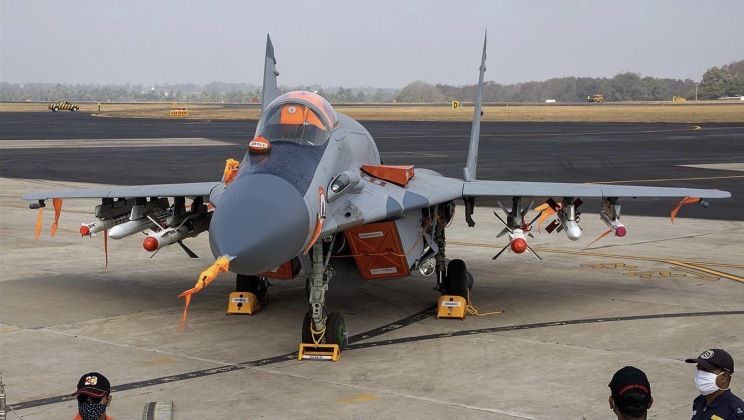
The MiG-29SMT was developed as an upgrade package for the original MiG-29A, and has been widely marketed abroad to operators of the older design. The aircraft is visibly different due to its larger spine which accommodates more internal fuel to extend the fighter’s flight range to 2,,100km. The extra weight is compensated for by the integration of RD-33 series 3 engines which each put out 81kN of thrust - ensuring that more fuel does not compromise the MiG-29’s flight performance. The fighter has a hands on throttle and stick (HOTAS) cockpit with colour liquid crystal multi function displays and its avionics and sensors are much better suited to operating advanced guided air to surface weapons. The fighter’s Zhuk-ME radar revolutionises situational awareness relative to the original MiG-29A, and allows each to engage more targets simultaneously. The SMT is particularly prized for its ability to be used as an upgrade package to bring the numerous MiG-29A jets across the world, including the hundreds in storage in Russia itself, up to a modern standard. A more conservative sister upgrade package to the MiG-29SMT with several similarities, the MiG-29BM, was developed in Belarus and used to modernise the country’s own jets as well as those of the Bangladesh Air Force.
MiG-29UPG
The MiG-29UPG is a similar aircraft to the MiG-29SMT but was designed specifically for the requirements of the Indian Air Force. Like the SMT, the UPG is primarily an upgrade package for older MiG-29A airframes including those already in service in the Indian Air Force and multiple airframes sold onto India from storage in Russia. The aircraft uses the same Zhuk-ME radar as the MiG-29SMT, and differs primarily in that it uses some non-Russian avionics. A $900 million contract to upgrade 69 MiG-29A fighters in the Indian Air Force was signed in 2011, with multiple orders subsequently placed including in 2019 and 2020.
MiG-29M
The MiG-29M represents the mosts radical and ambitious iteration of the MiG-29 design fielded by any air force in the world, and unlike the aforementioned variants which have sought to improve the airframes of the basic MiG-29A and are available as upgrade packages the MiG-29M is a redesign of the airframe to optimise performance. Technologies developed for the MiG-29M heavily influenced other modernisation efforts such as the MiG-29SMT, with the offering of an SMT upgrade package allowing countries to field many of the capabilities of the M variant without needing to acquire newly built post-Soviet airframes. This was particularly important due to the sheer numbers of MiG-29s built during the Soviet era. By using a new airframe, however, the MiG-29M could be redesigned as a lighter more durable aircraft using new composite materials. Its air intakes were extensively redesigned and internal fuel capacity was increased considerably, which along with in air refuelling capabilities provided a much higher endurance.
The MiG-29M’s service life was increased to 4000 hours, and maintenance was made easier and operational costs lower relative to older variants. The fighter’s RD-33MK engines ensured a superior flight performance, while the integration of the Zhuk-ME radar provided much greater situational awareness. Notable features include integration of the MSP-418K active jammer pod built to to spoof radar guided missiles, and the T220/e targeting pod to increase precision for air to ground strikes. Missiles such as the Kh-35 cruise missile and R-77 air to air missile were widely used by the new jets, which saw exports to Egypt and Algeria of 46 and 14 jets respectively. The MiG-29M is considered a ‘4+ generation’ fighter, and bridges the gap between the original MiG-29A and the ‘4++ generation’ MiG-35. The aircraft have been less popular on export markets than upgraded aircraft based on the original MiG-29A airframe such as the MiG-29S and SMT design due to their higher cost.
MiG-29K
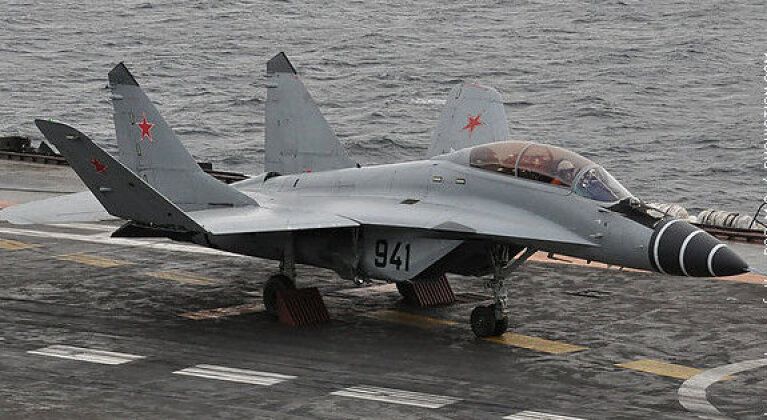
The MiG-29K is a carrier based derivative of the MiG-29M, with the two representing the most capable variants of the Fulcrum fighter. The aircraft is the primary carrier based fighter of the Indian Navy, and is also deployed in limited numbers from Russia’s sole carrier Admiral Kuznetsov where it saw limited combat deployments in 2016 against Islamist insurgents in Syria. Compared to the MiG-29M, the MiG-29K uses a reinforced airframe and undercarriage to withstand the stress of carrier landings, and uses a tail hook to be able to operate with carriers using arresting gear. The fighter’s folding wings allow it to be stored on a carrier’s deck or internally with minimal space requirements, and the fighter’s undercarriage track was also widened. The fighter’s use of smokeless RD-33MK engines, which have seven percent more power than the baseline RD-33 used by older MiG-29 variants, makes the aircraft more suitable for carrier operations.
MiG-35
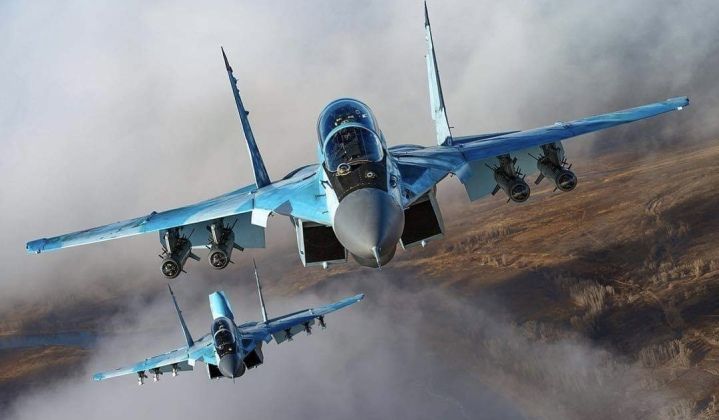
The MiG-35 was developed as a successor to the MiG-29 from the same weight range, and although it boasts advanced '4++ generation' capabilities its design is derived from that of the MiG-29M. The fighter is manufactured using more modern techniques and use some of the latest composite material technologies, which make it easier to maintain and more durable and facilitates higher rates of operational readiness. Entering service from 2019, fighter was the first in the Russian Air Force to integrate a nose mounted Phazotron Zhuk-AESA radar which allows it to track targets over 300km away and to track up to 30 targets simultaneously. This powerful sensor suite allows it to deploy a range of new weapons including R-37M air to air missiles with a 400km range, Kh-36 cruise missiles, and possibly K-77 APAA guided air to air missiles with a range of over 190km. The Kh-36 combined with the power of the fighter's sensor suite provides a much more robust strike capability than the less well rounded MiG-29 ever had. The aircraft also boasts an expanded weapons payload relative to the original MiG-29 and can deploy up to eight missiles - double that of the American F-35 and the same number as heavyweight jets such as the F-15C and Su-27S. The fighter benefits from integration of other new technologies including laser weapons and limited applications of artificial intelligence, and it is expected to eventually fully replace the MiG-29M in production.
