
MiG-31BSM Foxhound vs. F-22 Raptor: Which Heavyweight Jet Would Reign Supreme in Air to Air Combat?
Military Watch Magazine Editorial Staff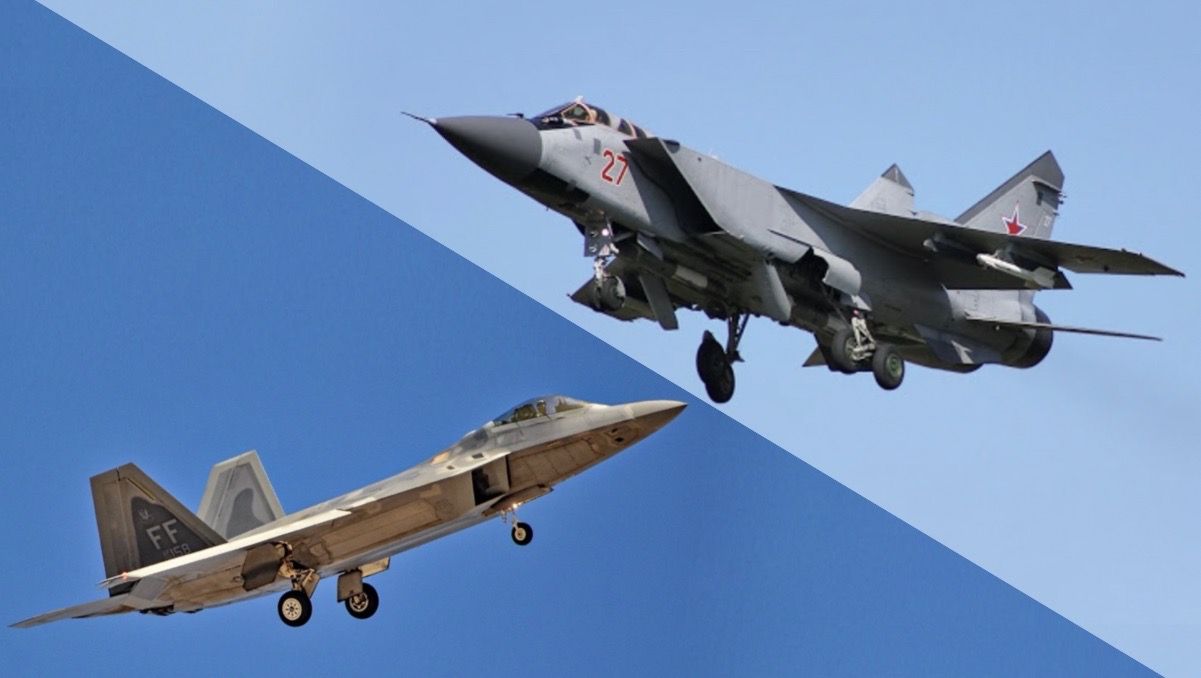
MiG-31 Foxhound vs. F-22 Raptor
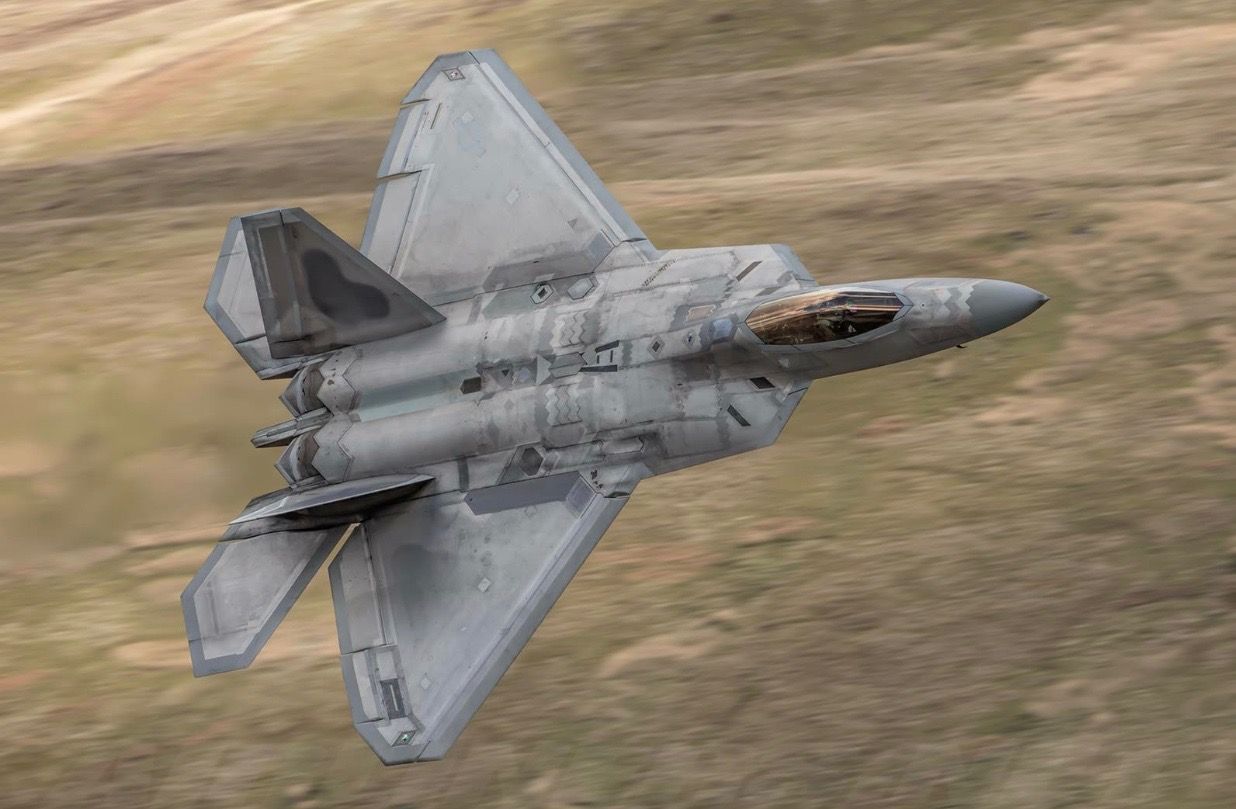
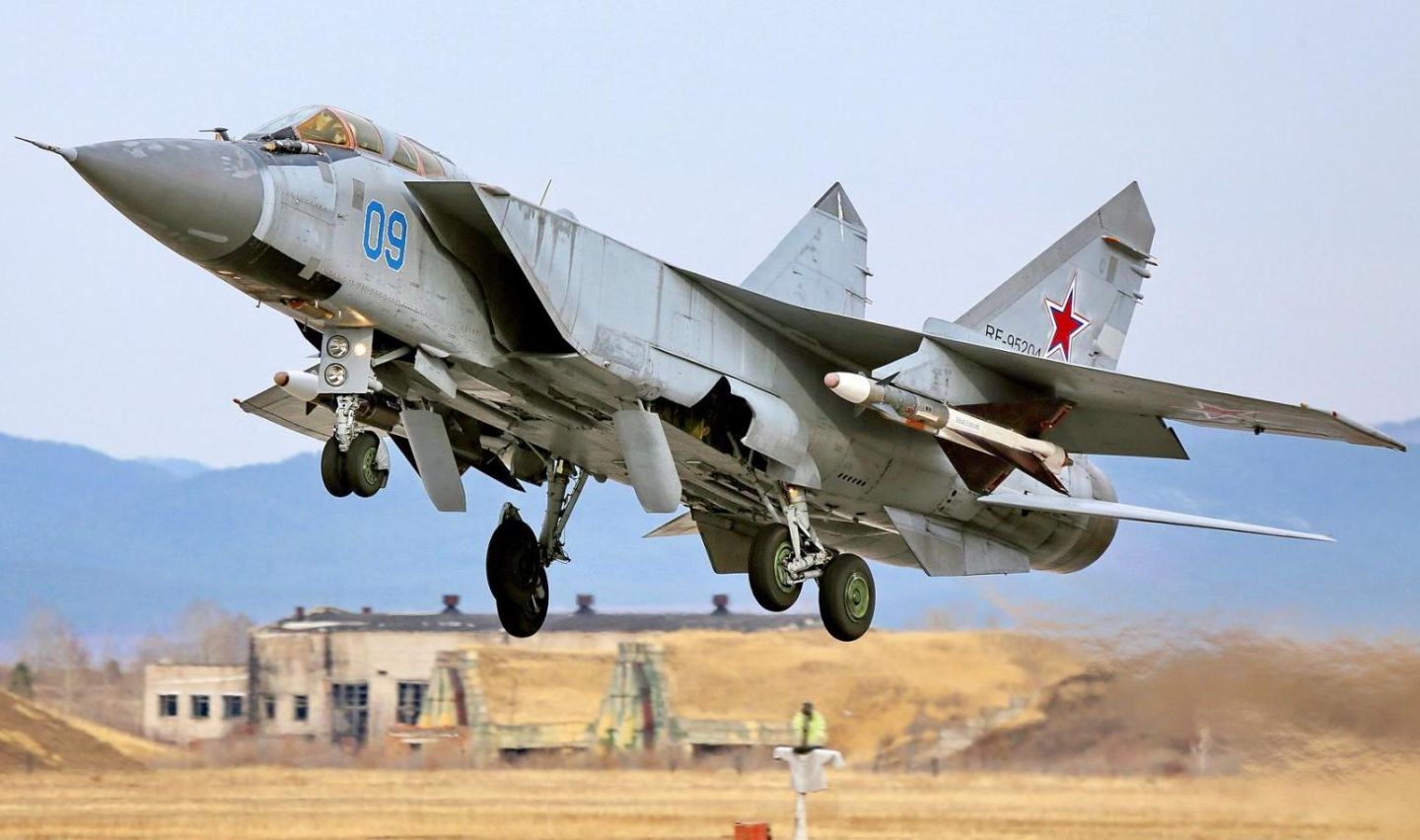
The F-22 Raptor entered service in 2005 as the U.S. Air Force’s most capable air superiority fighter, and is today considered the most capable Western jet ever designed for air to air combat. The Raptor was developed from the late 1970s to restore American superiority in the air, which had previously been achieved by its predecessor the F-15C Eagle but would be undermined within ten years of the Eagle’s entry into service by the Soviet Su-27 Flanker and MiG-31 Foxhound. While the F-22 is the heaviest and most capable Western fighter in service, the MiG-31 in its latest variants, the BS and BSM, is considered the most capable active Russian jet in air to air combat and is by far the heaviest in the world.
The F-22 has no direct analogue in the Russian Air Force - although three separate classes of Russian heavyweight combat jet heavily specialised in air to air combat have been designed to be capable of going head to head with the advanced American fighter. Russia developed the Su-35 ‘4++ generation’ fighter for a similar role, and while the aircraft benefits from superior manoeuvrability, a higher weapons payload, side looking radars and infra red tracking capabilities among its advantages its applications of stealth technologies are considerably more modest than the Raptor. The newer Russian Su-57, which is also built around a stealth airframe, cannot be considered an analogue to the Raptor - with the aircraft designed to integrate sixth generation technologies over the coming decade which will allow it to go head to head with next generation American fighters. It is unlikely to be widely deployed until such technologies are developed, by which time the Raptor will increasingly be considered dated design overshadowed by American sixth generation fighter designs. The MiG-31 Foxhound, too, is far from a direct analogue to the Raptor - but as Russia’s most capable air superiority platform today with several hundred in service a comparison of the two aircraft’s capabilities has significant implications for the balance of power in a potential future air war.
At around 29,400kg, the F-22 retains the title of the heaviest Western fighter by a considerable margin, and can accommodate one of the largest and most powerful radars the AN/APG-77 which weights around 554kg. Even compared to the Raptor, however, the MiG-31 remains an extremely heavy and powerful aircraft. At over 41,000kg each, the Foxhounds can accommodate the 1500kg Phazotron Zaslon radar - which provides a far longer detection and tracking range that its much smaller counterpart on the Raptor. Although the original Zaslon radar was a world leader in its time, the platform has been upgraded considerably sine which provides a degree of situational awareness exceeding that of many specialised airborne early warning aircraft. Although it is not an active electronically scanned array which the AN/APG-77 benefits from, meaning its radar signature is considerably higher, the Zaslon is so much larger that it is unlikely to be matched by radars on fighter-sized aircraft for the foreseeable future.
Comparing the MiG-31 and the F-22’s air to air combat capabilities, Powerplant Deputy Chief designer from 1971 to 1999 and Engineering Centre Advising Director art the Mikoyan Design Bureau Valentin Stepanov noted regarding the Foxhound, shortly after the Raptor entered service:
“Today the Americans recognise that if there its one aircraft to compare with the F-22, it is the MiG-31. First of all, it has a more powerful radar. Secondly, its missiles have a bigger payload and better range than the missiles on the F-22. The MiG-31 is faster than the F-22. Its dynamics field of interception is greater. The MiG-31 is in fact the most versatile interceptor with the best abilities in target interception.”
While glossing over the F-22’s own advantages, these comments do give some insight into the Foxhound’s strengths. Stepanov’s statement was made long before the latest MiG-31BSM variants were developed - although the Raptors capabilities have changed little since. His assessment should be taken with a pinch of salt given his position - much as Western claims that the Raptor can easily overcome all competitors should as well.
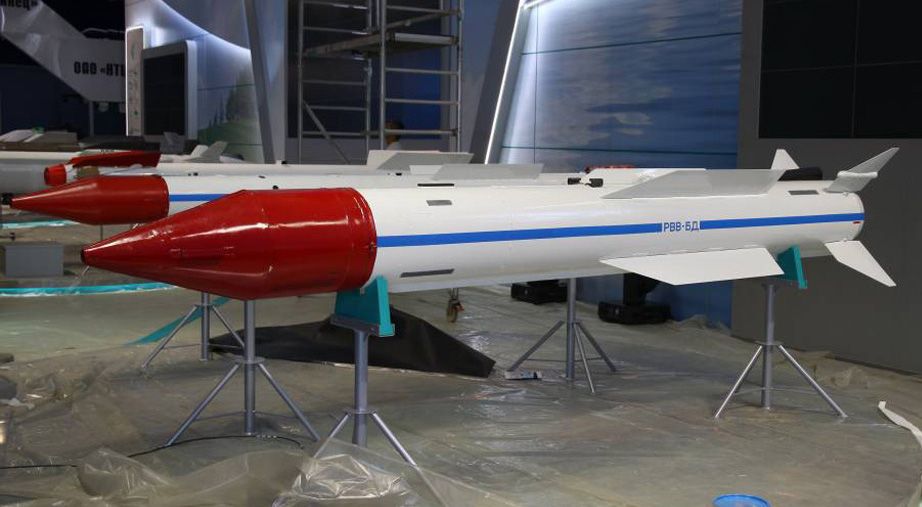
Comparing both platforms' air to air missiles, the F-22 carries six AIM-120D AMRAAM long range missiles and two AIM-9X short range missiles in its internal weapons bays - providing the same payload as its predecessor the F-15C and twice that of its lightweight single engine counterpart the F-35A. The AIM-120D has a 180km range, and replaced the older AIM-120C which had a much shorter 105km range in the mid 2000s. The MiG-31 has seen it’s maximum missile payload increase as the design has been further refined, and today carries six R-37 long range and two R-73 short range missiles in standard configuration. The R-37 is a newer design than the AIM-120, and boasts a hypersonic Mach 6 speed where the AMRAAM can only reach Mach 4. This provides target aircraft considerably less time to react when fired on, significantly increasing the probability of kill.
The Russian missile carries a massive 60kg fragmenting warhead, one of the largest ever deployed on an air to air missiles, which provides a far greater probability of kill. The AIM-120’s payload is around 20kg, or one third the weight, which places it at a considerable disadvantage. Perhaps the most significant advantage of the MiG-31’s armament, however, is its range. The R-37 is a much larger missile and is capable of engaging targets up to 400km away. With even the latest AIM-120D missiles having less than half this range, this places them at a considerable disadvantage. The MiG-31’s engagement range advantage will likely be even greater than that shown by comparing the R-37 and AMRAAM directly, as the aircraft's flight performance advantages will also play a role. The Foxhound is the fastest and highest flying modern combat jet in the world, able to operate at altitudes exceeding 21km and at speeds of over Mach 2.8. This allows the aircraft to launch missiles with considerably more kinetic and gravitational potential energy than the Raptor can - providing a greater boost to its missiles’ range.
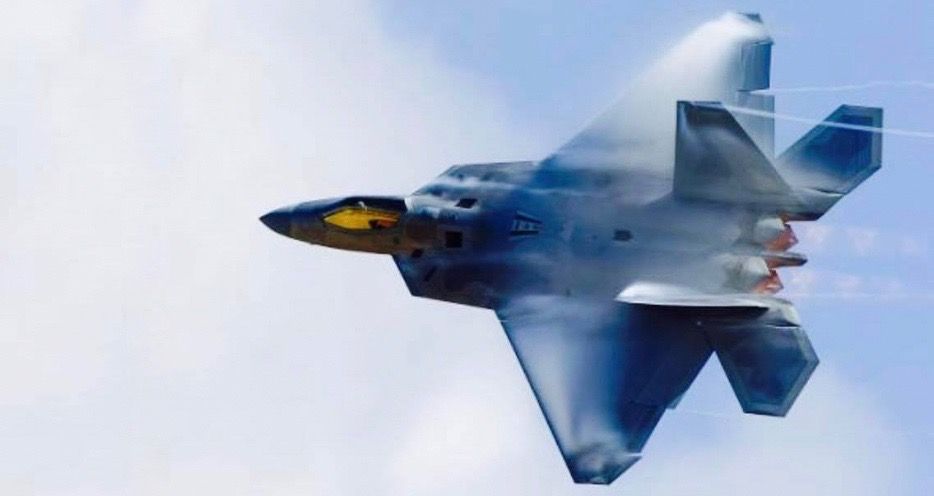
While the MiG-31 is a very strong performer in beyond visual range air to air combat, the F-22 does have some advantages of its own in the field. The Raptor is the stealthiest fighter currently in service anywhere in the world and has a very small radar cross section and heat signature. While this is of more limited use when operating as an interceptor, as an air superiority fighter it provides considerably superior survivability and makes the aircraft difficult to target at longer ranges. The MiG-31’s lack of stealth technology leaves it more vulnerable in this regard, although its much longer engagement range can help to heavily compensate by allowing it to strike from well beyond the retaliation range of potential targets.
Although the F-22’s advanced stealth capabilities make it a challenging target to intercept, the MiG-31BS and BSM are among the best suited in the world to such a role. The size and sheer power of the Foxhounds’ radars allow them to detect stealth fighters at far greater ranges than those on smaller fighter sized aircraft, while the newer variants of the Foxhound are able to share targeting information between with an advanced data link system allowing them to share tracking data - an effective means of targeting stealth platforms at greater ranges.
While the MiG-31 appears to overall be a stronger performer in beyond visual range combat, at visual ranges the F-22 will retain considerable advantage. The Raptor is the only Western fighter with thrust vectoring engines, which combined with a superior thrust/weight ratio will make the Foxhound an easy target should it be able to get close. The MiG-31’s thrust/weight ratio is poor, and the aircraft was not optimised for visual range engagements. The American advantage is further strengthened by its access to Block II and Block III versions of the AIM-9X Sidewinder missiles, which have a far higher probability of kill at short ranges than the R-73 deployed by the Foxhound. The Russian jet does have the advantage of an infra red search and track system which the F-22 lacks, which at medium and short ranges allows it to better lock onto stealth aircraft and to operate without a radar signature, but this is unlikely to be sufficient to bridge the gap between the aircraft. The Foxhound does have the advantage of a much higher speed and altitude however, which can allow it to choose when and where the fight and to better avoid close range engagements with the Raptor.
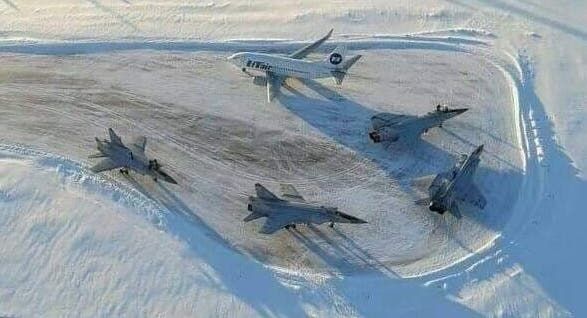
Looking beyond the aircrafts’ raw combat capabilities, both the F-22 and the MiG-31 are considered high maintenance aircraft with high operational costs and fuel consumption. While the MiG-31’s operational costs were formerly considered extreme - among the highest in the world when the aircraft entered service - they are only a fraction of those of the F-22 today. The Raptor over its lifetime costs over $700 million to operate making it by far the most expensive fighter in the world. The MiG-31’s lower maintenance requirements can also facilitate a much higher sortie rate. The F-22 is further restricted in the types of runways it can operate from, which have to be standard and pristine, whereas the Foxhound like most Russian combat jets is designed to operate from rugged makeshift runways - a critical advantage in the case of a major war in which airfields across all theatres will be priority targets for attack. The MiG-31’s wheels are also designed to allow it to operate from ice runways, a capability the F-22 lacks. This combined with considerable endurance and situational awareness advantages has made the Foxhound an ideal platform for Arctic warfare - with Russia deploying the aircraft to the region in growing numbers.
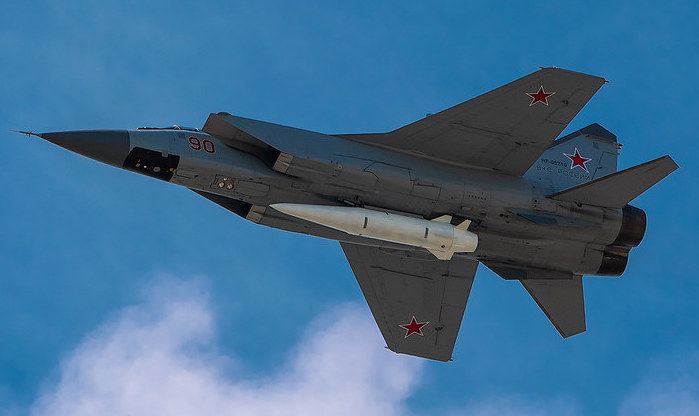
Ultimately the MiG-31 appears to be the overall superior design, and manages to benefit from a much heavier weight and higher performance airframe while maintaining a much lower operational cost relative to the F-22. With the possible exception of the Su-57, the Foxhound its expected to remain the most capable aircraft in air to air combat in Russian service - moreso if the design is further modernised. The F-22 for its part, with production cut just four years after its entry into service, and with the fighters today suffering from ageing computer architecture, a scarcity of parts and serious difficulties incorporating upgrades, is in a poorer position to compete. With maintenance difficulties for the fleet growing, it has been widely speculated that the Raptor could see an early retirement from service in favour of both cheaper F-15X ‘4+ generation’ platforms and more sophisticated F-X fighters and Penetrating Counter Air Fighters currently under development. The MiG-31 is likely to remain in service considerably longer, due to both the massive potential of its sensors suite to incorporate further upgrades, its lack of outstanding maintenance costs and its ability to be modified into a strike fighter to deploy new classes of Russian hypersonic missiles. When considering the capabilities of the MiG-31 in a strike role, equipped from 2018 with new Kh-47M2 Mach 10 ballistic missiles, its advantage over the F-22 becomes overwhelming - with the Raptor poorly suited to air to ground and anti shipping roles making it a far less versatile aircraft than the Foxhound.
