
Russia’s Elite MiG-31BM Foxhound Interceptors to Resume Patrols of the Arctic and North Pole
Military Watch Magazine Editorial Staff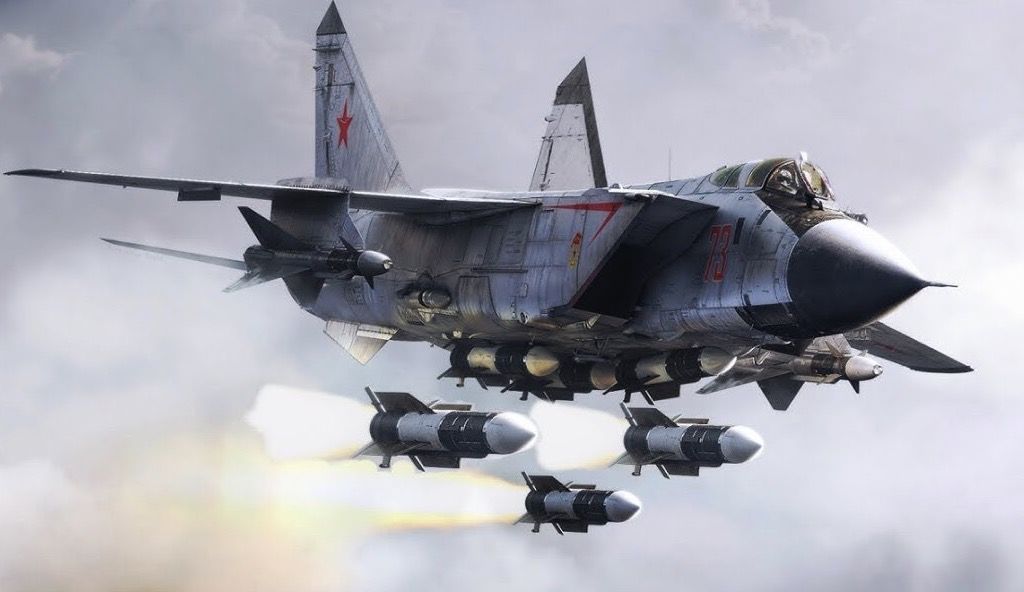
MiG-31 Foxhound Interceptor Fires R-33 Air to Air Missiles (artwork)
Russia’s armed forces have resumed air patrols of the country’s far north, deploying MiG-31BM heavy interceptors to fly long range missions in the extreme cold. Two squadrons of the elite combat jets from the country’s Northern and Pacific Fleets will be responsible for carrying out these patrols - with the intention of controlling the airspace of the entire Arctic north of mainland Siberia to beyond the North Pole. The resumption of patrols comes at a time of growing competition for the Arctic, with the Western Bloc also investing heavily in strengthening its military presence in the region where Russia has long had a strong foothold.
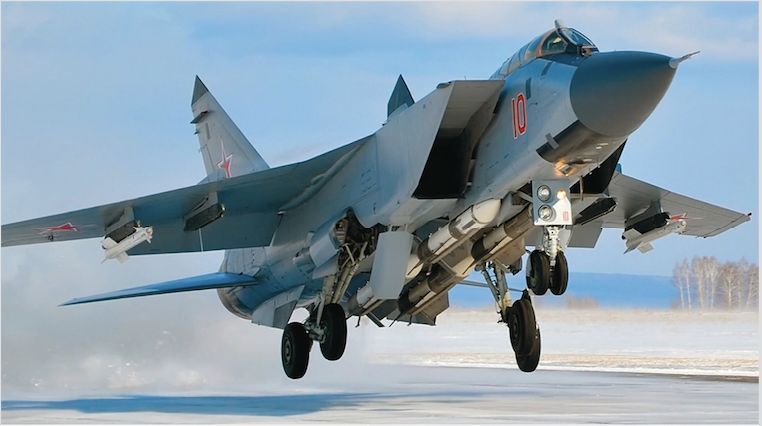
MiG-31 Foxhound Interceptor
The MiG-31 Foxhound was designed to patrol the Soviet Union’s vast interior - including its Central Asian and Arctic regions as well as the Far East. Slower and shorter ranged fourth generation fighters such as the MiG-29 and Su-27 were meanwhile tasked with missions in the more hotly contested but smaller European theatre. The MiG-31’s formidable range, powerful sensors and long engagement range make it ideal for patrols over vast territories such as the Arctic. The fighter is capable of engaging hostile aircraft at ranges of up to 300km with its R-33 air to air missiles - or at 400km using the newer and more specialised R-37. The Foxhound is the fastest and highest flying modern combat aircraft in the world, exceeding speeds of Mach 2.8 and able to reach altitudes of 21km (by contrast the lighter MiG-29 cannot fly at over 18km, while the United States Air Force’s new F-35 cannot fly higher than 16km.)
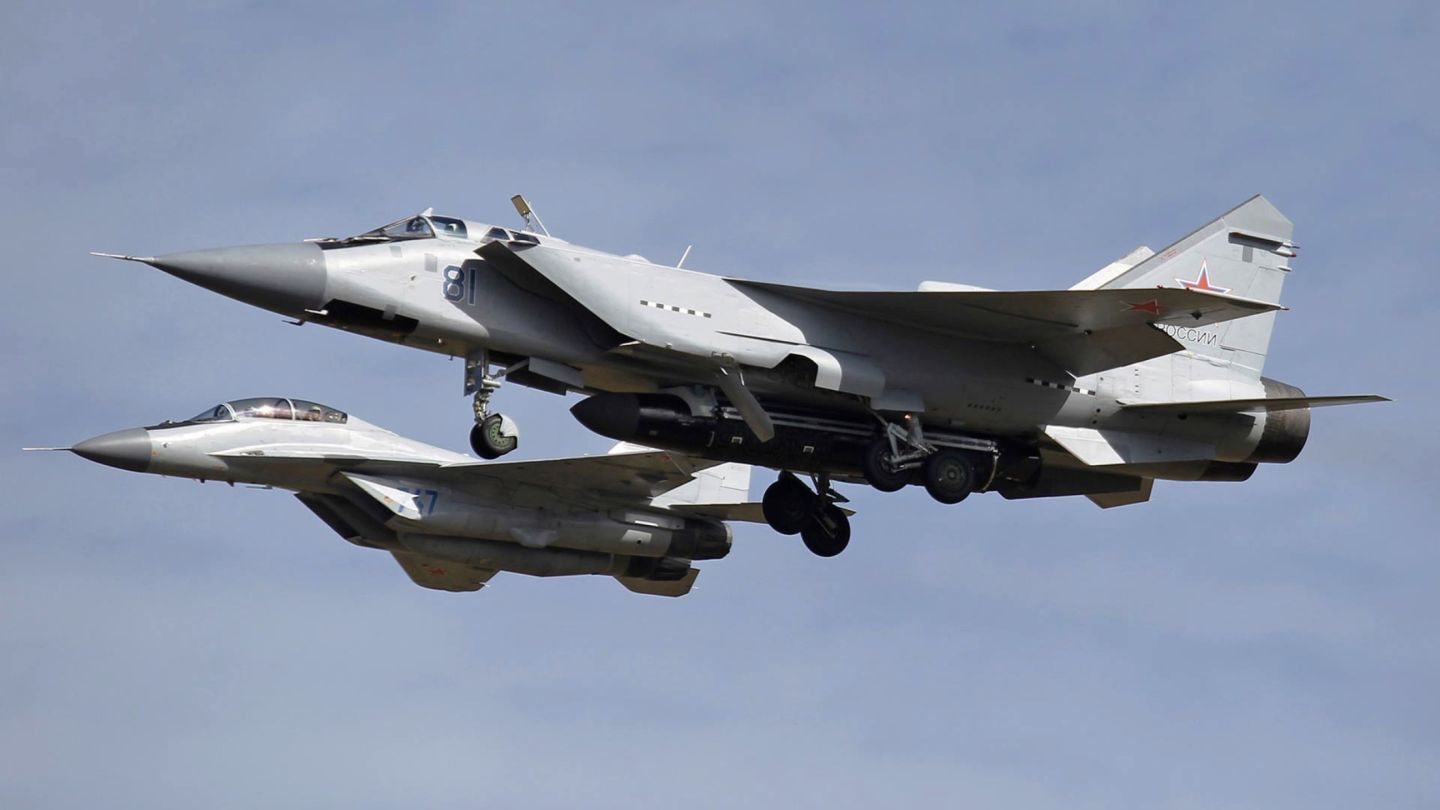
MiG-31 with Anti Satellite Missile and MiG-29 Escort
The MiG-31 currently forms the mainstay of Russia’s fleet of combat jets alongside the Su-27 air superiority fighter, and both designs have been extensively modernised since they first entered service in 1981 and 1985 respectively. The MiG-31BM represents a later iteration of the Foxhound design, and the efficiency of the new interceptor is reportedly 260% that of the original aircraft. The MiG-31BM’s detection range was increased considerably, and it gained the ability to track up to 24 targets simultaneously and engage up to eight. The ageing Argon-K computer was replaced with new Baget 55-06, and the aircraft was made comparable with the hypersonic R-37 air to air missile. The aircraft was also modified to be able to fulfil anti ship and air to ground missions, and inherited some ‘4+ generation’ avionics from the MiG-29M. The interceptors are set to be replaced with the more capable MiG-31BSM in future as more Foxhounds are modernised to this higher standard.
