
Laser Weapon Adds to Russian MiG-35’s Growing Range of Advanced Features
Military Watch Magazine Editorial Staff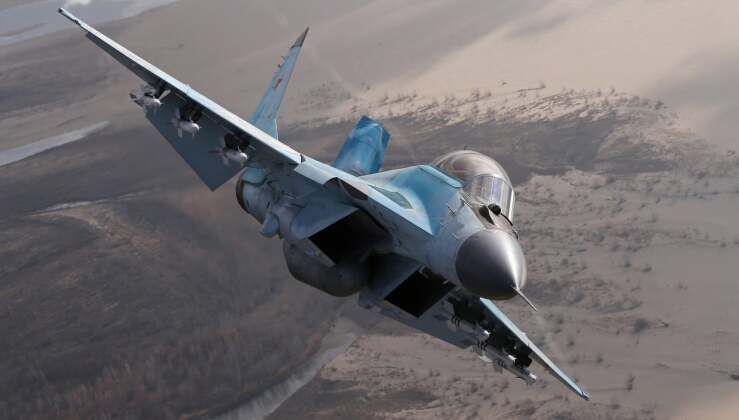
MiG-35
Although it first entered service in the Russian Air Force in June 2019, new details regarding the capabilities of the MiG-35 medium weight ‘4++ generation’ fighter have continued to emerge. The fighter its currently the most sophisticated in Russian service, and appears to currently be aimed primarily at the export market due to the Russian Air Force’s much greater emphasis on heavyweight aircraft - although this could change in future. The MiG-35 has reportedly been equipped with a conservative design for a laser weapons system for testing purposes, which could be integrated onto the aircraft in future alongside its cannons, guided bombs, rocket bombs and air-to-air missiles. The purpose of this laser weapon, according to a Russian state media report, is to blind the sensors and neutralise the electronics of enemy aircraft. A laser weapon would add to existing high tech features of the MiG-35 such as artificial intelligence, three dimensional thrust vectoring engines, and access to extreme range hypersonic air to air missiles.
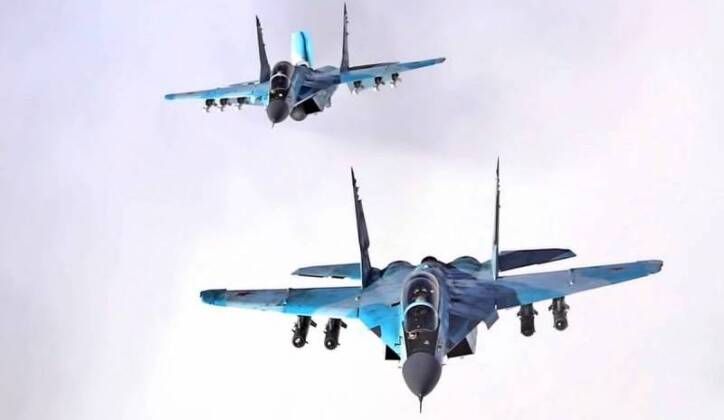
Russia has notably also integrated lasers onto its Su-57 fighter, although these are defensive and intended to blind incoming missiles. The Su-57 is a heavyweight fighter developed in parallel to the MiG-35 which has yet to enter service, but which entered mass production in 2019. The MiG-35 is expected to see considerable export successes particularly to countries which operated its fourth generation predecessor, the MiG-29, with the jet reportedly having less than half the operational cost and being much easier to maintain making it a much more cost effective and cheaper investment in the long term. The fighter is the first in Russian service to integrate a nose mounted AESA radar, providing comparable and in many cases superior situational awareness to much heavier aircraft with much larger radars such as the Su-27 due to the advantages of AESA technologies, which are also much more difficult to jam.
