
One Size Fits All: New Russian Engine Designed to Power Su-35, Su-30 and Su-27 For Superior Performance and Easier Maintenance
Military Watch Magazine Editorial Staff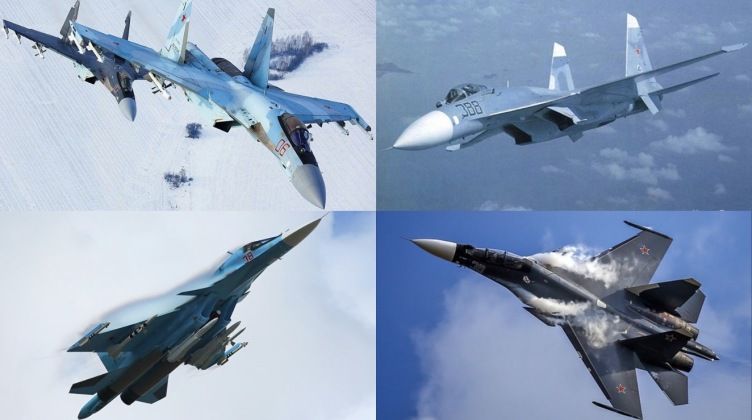
Su-35, Su-27, Su-30SM and Su-34 Fighters (clockwise from top left)
Russia’s Ufa Engine Building Production Association is working to develop a new class of turbofan engine which will be able to power the three most widely used multirole fighter classes in the Russian Air Force, the Su-35, Su-30 and Su-27. The fighters are all twin engine heavyweight platforms based on the Su-27 Flanker design, and all use variants of the AL-31 which, in the case of the Su-35, has been called AL-41 to reflect its superior performance. The move to develop a single engine to fit all the fighter classes was announced by the managing director of the production association Yevgeny Semivelicenko, who announced that the order for development had come from the Defence Ministry. He stated that the engine would be based on the AL-41, referring to it as “a kind of universal engine that can be installed on the Su-27, Su-30 and Su-35.”
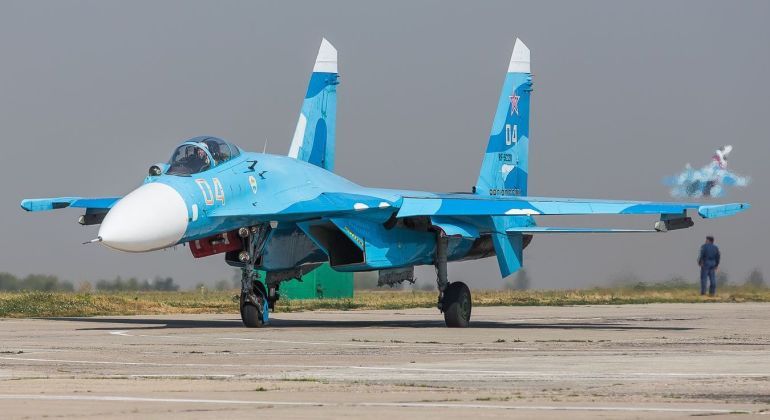
Work has been ongoing for over a year to integrate the AL-41 onto the Su-30 fighter, specifically the Su-30SM platform currently in mass production, with Su-30 jets equipped with the newer engines from the Su-35 set to be classified as the Su-30SMD. The AL-41 has a number of advantages over the standard AL-31, including a more efficient blade cooling system, three dimensional thrust vector controls, lower maintenance requirements, a longer service life and 16% more thrust. Using an universal engine will serve to considerably increase interoperability among the fighters in the Russian Air Force, capitalising on the similarities between the designs which between them form the vast majority of the country’s fighter fleet to reduce maintenance difficulties. It remains uncertain whether the new engine will be more capable than the AL-41 variants currently used by the Su-35 - although it is likely it will have a similar performance but prioritise easier maintenance and a longer service life given how widely it will be used. It is highly possible that the universal engine will also be used by Su-33 and possibly even Su-34 fighters - the former a carrier based variant of the Su-27 operated by the Russian Navy and the latter a dedicated strike fighter.
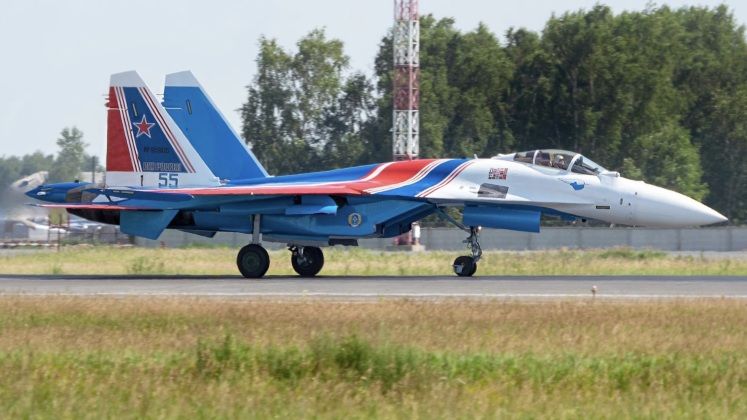
Equipping Su-27 and Su-30 fighters with AL-41 derived engines will not only reduce their operational costs, but will also revolutionise there combat performances providing longer ranges and superior flight performances - from climb rates to high and low speed manoeuvrability. This will provide a cost effective means of enhancing the capabilities of the Su-27 fleet and of older Su-30 variants, which are increasingly being challenged as the U.S. Air Force moves to upgrade its analogous F-15 fighters with newer technologies. Russia has previously integrated Su-35 technologies onto the Su-27, with the Su-27SM2 and SM3 variants using the same avionics and Irbis-E radar and having access to much of the same weaponry. It is likely that the new universal engine will be offered to export clients for the Su-35, Su-30 and Su-27 such as China and Indonesia, which are both either operating or set to operate all three classes of fighter. Other leading clients could include Algeria, which operates a large Su-30 fleet, as well as Vietnam, which operates both the Su-27 and Su-30, and India which is the largest foreign operator of Russian-built Flanker jets.
