
Russian Su-35 Fighter Engages French Rafales and Swedish Gripens Over the Baltic Sea
Military Watch Magazine Editorial Staff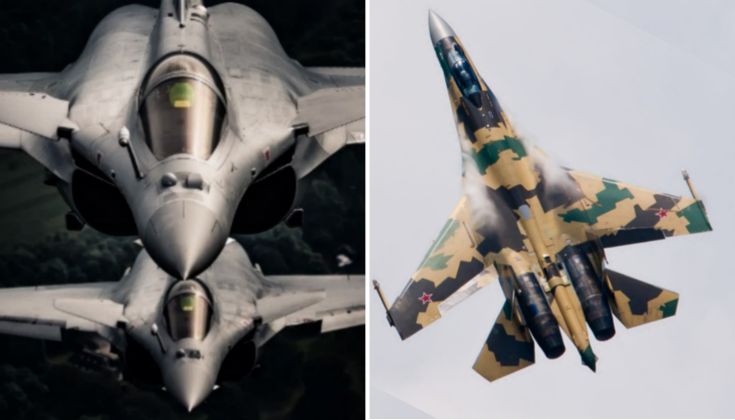
Rafale (left) and Su-35 Fighters
A Russian Aerospace Forces Su-35 air superiority fighter was on June 2 involved in multiple engagements with French Air Force Rafale and Swedish Air Force Gripen fighters over the Baltic Sea. Two Rafales operating as part of the Baltic Air Policing mission scrambled from Siauliai Air Base in northern Lithuania, and met up with Gripens to jointly intercept a group of six Russian aircraft, including a Su-35. The fighter was escorting an An-30 reconnaissance aircraft, Su-24 and Su-34 strike fighters, and an Il-76 transport. The Su-35 is the only fighter type in the flight optimised for air-to-air combat, and thus appeared to be their escort when operating near hostile territory. Engagements between Russian and NATO military aircraft over the Baltic Sea have been particularly frequent over the past year, as tensions remain high over NATO members’ involvement in the Russian-Ukrainian War.
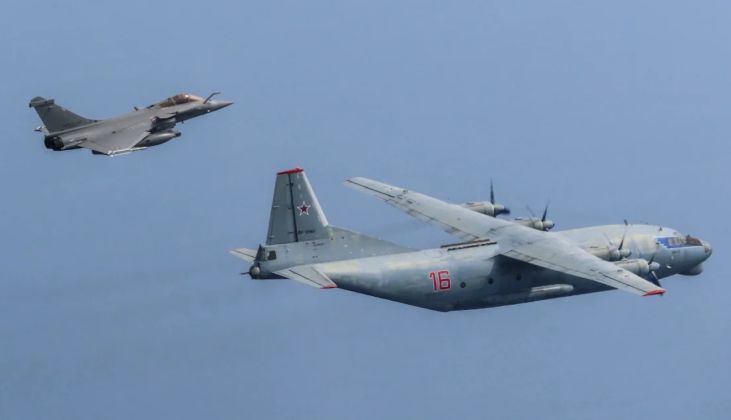
The Su-35 has been more intensively combat tested in air-to-air combat than any other post-Cold War fighter type in the world, and been credited with shootdowns of multiple Ukrainian Air Force MiG-29 and Su-27 fighters, as well as an F-16 in mid-May, among other targets. The Gripen has never been tested in air-to-air combat, while the Rafale’s sole combat test in May 2025 saw between one and four of the aircraft in Indian service shot down by Pakistan Air Force J-10C fighters supplied by China. The Su-35 has the advantage of being a significantly larger aircraft, and integrates the most powerful engine of any fourth generation fighter type, where the Rafale’s M88 engines are by far the weakest in production for any fighter in the world today. The Su-35 can accommodate a much larger weapons load and a radar over three times as powerful.
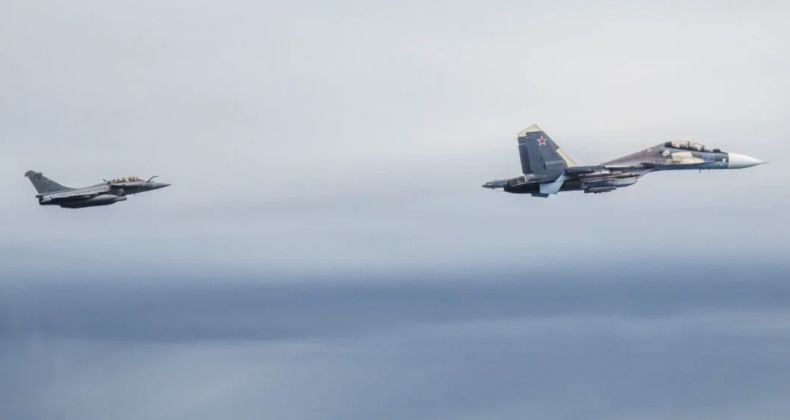
The Rafales assumed a new rotation for Baltic Air Policing in the first week of April, arriving at Siauliai Air Base which is located 130 kilometres from Russian territory. In mid-April the aircraft engaged Russian Su-30SM2 fighters, as well as an accompanying Il-20M electronic intelligence aircraft. Subsequently in early May they intercepted to Russian Aerospace Forces Su-24M strike fighters over the Baltic Sea. On May 30 the French Air Force was reported to have scrambled Rafale fighters from Siauliai Air Base in Lithuania to intercept two Russian Navy Su-30SM2 long range fighters over the Baltic Sea. In April Swedish Gripens were scrambled to intercept Russian Su-30SM fighters, which were escorting Tu-22M3 strategic bombers over international waters in the Baltic Sea at the time, with the aircraft operating closely alongside the French Rafales in Lithuania. While Russian Navy Su-30SM2s are deployed in the Russian exclave of Kaliningrad, Su-35s are deployed only on the Russian mainland, and at times at facilities in Syria, meaning they have been involved in engagements less frequently.
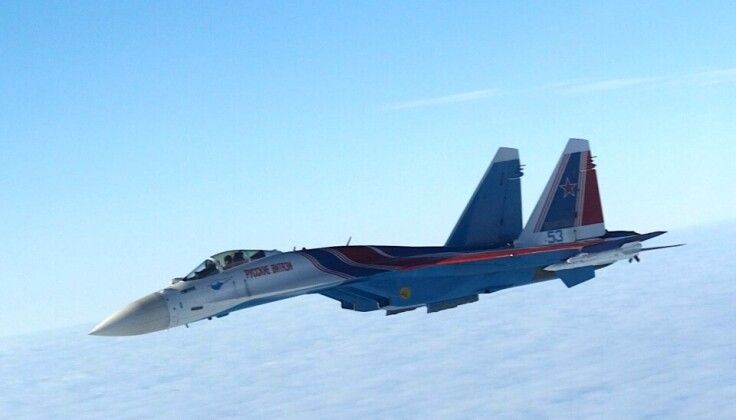
While the Su-35 retains a distinct advantage against European-origin fighter types, its capabilities are considered to be significantly outmatched by those of NATO’s new premier fighter type the U.S. Air Force F-35. In early March the Royal Norwegian Air Force deployed two F-35s to engage a pair of Russian Tu-95MS strategic bombers and their Su-35 fighter escorts in international airspace over the Barents Sea, with the advanced stealth fighters having established positive identification, maintained a controlled escort profile, and sustained continuous tracking. The engagement highlighted the extent to which the balance of power over the Barents Sea had been transformed against Russia’s favour by Norway’s procurement of F-35s, where the F-16s it had previously relied on had been far outmatched by Russian fighters in the region. While the F-35 has proliferated rapidly across Europe, France and Sweden remain the only major NATO air forces not only have placed orders for the aircraft due to a perceived need to protect their much less competitive local fighter industries.
