
New Batch of Russian Su-30SM2 ‘Supermaneouvrable’ Fighters Leaves Factory: How Capable Are They?
Military Watch Magazine Editorial Staff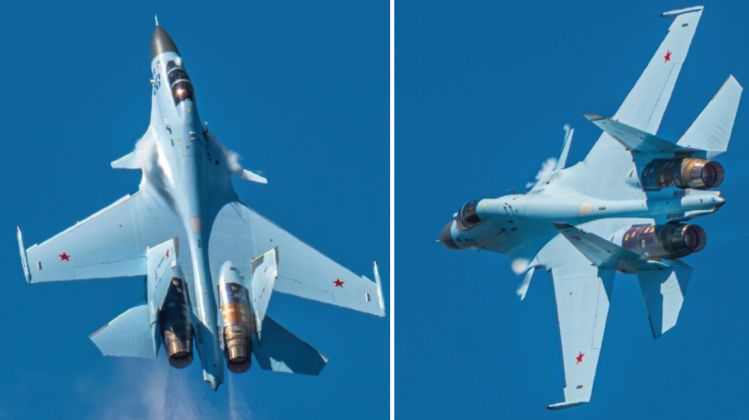
Su-30SM2 Flight Demonstration After Production
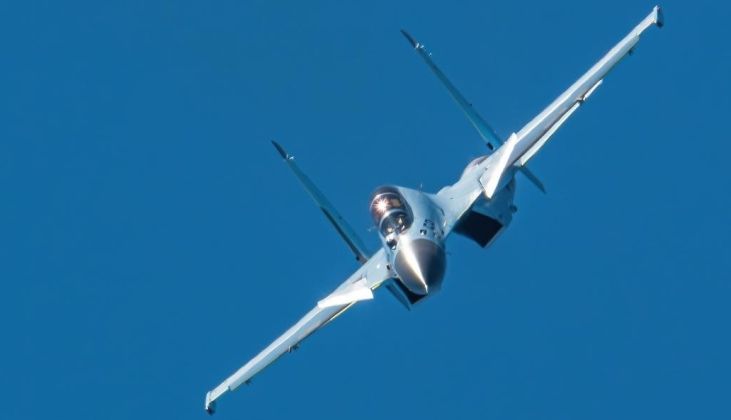
The Russian Irkutsk Aviation Plant has completed a new batch of Su-30SM2 fighter aircraft, with footage released of a display of the newly built aircraft alongside newly produced Yak-130 trainers. The Su-30SM2 is the most advanced evolution of Russia’s twin-seat Su-30 fighter type that first entered service in early 2022, and was developed as part of a broader push to standardise systems across Russia’s fighter fleet, while also reducing maintenance costs and simplifying logistics and significantly improving combat performance. Its primary improvement over the baseline Su-30SM that was brought into service a decade prior in 2012 was the integration of the AL-41F-1S engine, the same powerplant used by the Su-35 air superiority fighter, which is the most powerful ever integrated onto a fourth generation fighter type.
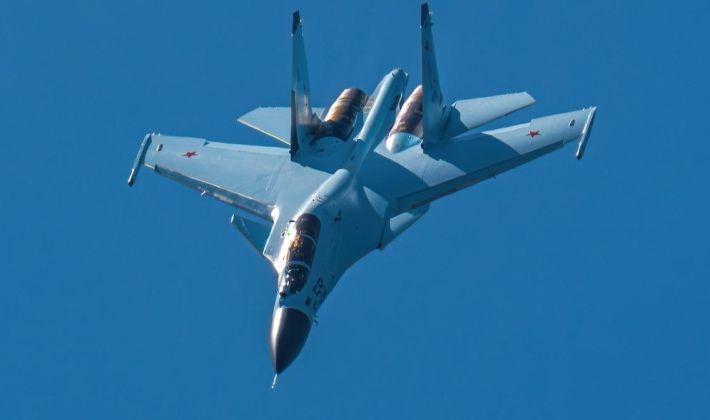
The Su-30SM2’s development illustrates how Russia has increasingly pursued evolutionary modernisation rather than clean sheet new fighter programs, with the Su-30 being an enhanced derivative of the Soviet Union’s most capable air superiority fighter, the Su-27, which was heavily enhanced to a ‘4+ generation’ standard with Indian financing in the early 2000s. The Su-30MKI variant that entered service in the Indian Air Force in 2002 was widely considered the most capable fighter type in the world at the time, and was used as a basis for developing the Su-30SM for the Russian Air Force when Russian efforts to develop a fifth generation fighter facd serious delays. With the Su-57 fifth generation fighter belatedly being brought into service in greater numbers as the program makes significant progress, however, the future of Su-30 procurement plans has been brought into question.
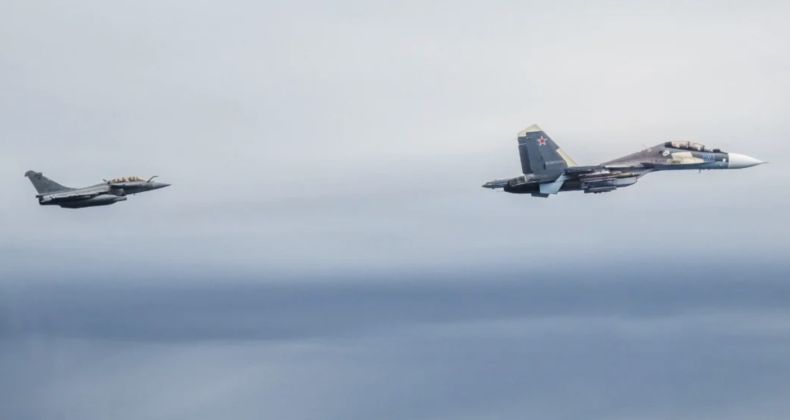
The Su-30SM2 has from 2022 been deployed to one of the most sensitive locations in Russia, namely the exclave of Kaliningrad, where Russian Navy fighter units are surrounded by hostile NATO member states. The fighters based there have seen frequent engagements with Western Bloc fighter aircraft, including in 2026 with French Rafale, Swedish Gripen and Spanish F-18 fighters. While the Su-30 is an ageing design, it is considered more than sufficient to provide a distinct performance advantage over these fighter types, with its radar being several times more powerful, its flight performance at high and low speeds being on an entirely different level, and its firepower being significantly greater.
The Su-30SM2’s new AL-41F-1S engines provide approximately 16 percent more thrust than the older Su-30SM’s AL-31FP, while also having a substantially longer service life, improved fuel efficiency, and lower maintenance requirements. This increased power allows for a much improved climb rate, acceleration, sustained manoeuvrability, and performance at high altitudes, while also generating more electrical power for advanced avionics. New armaments developed for the fighter type, in particular the R-77M next generation air-to-air missile and R-37M heavyweight long range air-to-air missile, have significantly improved its beyond visual range air-to-air performance, with the former considered broadly equivalent to the U.S. AIM-120D and European Meteor missiles in its performance.
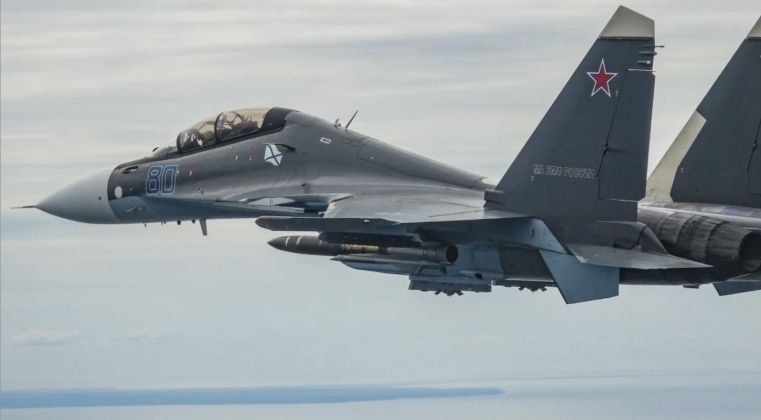
In terms of kinematic performance, AL-41F-1S engines provide the Su-30SM2 with extremely high thrust and excellent manoeuvrability. Combined with thrust-vectoring nozzles, the engines contribute to making the Su-30SM2 one of the most agile fighter types in service worldwide. While post-stall manoeuvrability is often less decisive than sensor and missile performance in modern air combat, it can still provide important advantages in close-range engagements and for missile evasion at all ranges. No Western fighter type can match the Su-30SM2’s combination of thrust-vectoring and aerodynamic performance. The aircraft also benefits from the retention of a dedicated weapons systems officer in the rear cockpit to manage sensors, communications, electronic warfare, and weapons employment simultaneously, with the work sharing this allows for being particularly useful on long range missions. The Su-30SM2 has a much longer range on internal fuel than any Western fighter type, improving on the range of the Su-27 which was world leading in its time, which is particularly critical due to the size of Russia’s territory.
