
Russian Su-30 Fighters Engaged By Swedish Gripens Over the Baltic Sea
Military Watch Magazine Editorial Staff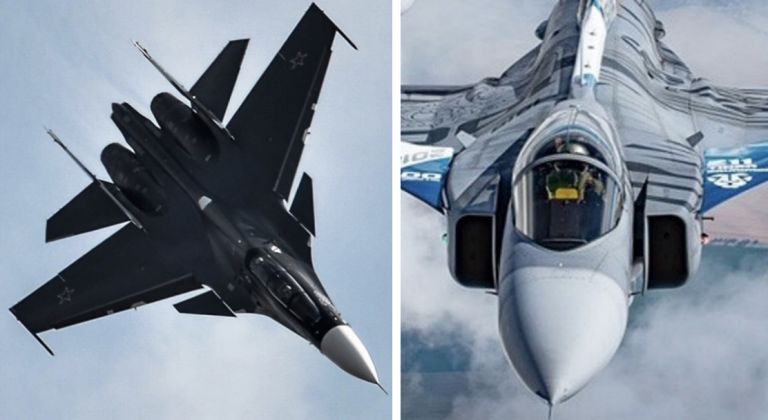
Su-30SM (left) and Gripen Fighters
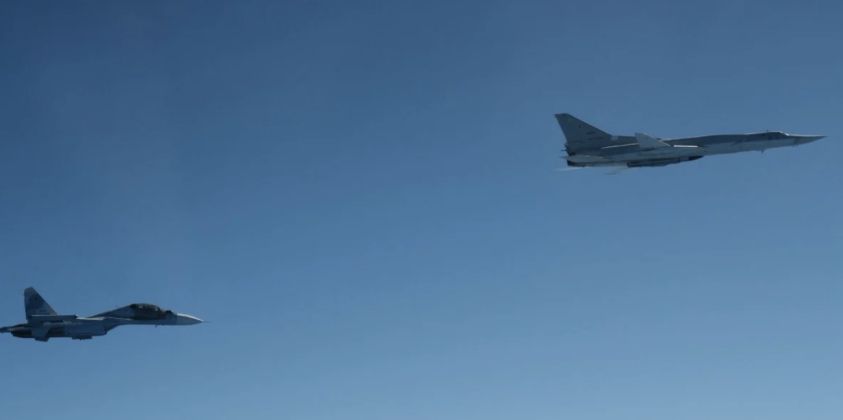
Swedish Air Force Gripen fighters were scrambled on April 20 to intercept Russian Su-30SM fighters, which were escorting Tu-22M3 strategic bombers over international waters in the Baltic Sea at the time. The mission was carried out under Sweden’s Quick Reaction Alert system in coordination with NATO allies. The Gripens remained in close proximity, and maintained visual contact with both the bombers and their escorts throughout the encounter. The Air Force maintains Gripen fighters on standby, ready to launch within minutes, as was the case for decades preceding the country’s integration into NATO in March 2024.
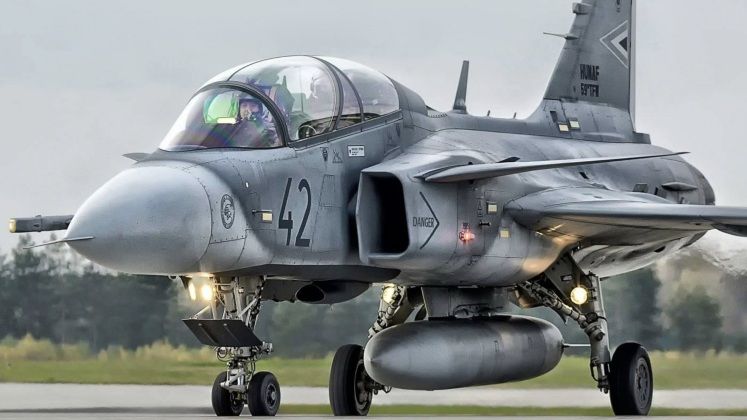
The latest engagement closely follows the deployment of a Gripen fighter on April 10 to intercept a Russian Navy Kilo class attack submarine, with the aircraft tracking the ship’s movements into the Baltic Sea between Sweden’s west coast and Denmark’s Jutland peninsula. Although much more limited in its combat potential than most other fourth generation fighter types, the Gripen’s lightweight low maintenance design makes it easy to maintain high availability rates, and allows for interceptions to be made at a fraction of the cost when compared to using other fighter types such as the F-35A or F-15. The Gripen C/D has long faced significant obsolescence issues, with the aircraft using mechanically scanned array radars that are among the weakest of any fighters built in the post-Cold War era, while being highly susceptible to jamming.
The scrambling of Gripen fighters to intercept Russian fighters and bombers closely coincides with the Royal Norwegian Air Force’s scrambling of F-35A fifth generation fighters to intercept a Russian Il-38 maritime patrol aircraft over the nearby Barents Sea. This occurred less than four days after French Air Force Rafale fighters forward deployed in Lithuania engaged Russian Su-30SM fighters. The high rates of engagements between Russian and NATO combat jets has occurred at a time of high tensions, as multiple NATO member states have deployed forces in the Ukrainian theatre to actively take part in the war effort against Russia. European states have continued to prepare a wide range of options for further escalation of their involvement in the conflict should the Ukrainian and Western Bloc forces already deployed face further setbacks.
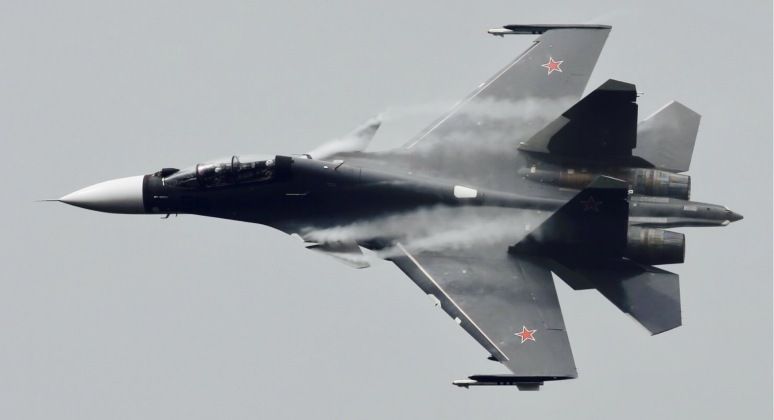
The Su-30SM currently forms the backbone of the Russian fighter fleet, with its design incorporating multiple features from Soviet fighter programs that were cancelled after the state’s disintegration. Loosely based on the Su-27PU heavy interceptor design, the aircraft uses a particularly wide range of technologies from the cancelled Su-27M and Su-37 air superiority fighters, including use of the Su-37's N011M radar, which was one of the first ever electronically scanned array radars integrated onto a fighter, as well as the Su-27M’s controlled canards, AL-31FP engines and thrust vectoring nozzles. The fighter has approximately 2.88 times the engine power of the Gripen C/D, a radar several times larger, and a range well over twice as long.
