
French Rafale and Russian Su-30SM Fighters Engage Over Eastern Europe
Military Watch Magazine Editorial Staff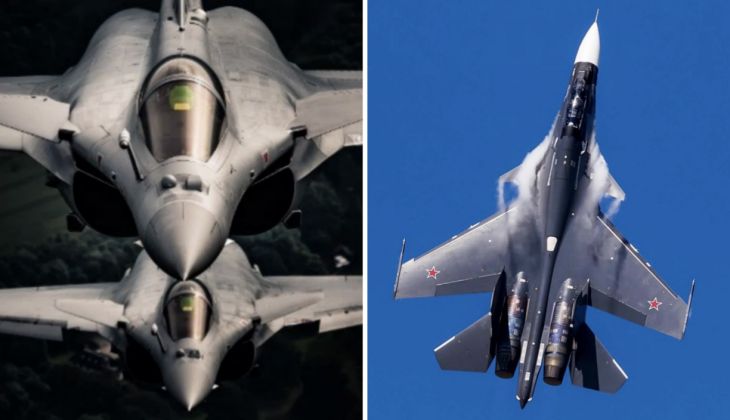
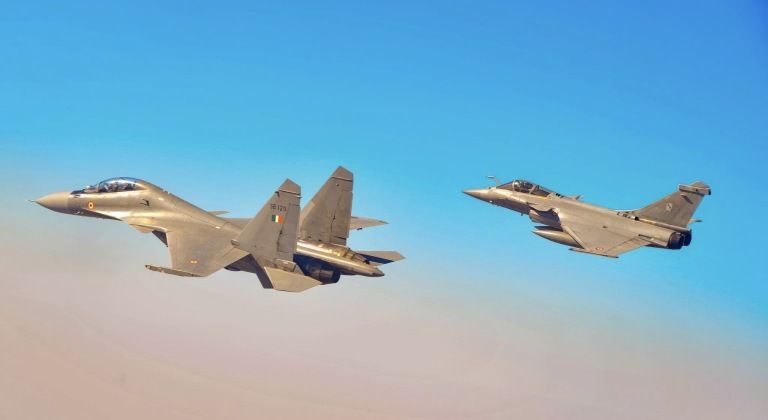
French Rafale (left) and Russian Su-30SM Fighters
French Air Force Rafale fighters forward deployed in Lithuania have engaged Russian Su-30SM fighters, which are thought to be operated by the Russian Navy from facilities in the Kaliningrad region. Rafale pilots reportedly used the Thales TALIOS targeting and laser designation pod during the intercept, which provides a high-resolution long-range visual identification capability This allows personnel to confirm aircraft type and visible weapon loads from a safer distance. The pod’s capabilities are particularly useful during Baltic Air Policing operations, where the primary task is to identify and monitor Russian aircraft. The Su-30SM fighters appear to be equipped with Kh-31 anti-radiation missiles designed for air defence suppression, with the possible carriage of air-to-air missiles remaining unclear.
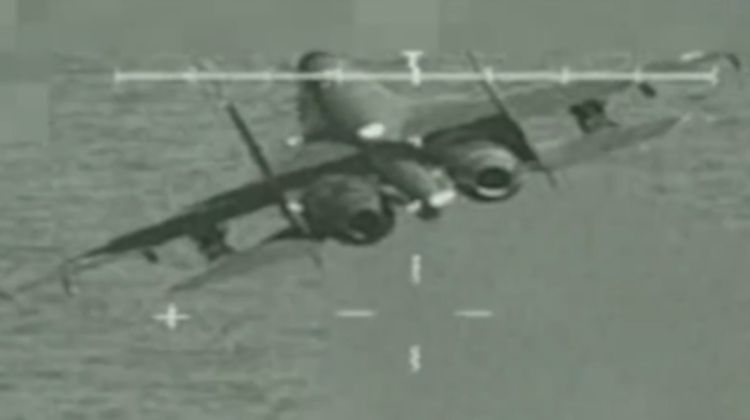
The engagement between Rafales and Su-30s occurred shortly after the French fighters assumed a new rotation for Baltic Air Policing in the first week of April, arriving at Siauliai Air Base located just 130 kilometres from Russian territory. The fighters’ arrival closely coincided with the French Army’s deployment of Leclerc main battle tanks for live fire exercises in Romania, across the border from Ukraine. Video footage released by the French Armed Forces have shown the Rafales escorting a Russian Il-20M electronic intelligence aircraft and a Su-30SM fighter operating near NATO airspace, with the interception conducted in coordination with other NATO members’ forces.
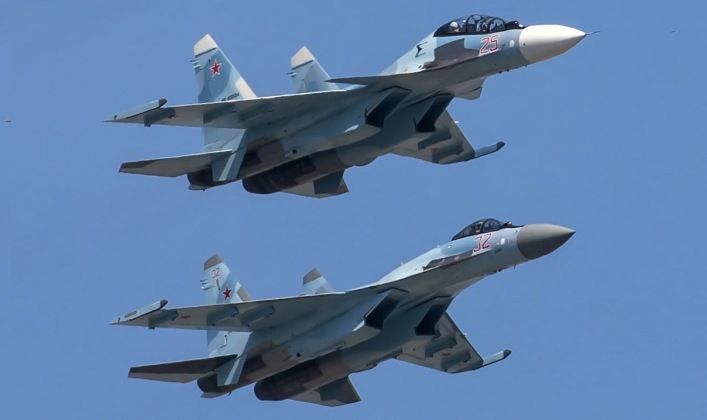
The Su-30SM is the most capable fighter in Russian Navy service, with the fleet having gradually been updated to the Su-30SM2 standard integrating updated avionics and much improved AL-41F-1S engines. It is one of four fighter types currently being produced to equip the Russian Armed Forces, alongside the similarly priced Su-34M strike fighter, the Su-35S air superiority fighter which is close to 60 percent more costly, and the Su-57 fifth generation fighter which costs well over twice as much to procure. Where the AL-41F-1S is the most powerful engine integrated on a fourth generation fighter, the Rafale’s M88 is by far the weakest fighter engine currently in production worldwide, reflecting both the vast discrepancy in size between the Rafale and Su-30, and the fact that the former design places a much lower emphasis on flight performance than the latter.
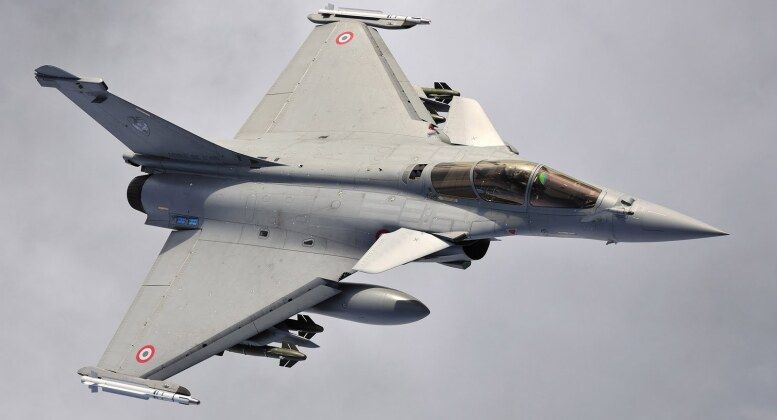
The Rafale is a lightweight ‘4+ generation’ fighter constrained by a very small radar, around one quarter the size of those of Russian Su-30 and Su-35 fighters, and by its limited flight performance. The aircraft has been widely assessed to be far outmatched not only by advanced fifth generation fighters such as the U.S. F-35 and Chinese J-20, but also by higher end fourth generation fighters like the U.S. F-15EX and Russian Su-30SM. French efforts to jointly develop a more capable fighter type with Germany and other regional partners under the Future Air Combat System program have faced repeated delays, with the program currently considered at serious risk of collapse, and even if succeeded scheduled to produce fighters ready for service only in the 2050s. The gap in capabilities between Russian and French fighters is thus expected to continue to widen.
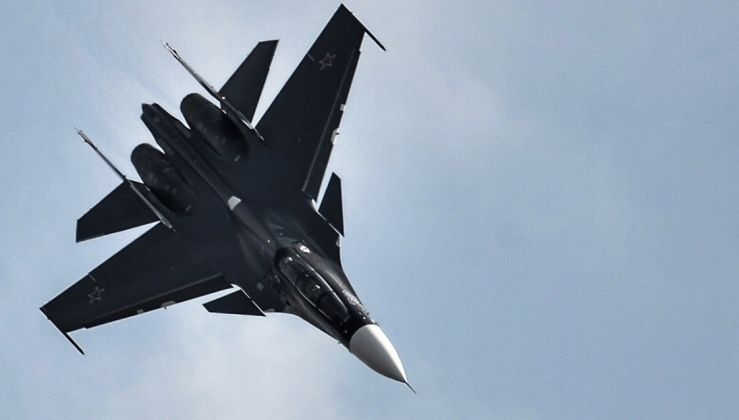
In early February Su-30SM2 fighters were deployed for operations over the Baltic region with an unusual weapons configuration, which included a mixed load of Kh-31 anti-radiation missiles and RBK-500 cluster bombs. Footage released by the Spanish Ministry of Defence revealed this loadout, after Spanish Air Force F-18 fighters operating from Siauliai Air Base were scrambled to intercept them. The Su-30SM2 was operated by the 4th Guards Naval Attack Aviation Regiment based at Chernyakhovsk Air Base in Russia’s Kaliningrad region. The carriage of air-to-ground weapons, rather than air-to-air missiles, may be a response to the current state of high tensions between Russia and NATO members, signalling that the Navy and Aerospace forces are ready to take to the offensive against critical ground targets.
French contractor and active duty personnel have for years been actively engaged in combat against Russian forces in the Ukrainian theatre, while French forces have more recently also assumed a leading role in boarding and taking over civilian cargo ships in international waters that are carrying Russian goods. French forces in Ukraine have consistently been prioritised for targeting, with a notable incident being a missile strike on January 16, 2024, targeting the headquarters of predominantly French European contractors, causing at least 80 casualties 60 or more of which were killed. In December Russia’s Foreign Intelligence Service warned that the French government is currently exploring ways to directly involve itself in the ongoing Russian-Ukrainain War, citing a new government decree authorising the use of private military companies to assist foreign state actors engaged in armed conflict. President Emmanuel Macron has on multiple occasions stated that further escalation of the country’s presence in Ukraine is not ruled out as part of a policy to “do everything necessary to prevent Russia from winning this war.”
