
France Forward Deploys Rafale Fighters 130km From Russian Border as Tensions Remain High
Military Watch Magazine Editorial Staff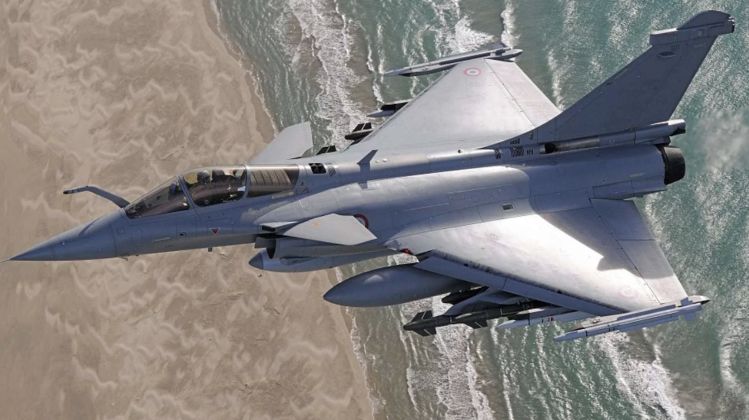
French Air Force Rafale Fighter
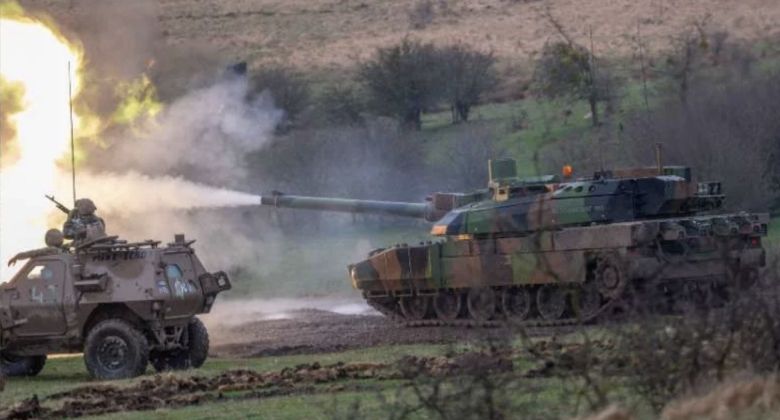
The French Air Force has deployed Rafale fighters to Siauliai Air Base, a facility located 130 kilometres from Russian territory, to take the lead in NATO’s Baltic Air Policing mission in Lithuania. Rafales at the airbase are capable of firing air-to-air missiles deep int Russian airspace, and can easily conduct cruise missile strikes deep into the country including thousands of kilometres beyond Moscow and St. Petersburg. The arrival of Rafales in Lithuania closely coincides with the French Army’s deployment of Leclerc main battle tanks for live fire exercises in Romania, across the border from Ukraine.
While French contractor and active duty personnel have for years been actively engaged in combat against Russian forces in the Ukrainian theatre, French fighter and attack helicopter units have more recently been deployed to the Middle East and been engaged in combat against Iranian drones. The intensity of these operations has significantly depleted the Air Force’s reserves of air-to-air missiles. French forces have also assumed a leading role in boarding and taking over civilian cargo ships in international waters that are carrying Russian goods, in particular fossil fuels, as part of a broader Western campaign that has been criticised internationally for its lack of legal justification.
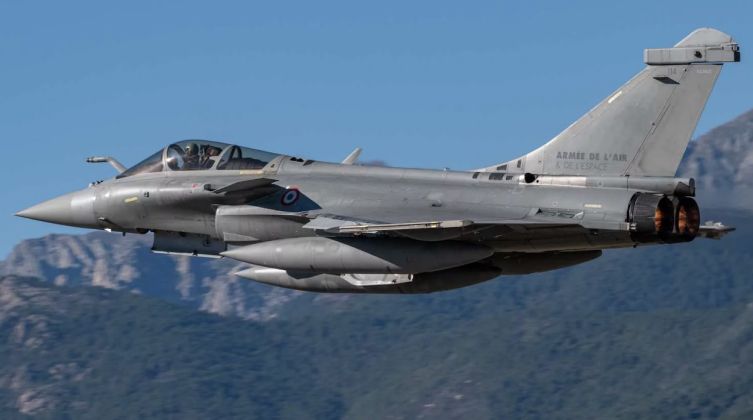
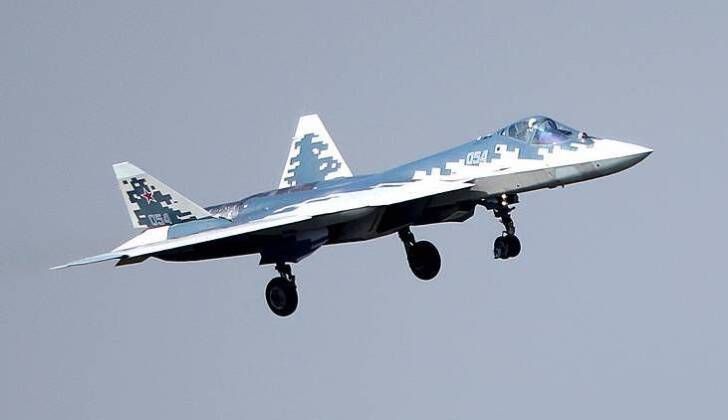
The Rafale is a lightweight ‘4+ generation’ fighter constrained by a very small radar, around one quarter the size of those of Russian Su-30 and Su-35 fighters, and by very limited engine power which limits its flight performance. While the aircraft is far outmatched by advanced fifth generation fighters such as the U.S. F-35 and Chinese J-20, it is also considered far from outstanding within the fourth generation, with the U.S. F-15EX and Russian Su-35 widely assessed to have very distinct advantages. As Russia has begun to more rapidly expand its own fifth generation fighter fleet by procuring improved variants of the Su-57, the Rafale’s viability for high intensity combat if operating without support from more capable U.S. fighter types has been brought increasingly into question.
French officials have been particularly vocal regarding the possibility of a major escalation in the country’s operations against Russia in the Ukrainian theatre, with French Land Forces Commander General Pierre Schill having in October pledged that the country would be ready to do so in 2026 if required. This follows a statement by Chief of the General Staff Fabien Mandon that forces troops should be ready for a combat in three to four years to face an emerging “Russian threat.” President Emmanuel Macron has on multiple occasions stated that greater deployments of ground forces in Ukraine are not ruled out as part of a policy to “do everything necessary to prevent Russia from winning this war,” with the French government having begun considering options for major ground force deployments to Ukraine from June 2023.
