
Russian Su-57 Fighters From Latest Batch Integrate New Stealth-Optimised Passive Sensor
Military Watch Magazine Editorial Staff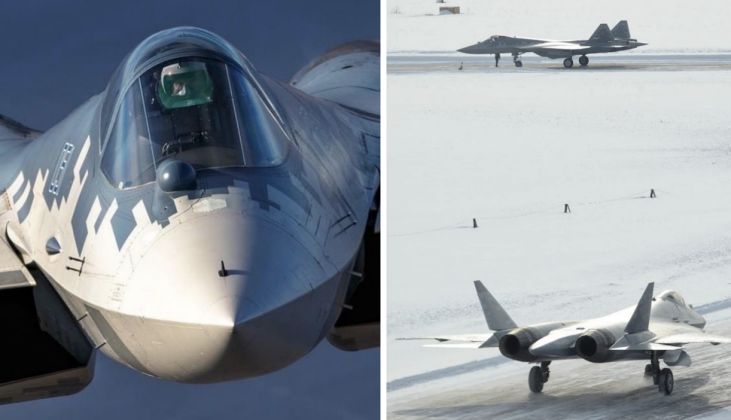
Su-57 Fighter and Su-57s From February 2026 Delivery Batch
Su-57 fifth generation fighters from the latest batch delivered to the Russian Aerospace Forces on February 9 have reportedly integrated a new passive sensor, the upgraded 101KS onboard optical-electronic self-defence system, which is heavily optimised for maximising situational awareness while maintaining the fighter’s stealth profile. The system uses a medium and long wave infrared sensor which can detect and track airborne targets by their heat signature, and is reportedly a significant improvement over the preceding passive sensor that had only optical, laser and ultraviolet channels. Chief executive of United Aircraft Corporation Vadim Badekha previously referred to the Su-57s at the time of delivery as having “undergone a major evolution,” singling out improvements to weapons capabilities, although not specifically mentioning improvements to sensor capabilities.
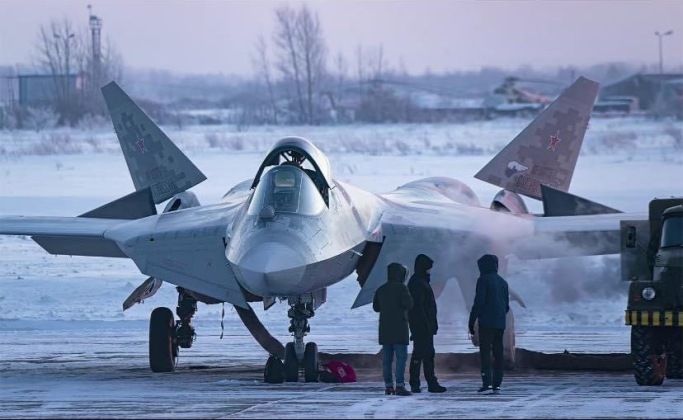
Updates to the Su-57 have also reportedly improved its ability to counter advanced air defence systems, with CEO of the state defence conglomerate Rostec, Sergey Chemezov, reporting that the aircraft "have become even more potent and dangerous" and can be used "against even the most advanced enemy air defence systems." Chemezov previously in November 2025 elaborated on plans to continue to modernise the Su-57, stressing that it “is still being refined," while “work is underway toward a comprehensive modernisation that will encompass its components, electronics, and weaponry.” He highlighted at the time that it had “effectively demonstrated its capabilities in new tactical roles and confirmed the robustness of its stealth features” during high intensity combat operations in the Ukrainian theatre.
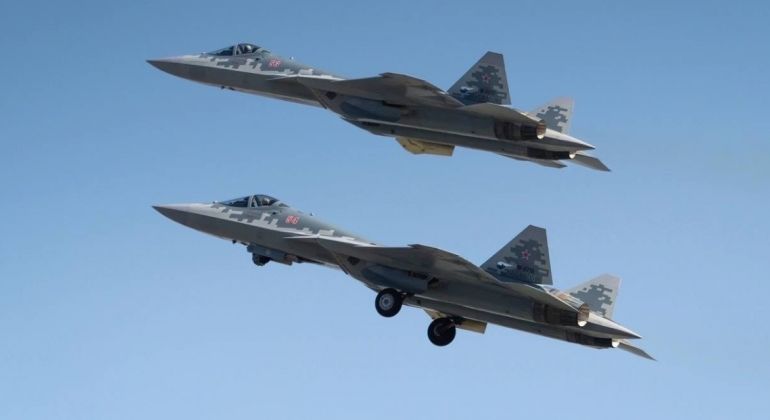
Although it remains uncertain how many of Su-57s have been delivered over the past year, Russian state media has referred to the latest delivery as “a large new batch.” With no prior deliveries reported for over six months, this may indicate that a backlog of fighters build up as aircraft intended for delivery were brought up to the latest standard before being delivered in a single large batch. In August 2025 Deputy Commander-in-Chief of the Russian Aerospace Forces Lieutenant General Alexander Maksimtsev confirmed that preparations were underway for the deliveries of Su-57 fifth generation fighters at an accelerated rate, following the opening of new facilities in August for their production, with this potentially already being reflected in the expanded sizes of new batches.
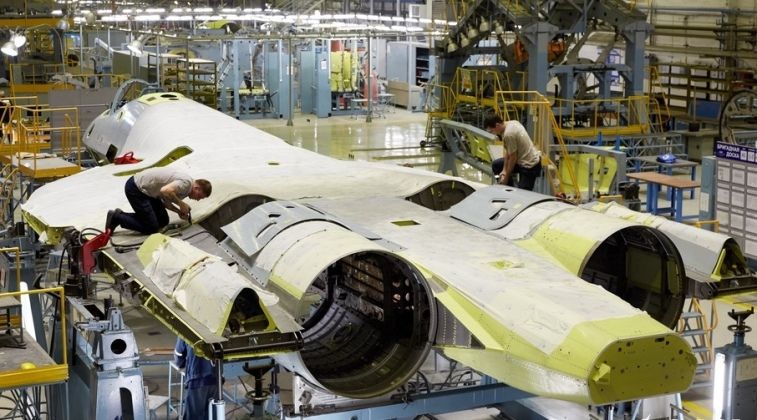
The Su-57 is currently one of just five fifth generation fighter types in service worldwide, alongside the Chinese J-20 and J-35, and the American F-22 and F-35. The F-22 has not been produced since 2011, and first flew in 1990, with growing obsolescence issues hindering its performance even compared to many newer fourth generation fighter types such as the F-15EX. The Su-57’s avionics are considered significantly more advanced than those of the F-22, but less so than those of the F-35 and modern Chinese fighters. The fighter’s range is over to double those of the F-22 and F-35, but shorter than the new J-20A, while the range of the J-35 is unknown. The Russian fighter’s manoeuvrability levels are significantly superior to those of any fighter type in the Western world, although potentially inferior to the new J-20A.
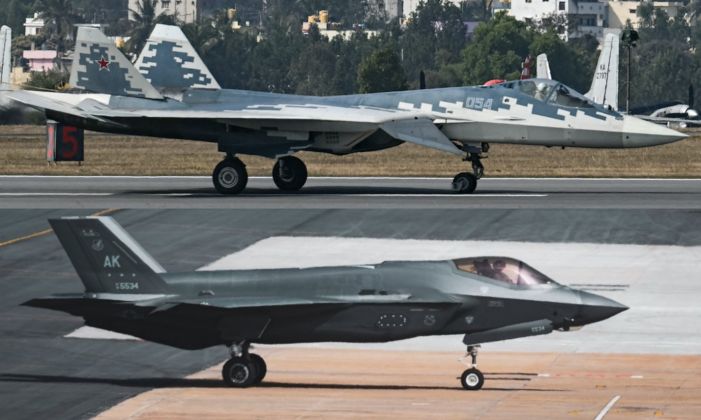
Although the Su-57 has been produced on a smaller scale, it has been combat tested much more intensively in high intensity scenarios than other fighter types of its generation. Combat operations in the Ukrainian theatre have included air defence suppression, air-to-air combat, and operations in heavily defended enemy airspace, as well as a range of precision strike missions. With the J-20 and F-22 not having been offered for export, while the J-35 only entered service in 2025, the Su-57 and the F-35 are the only fifth generation fighters to have been exported, with the first of the Russian fighters confirmed in November 2025 to have entered service in the Algerian Air Force. The Indian Defence Ministry is currently holding talks to procure in large numbers of the aircraft under a license production deal, which reportedly will include a minimum of 140 aircraft.
