
New Russian Production Facility Opened to Accommodate Faster Su-57 Deliveries: Rapid Fleet Expansion Expected
Military Watch Magazine Editorial Staff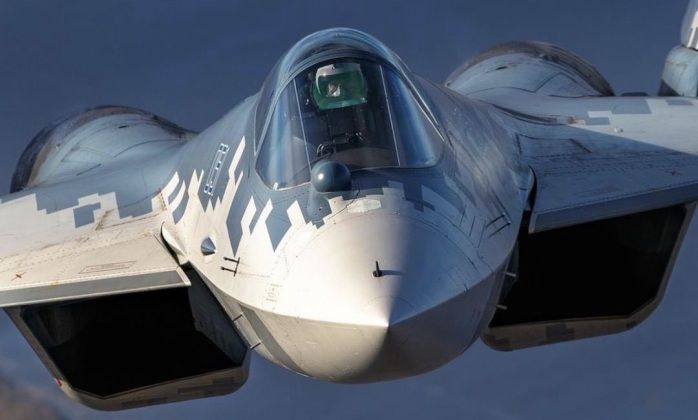
Su-57 Fifth Generation Fighter
The Komsomolsk-on-Amur Aviation Plant in the Russian Far East has seen new facilities opened specifically to facilitate expanded production of the Su-57 fifth generation fighter. With their inauguration coinciding with the 90th anniversary of the plant, the facilities were designed to also be able to conduct further testing of the fighter’s fuel system and onboard radio-electronic equipment. The Komsomolsk-on-Amur Aviation Plant currently produces both Su-35 and Su-57 fighters, with production of the latter having expanded significantly allowing 12 fighters to be delivered in 2023, up from just six the previous year. Output in 2024 is expected to increase to 20 Su-57 fighters, before further expanding in subsequent years to possibly eventually exceed 30 aircraft. The Su-57 fleet is expected to reach 76 fighters in 2027, up from just 22 fighters today, with a number of unconfirmed reports indicating that further aircraft may be intended to have been delivered for export by then - reportedly a contingent of 14 fighters to Algeria.
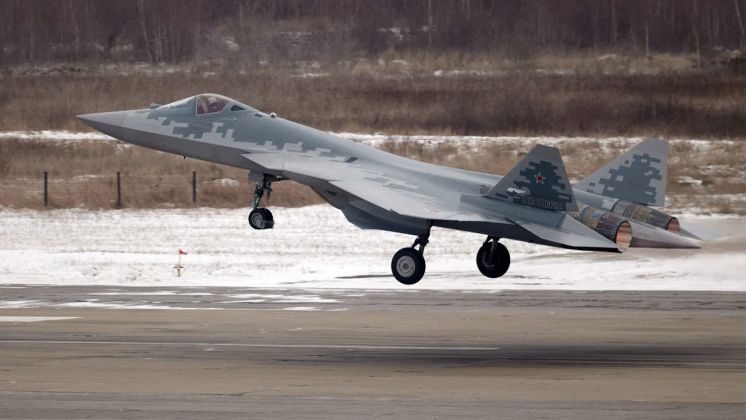
Commenting on the expansion of production facilities for the Su-57, head of the state run United Aircraft Corporation Yuri Slyusar observed: “Modernising and expanding the production capabilities of the Komsomolsk-on-Amur plant is part of a multi-year investment program involving significant state funding and the corporation’s own resources. This initiative has resulted in the creation of a cutting-edge, large-scale, high-tech production facility for the manufacture of the most advanced aviation systems.” Footage released in 2020 showed that production of the aircraft does make use of a range of advanced technologies, including augmented reality headsets allowing production workers to see computer generated perceptual information over their real vision to assist them in manufacturing. While much remains uncertain regarding the extent of the Su-57’s stealth capabilities, initial criticisms in the Western world were largely based on observations of the aircraft’s prototypes, and while less stealthy than the most recent Chinese and American fifth generation fighters, serial production aircraft have nevertheless shown a significant improvement in manufacturing quality and radar cross section reducing features.
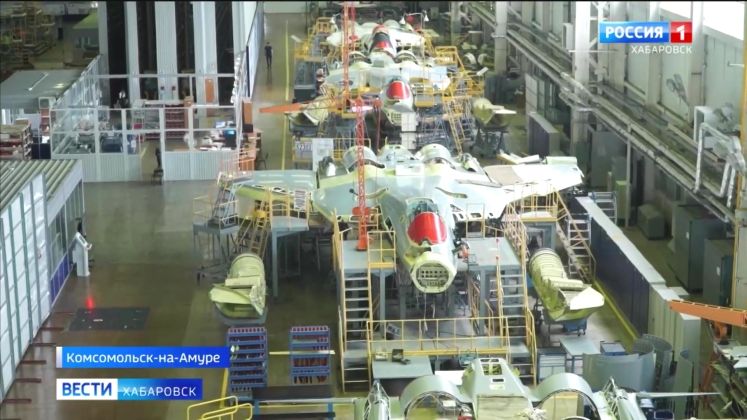
Regarding the future of the new facility for Su-57 production, director of the Komsomolsk-on-Amur Aviation Plant Alexander Pekarsh stated: “Our objective is to bring this facility online as quickly as possible. The expansion of the plant’s capacities will also include the construction of a third phase of galvanic production, supported by state investment, along with a major reconstruction of other facilities.” He added that the increase to the plant’s capabilities would allow for more efficient and sophisticated production of the Su-57. Expanded Su-57 production is expected to allow Russian industry to phase out production of the Su-30 or Su-35 fighters, and possibly both, as domestic orders are focused on the new fifth generation fighter and on the Su-34 strike fighter. The Su-57 program remains considerably behind schedule, and was initially intended to see 50 fighters operational by the end of 2020, and 200 in 2025, with service entry scheduled for 2015. The first full regiment of 24 fighters is instead only expected to be formed in 2024. Despite these shortcomings, the Su-57 remains by far the most throughly combat tested aircraft of its generation, and has been deployed for operations in the Ukrainian theatre from early 2022 including launching precision strikes, suppressing enemy air defences, and even engaging in air to air combat.
