
Russia’s Su-35 and Su-30 Could Soon Be Merged Into a Single Fighter Program: New ‘Super Flanker’ Expected After 2027
Military Watch Magazine Editorial Staff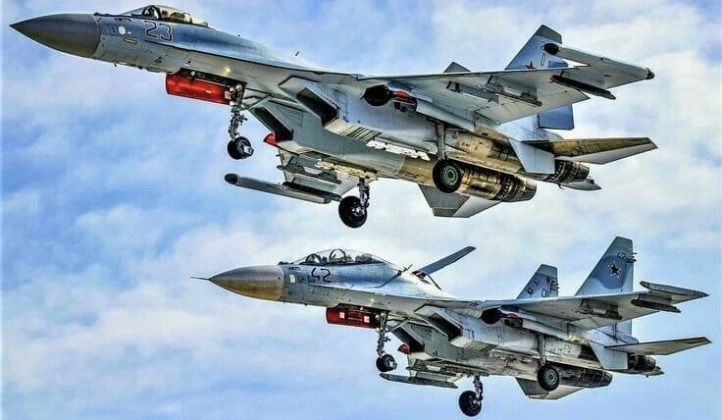
Su-35 and Su-30 Heavyweight Fighters
Russia's United Aircraft Corporation has five separate classes of fighter jet in serial production to meet the requirements of the country's current State Armaments Plan. These include three heavyweight fighters, the Su-57, Su-35 and Su-30SM, as well as the Su-34 dedicated strike fighter and the MiG-35 medium weight platform. These aircraft will all remain in mass production until the current state armaments concludes 2027, with around 80 of each aircraft on order with the exception of the more export-oriented MiG-35, which is being produced on a smaller scale, and the Su-30 which is being produced in larger numbers. Of all these aircraft, only the Su-57 is not directly derived from a Soviet era design - with the Su-30, 34 and 35 all derived from the Su-27 Flanker of the mid-1980s and the MiG-35 derived from the Flanker's lighter counterpart the MiG-29. After 2027, however, it is expected that Russia will invest more heavily in more advanced aircraft including the Su-57 fighter, which will integrate more advanced sixth generation technologies such as artificial intelligence and hypersonic weapons, and the MiG-41 interceptor which is being designed from the outset as a sixth generation platform. This being the case, questions have been raised regarding how Russia will manage its four other production lines for ‘4+ generation’ and ‘4++ generation’ designs.
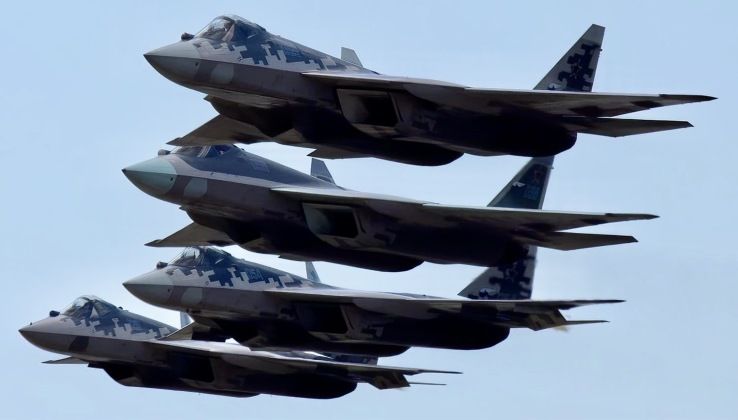
Although the Russian Air Force will likely acquire the Su-57 at a much faster rate under the next State Armaments Plan, it is expected that there will still be significant demand for enhanced fourth generation designs which are considerably less costly both to build and to operate and have potential to be upgraded with many of the same next generation technologies. It is also important to consider that Russia’s military aviation industry has been heavily export dependant since the collapse of the Soviet Union, and while Russia itself may reorient its purchases towards sixth generation aircraft the majority of its export orders will likely still be for advanced fourth generation designs such as the Su-30 or MiG-35 due to their lower costs. This being the case, there remains a very considerable possibility that Russia will seek to merge the production lines for its Su-30 and Su-35 fighters, its most similar fighter designs in production, with official sources having given multiple indications that this could well occur. Should this happen, not only will production be more efficient for both designs, but it will also allow the country’s defence sector to focus more on the Su-57 and MiG-41 programs without ending production of the Flankers entirely, and will also allow upgrades to the Su-30/35 design to be implemented more easily. 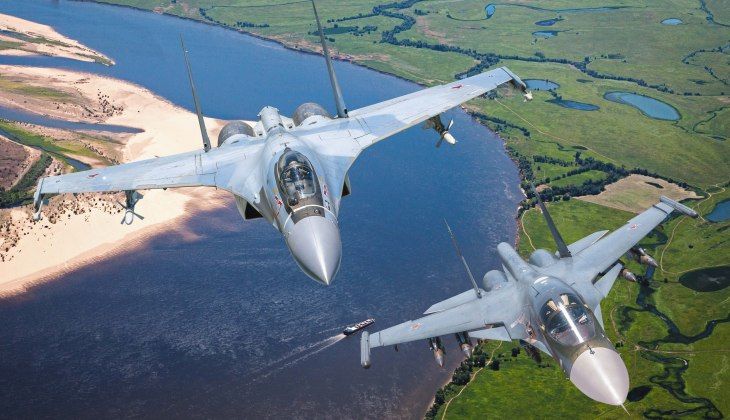
Although the dimensions of the Su-35 and Su-30 are fundamentally the same, the Su-35 is a more costly model which has more modern and powerful AL-41 engines, a much smaller radar cross section due to its newer airframe design, higher use of composite materials for greater durability and lightness and integration of a more powerful sensor suite. The Su-30SM is considerably cheaper, but comes in a standard twin seat configuration and is more well-rounded as a multirole aircraft which can carry out air to ground and anti-shipping missions - with the second seat accommodating a weapons systems officer for this purpose. There have been several signs that the two fighters could be merged into a single fighter class, which would have both single and twin seat variants and would see the Su-30’s replacement benefit from many of the same technologies as the Su-35 itself. Most notable are the Su-35’s Irbis-E radar and AL-41 engines, which are already being offered for export to Su-30 clients to upgrade their fighter to a similar standard to the Su-35. It is planned in future that all Su-30 fighters in the Russian Air Force, and most likely the older Su-27 fighters which are no longer in production, will also be fitted with the Su-35's AL-41 engine - allowing the Russian Air Force to operate all three fighter classes with a single more modern engine type. The design would also be better configured for air to ground and anti-shipping missions as the Su-30 currently is, and would gain access to new weapons systems such as the Kh-32 anti ship cruise missile which the Su-35 does not currently have access to.
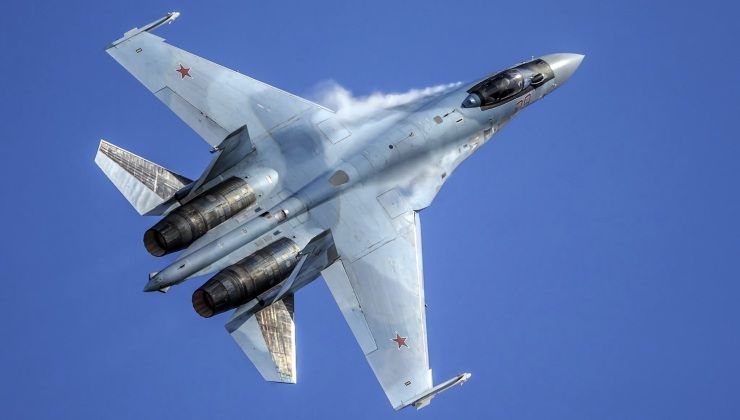
Regarding the growing similarities between the Su-30 and Su-35 as the former has been modernised, Russian Deputy Prime Minister Yuri Borisov previously stated: “After completing the work on the Su-30SM upgrade, changing the layout of the onboard radio-electronic equipment to make the Su-35 and the Su-30SM more standardised and thus cut the cost price and standardising the airborne weapon systems, this may breathe a new life into the plane.” Russian state media outlet TASS subsequently quoted the Western Military District’s press office stating the following: “The fighter regiment of the Western Military District will get a batch of Su-30SM fighters under the state defence procurement plan with an upgraded engine. The first batch is planned for delivery in 2021. The new fighters are set to be outfitted with the latest AL-41F-1S engines [from the Su-35].” According to TASS: “The upgrade will boost the fighter’s combat capabilities: it will increase the range of detecting and identifying air targets and furnish the plane with new precision weapons to hit air, ground and sea targets at a range of several hundred kilometres.” With the engine being the primary difference between the Su-35 and Su-30 today, the fact that Russia is set to shortly begin equipping the latter with the former’s engine is a strong indication that the two programs could indeed merge into one.
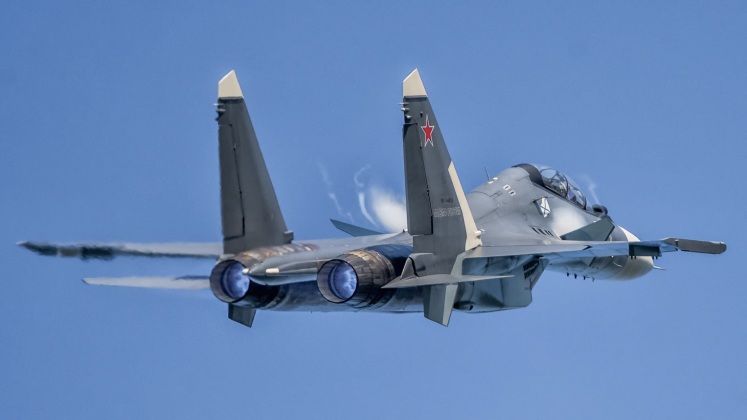
It is likely that should a Su-30/35 fighter be produced as a single platform, there will be a number of improvements to the design including integration of more modern variants of the AL-41 with lower maintenance requirements, addition of new electronic warfare systems, and very likely the integration of a new active electronically scanned array (AESA) radar based on that of the Su-57. It was previously proposed that the Su-35’s Irbis-E radar be replaced by a newer design which makes use of Su-57 technologies, and it is likely that should such an upgrade be implemented it will become standardised for production of new units after 2027 - with passively scanned radars likely to be considered obsolete after 2027. Other next generation technologies such as new composite materials, artificial intelligence and possibly even laser weapons could also be integrated onto the aircraft to bring them up to a closer technological level to the Su-57. Ultimately it is unlikely that Russia will continue two produce two separate ‘Flanker’ fighters with such similar designs for similar missions, particularly as the designs increasingly come to closely resemble one another. It is likely that the new enhanced aircraft, whether it is designated ’Su-40,’ ‘Su-35M,’ or something else entirely, will continue to be purchased by the Russian Air Force as a cheaper counterpart to the Su-57 as well as marketed for export.
