
Russia’s Su-30 Could Soon Become the World’s Top Ship Hunting Fighter With Deadly New Kh-32 Missile
Military Watch Magazine Editorial Staff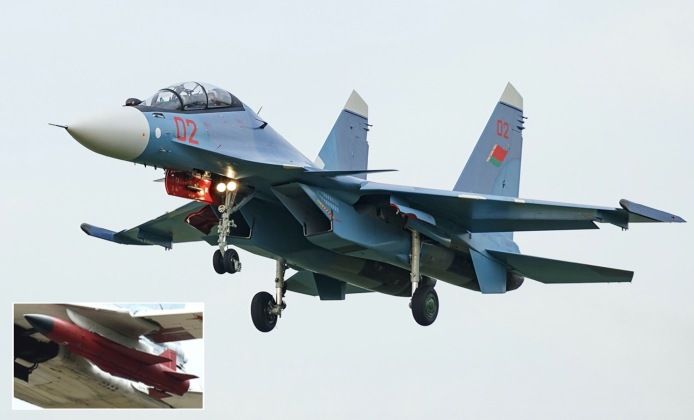
Su-30SM Fighter and Kh-32 Missile
Russia is reportedly planning to equip its Su-30 heavyweight fighter jets with the new Kh-32 long range anti ship cruise missile, which is expected to revolutionise the aircraft's capabilities and seriously expand the Air Force’s ability to counter enemy warships at extreme standoff ranges. The Su-30 is today being produced in greater numbers in Russia than any other class of fighter jet, and alongside the newer and more expensive Su-35 and Su-57, enhanced variants of the Su-30 are expected to form the backbone of the country’s fleet for years to come. The Su-30 is less specialised in an air to air role than the newer fighter classes, and its twin seat configuration allows it to accommodate a weapons systems officer to operate air to ground munitions. The latest Su-30 variant, the Su-30SM, is considered of of the world’s most capable heavyweight fighters and is set to incorporate a number of enhancements including new more powerful engines and an updated sensor suite. Although the fighter has already been widely exported, the massive new possibilities the Kh-32 will open up for the fighters could seriously increase its appeal on export markets particularly for countries with important maritime interests such as India, Vietnam and Indonesia.
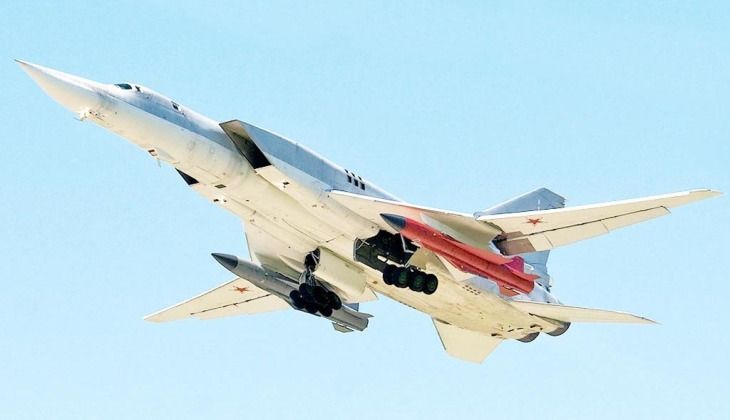
Entering service in 2016, the Kh-32 missile air launched cruise missile can approach hypersonic speeds and impact targets at Mach 4.6, with some reports indicating that it can exceed Mach 5 speeds. Its most notable traits however are its flight performance, manoeuvrability, and impressive 1000km range. The Kh-32 is designed specifically with overcoming American missile defences in mind, and can fly at 40km altitudes above the reach of American SM-2 surface to air missiles which protect the U.S. Navy’s carrier strike groups. The missile follows a trajectory which makes it particularly difficult two intercept, and in its final stage of attack it makes a steep dive, attacking its targets from directly above at extreme speeds which makes it very hard to detect for enemy radars. Commissioning of the Kh-32 comes as part of a wider trend towards investment in very advanced standoff anti ship weapons systems - other prominent examples including the Kh-47M2 hypersonic ballistic missile with a 2000km range deployed by Tu-22M bombers and MiG-31K Foxhound jets, and the Zircon Mach 9 cruise missile deployed by Russian submarines and surface warships.
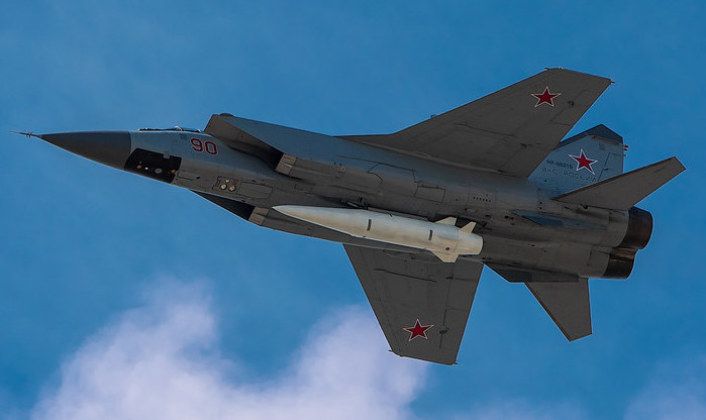
The Kh-32 was designed to be carried by Tu-22M3M tactical bombers, which are considerably larger and heavier than the Su-30, and the missile’s size means each fighter is likely to be restricted to carrying just one or two of them. The missile benefits from advanced electronic warfare countermeasures, and its integration onto the Su-30 will significantly increase the fighter's versatility. Russia already fields a fleet of around 70 Tu-22M bombers, with the number growing as aircraft in storage are refurbished and upgraded to the M3M standard, meaning the need to equip a large portion of its Su-30 fleet with the new missiles is questionable. It is possible that the integration is intended primarily to diversify the launch platforms for the missiles, and to provide an avenue for marketing the Kh-32 for export since no country other than Russia operates the Tu-22M bomber. Whatever the case, the impact of integration will be a revolutionising of the Su-30’s anti shipping capabilities with the Kh-32 having a far superior performance to any missile class currently deployed by fighter-sized aircraft not only in Russia, but worldwide.
