
Russian Air Force to Field New Tu-22M3M Strike Bombers with Lethal Long Range Ship Hunting and Strike Capabilities
Military Watch Magazine Editorial Staff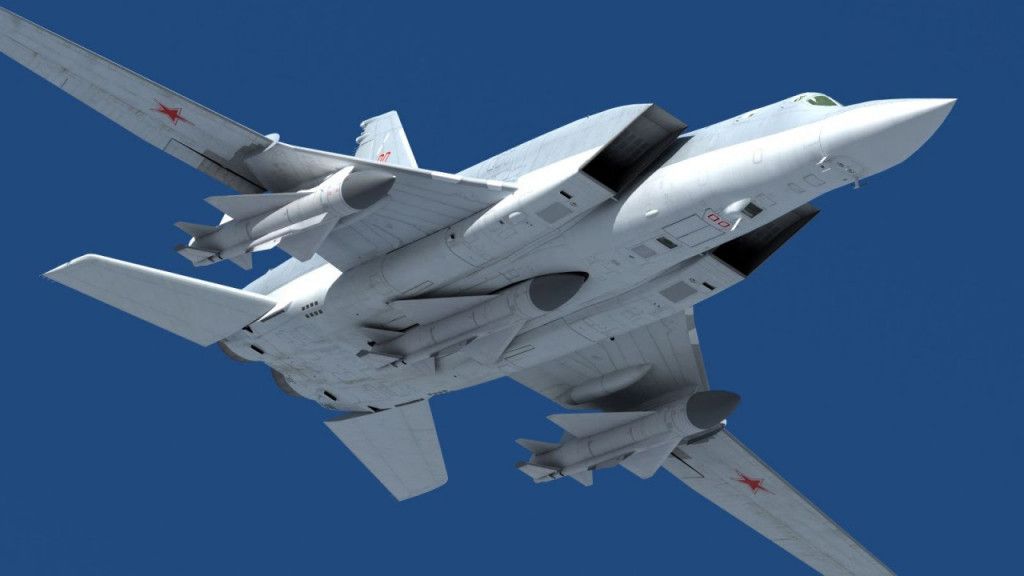
Russian Air Force Tu-22M Strategic Bomber
The lightest of three advanced heavy bomber variants in service in the Russian Air Force, the Tu-22M has been in service for over 45 years fulfilling both strategic bombing and anti shipping roles. With approximately 500 of the high successful combat platforms built, 69 remain in Russian service today making them the most numerous bombers fielded by the country’s armed forces. Capable of deploying a 24,000kg payload up to ten missiles each, including Kh-15 and Kh-32 platforms which both travel at speeds near Mach 5, the bombers are heavily armed for strike missions against enemy naval and ground target. A single Tu-22M can pose a major threat to an enemy naval strike group due to the quantity and sophistication of weapons deployed.
In line with the country’s extensive military modernisation program, under which Russia has sought to seriously enhance the capabilities of its Soviet era bombers to keep them viable against the growing capabilities of potential adversaries, a number of modifications to the Tu-22M airframe to reach the Tu-22M3M standard have been implemented. This mirrors the modernisation of the heavier Tu-160 swept wing bombers to the Tu-160M2 standard, with the elite platforms having been put back into production by the Russian armed forces while older variants receive extensive upgrades. While upgrading of the Tu-22M fleet has already begun, modifications to the entire fleet are expected to take up to the year 2020 to implement. The new bombers will be able to better deploy precision air to surface munitions and extended range weaponry, possibly including the Kh-55 long range cruise missile used by the Tu-160 which were formerly tested on the lighter bomber but never deployed. Should the aircraft be equipped with the Kh-55 it will gain an engagement range of up to 3000km, depending on the variant used. The new bomber’s SVP-24 all-weather special computing subsystem will allow for more precise guidance, while the GLONASS satellite navigation system will constantly compare the position of the plane and the target to better facilitate missile strikes at extreme ranges.
The Tu-22M3M will incorporate new hardware critical to deploying extended range munitions, and will reportedly be able to carry a larger payload of up to 12 Kh-15 missiles for strike and anti ship missions. The heavier and longer ranged Kh-32 cruise missile, with a 1000km strike range, was designed specifically to be operated by advanced variants of the Tu-22M. It remains one of the bomber’s most formidable assets and is key to its effective performance as a long range ship hunter. The Kh-32 was designed specifically to neutralise U.S. carrier strike groups far from Russian coasts, and follows a unique trajectory - climbing to altitudes of 40km after launch and then diving to approach at several times the speed of sound from extremely low altitudes, often as low as five meters above the water surface. Flying at low altitudes makes the Kh-32 effectively impossible to detect at distances of over 10 km, leaving hostile warships with a reaction window of just 10 seconds. This gives even the most capable air defence systems little chance to fend off missile attacks by the advanced Russian bombers. Striking with a 500kg payload at extreme speeds, the missiles will likely be able to tear even the largest warships in half with a single strike. The missiles benefit from the kinetic energy of the supersonic launch platforms, making the Tu-22M ideal. Each Tu-22M3M will be able to deploy up to three of the advanced Kh-32 missiles, and alongside the newer and more sophisticated Kh-47M2 Kinzhal hypersonic missile deployed by Russian MiG-31 twin engine interceptors it will pose a major threat to hostile surface warships even at great distances from Russian coasts. Development of such capabilities is key to dominating the pacific theatre in particular, where Russia’s relatively small surface fleet is compensated for by highly sophisticated anti ship munitions carried by its heavy combat aircraft.
