
New Batch of Su-57 Fifth Generation Fighters with Latest Enhancements Delivered to Russian Aerospace Forces
Military Watch Magazine Editorial Staff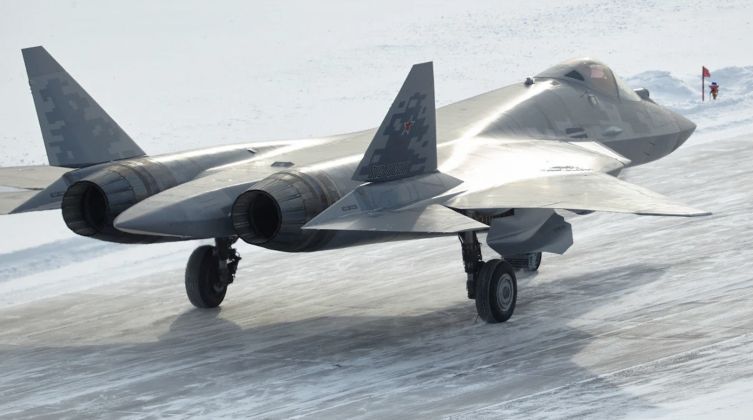
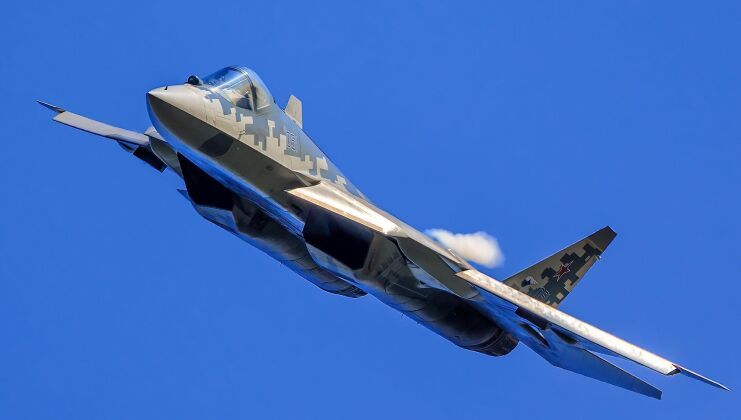
Newly Delivered Su-57 Fighter in the Russian Aerospace Forces
The Russian Aerospace Forces have received a new batch of Su-57 fighters, with the state run United Aircraft Corporation reporting that the aircraft have benefited from continued refinements to the design. The fifth generation fighters reportedly have reportedly integrated updated avionics systems that expand the range of missions they are capable of performing, with upgrades particularly emphasising improvements to weapons integration and operational flexibility. Commenting on these enhancements, chief executive of United Aircraft Corporation Vadim Badekha stated: “we are not stopping at what has been achieved. The fighter has undergone a major evolution and today continues to be improved — the capabilities of the aircraft’s weapons and systems are being expanded. This already allows the solution of the most important tasks, demonstrating efficiency and excellent manoeuvring and combat qualities.”
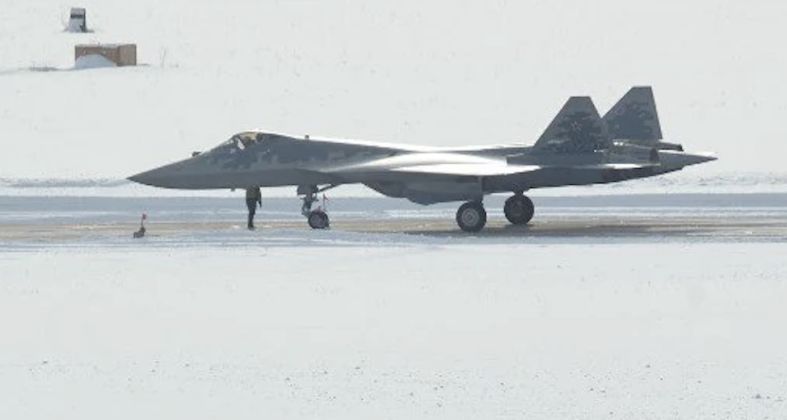
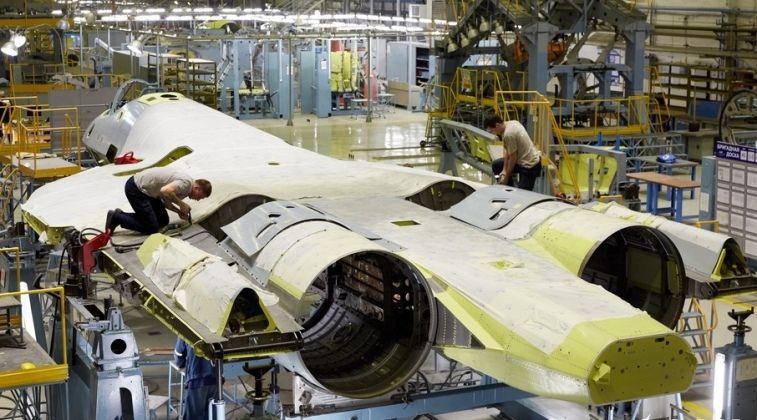
In August 2025 Deputy Commander-in-Chief of the Russian Aerospace Forces Lieutenant General Alexander Maksimtsev confirmed that preparations were underway for deliveries of Su-57 fighters at an accelerated rate. This followed the opening of new facilities in August for production of the aircraft, raising the possibility that increased production rates will allow current Defence Ministry orders for 76 fighters to be met by 2027, while also fulfilling outstanding export orders. Although no recent deliveries to the Russian Aerospace Forces have been confirmed for over six months, the Su-57 was confirmed in November 2025 to have been delivered to the Algerian Air Force, with orders from the country thought to have played an important role in financing continued expansion of production facilities. It remains possible that the latest batch of Su-57 fighters were delivered to a similar standard as those built for export to Algeria, and that these may be the first of what the manufacturer has described as a “new technical configuration.”
In November 2025 CEO of the state defence conglomerate Rostec, Sergey Chemezov, stated that work would continue to modernise the Su-57. “The aircraft is still being refined… work is underway toward a comprehensive modernisation that will encompass its components, electronics, and weaponry,” he observed. Head of the Sukhoi Design Bureau’s flight service Sergey Bogdan previously observed that extensive combat testing in the Ukrainain theatre had allowed the Su-57’s design to be further refined and updated. “Until the aircraft is decommissioned, it will continue to be refined. We incorporate all modifications and innovations before they are introduced into production,” he stated regarding future modernisation plans. Combat operations in the Ukrainian theatre have included air defence suppression, air-to-air combat, and operations in heavily defended enemy airspace, as well as a range of precision strike missions, placing the Su-57 in a league of its own among fighters of its generation in the degree of combat testing it has been put through.
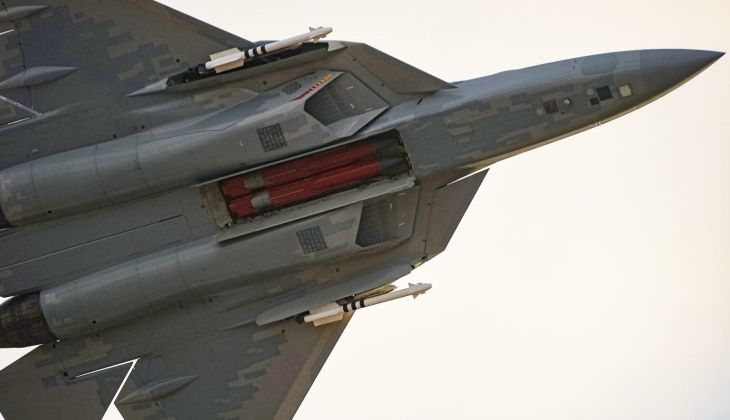
Commenting on the latest delivery, a Su-57 pilot from the Russian Aerospace Forces observed: “For the implementation of target tasks set by the Ministry of Defence of the Russian Federation for the supply of especially in-demand samples of weapons and military equipment to the troops, the crews of the Aerospace Forces completed the acceptance of Su-57 aircraft in a new technical configuration. I thank the representatives of the plant and all employees of the United Aircraft Corporation of Rostec who took part in the creation, assembly, and preparation of aviation equipment for their professionalism.” “The aircraft has already shown itself well during the special military operation [Russian-Ukrainian War]. The new technical configuration will contribute to expanding the range of tasks for which this type of aircraft is used. The prospective capabilities incorporated in the aviation weapons complex make it possible to employ new types of aviation weapons,” he added.
Continued efforts to both enhance the Su-57, and to expand production, have gained newfound importance due to both the rapid rise in tensions between Russia and NATO members, and due to the ongoing talks with India regarding a license production deal, which were confirmed in late January to have reached advanced stages. The Indian Air Force procured the preceding Su-30 fighter in considerably greater numbers than the Russian Aerospace Forces, and is considered likely to procure the Su-57 in comparable numbers, with a license production deal expected to initially include 140 aircraft. Russia’s ability to produce the fighters quickly remains critical to allowing the program to gain Indian orders, as well as orders from other potential clients. In May Russian sources reported that the Komsomolsk-on-Amur Aviation Plant was preparing to transition from production of the baseline Su-57 fighter, to the new Su-57M1 variant, with ongoing improvements to the design expected to pave the way to the service entry of this deeply enhanced platform.
