
Germany Invited to British-Japanese Stealth Fighter Program: Rival Pan-European Effort Continues to Fall Short
Military Watch Magazine Editorial Staff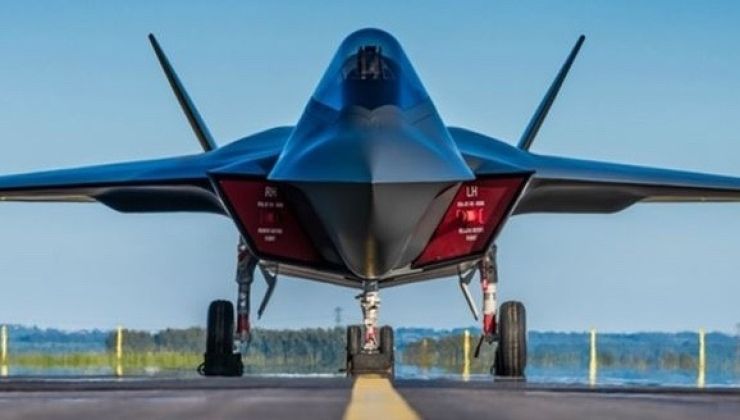
Tempest Future Combat Air System Fighter Artwork
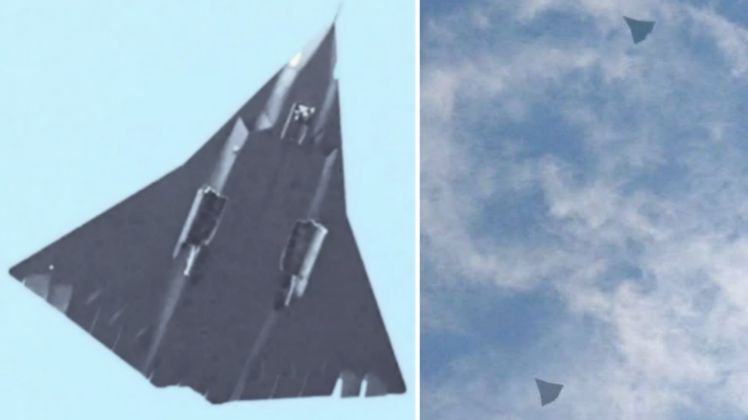
The United Kingdom Ministry of Defence has offered Germany with possible entry into the the Global Combat Air Programme (GCAP) next generation fighter program, amid growing speculation that the country could leave the rival pan-European Future Combat Air System which it is currently a partner in alongside France and Spain. Defence Minister Luke Pollard on December 18 responded to questions regarding whether discussions had taken regarding Germany potentially joining the program, following reports that the Future Combat Air System program faced a serious risk of collapse, observing that partners, observing: “As partners we have maintained that we remain open to other partners joining… The UK and our GCAP partners, Italy and Japan, are focused on delivering this vital military capability at pace.”
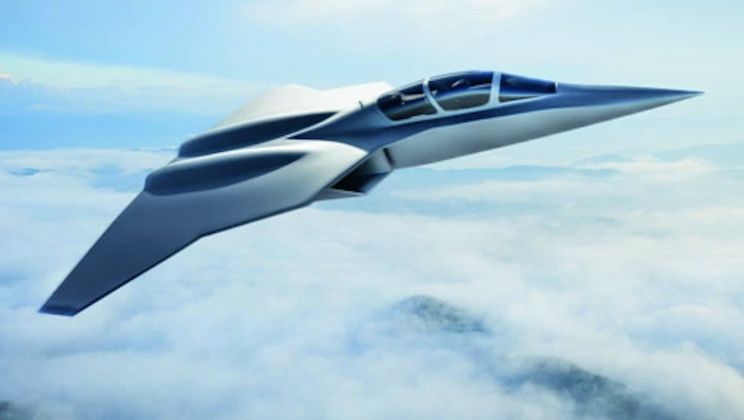
The Future Combat Air System has faced growing difficulties, with reports in September indicating that officials at the German Defence Ministry were considering options to leave the program entirely. The program is not expected to produce a fighter for over two decades, with Dassault CEO Eric Trappier having observed regarding as early as 2021 that “[The target of] 2040 is already missed, because we already stall, and the discussions of the next phase will surely also be long... so we rather aim for the 2050s.” China, by contrast, is expected to bring its first sixth generation fighters into service in the early 2030s, closely followed by the United States with the F-47 fighter near the middle of the decade. China and the United States have increasingly competed in a league of their own in fighter aviation, with European states by the end of the Cold War having long since ceased to be peer competitors to the United States and Soviet Union, with the decline in the standing of the Russian fighter industry after 1992 has ensured that Chinese and American industries have no other peer competitors.
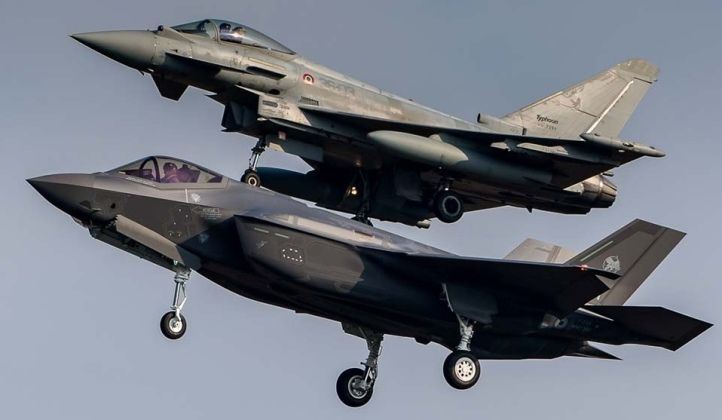
The United Kingdom and Germany were previously the leading partners in developing the Eurofighter ‘4+ generation’ fighter program, leaving France to develop its rival Rafale fighter separately. Significant shortcomings with the Eurofighter, however, made it far from successful on global export markets. France’s more effective marketing of its Rafale, and its integration of significantly more advanced radars, at least until the early 2020s, meanwhile provided it with a distinct advantage. The Eurofighter and Rafale programs nevertheless both remained relatively lightweight fourth generation fighters in an era dominated both by much more competitive ‘4+ generation’ heavyweights, such as the F-15SG/SA/QA and Su-30MKI, and from the mid-2010s by the fifth generation F-35. The fighters consistently lost tenders against all these aircraft, from the Su-30 in Algeria and Kazakhstan, to the F-15 in South Korea and Singapore, and the F-35 across Europe and far beyond. European aircraft have also very frequently ranked behind the American F-18E/F medium weight fighter in tenders, often by a considerable margin as seen in Finland.
The limited standings of European fighter aviation industries, and of the broader tech sectors and industrial bases of the continent, have raised serious questions regarding European states’ ability to develop a competitive stealth fighter under either GCAP or the Future Air Combat System program. While both have been touted as sixth generation fighter programs, these limitations mean that even if successfully entering service and production, they are likely to be far from capable of achieving reaching this standard in the same sense that rival Chinese and American programs will, and will most likely only produce ‘5+ generation’ aircraft with significantly poorer avionics, weaponry, and stealth capabilities. Significant involvement from the United States in providing technology transfers may be the only means to avoid this, although the damage this could do to the competitiveness of both the F-47 and of planned ‘5+ generation’ variants of the F-35 makes this unlikely. There remains a very significant possibility that future European fighters, should any materialise, will continue to remain far less capable than the heavily enhanced F-35 variants currently being planned.
