
Russia Threatens Attacks on European Drone Factories as Intensified UAV Strikes From Ukraine Cause Devastation
Military Watch Magazine Editorial Staff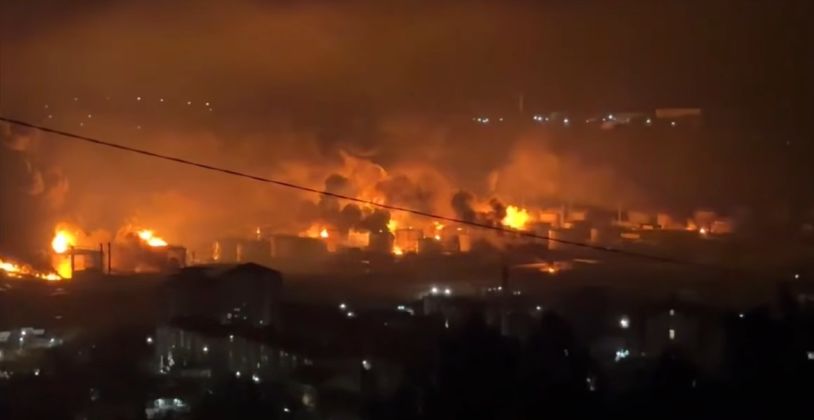
Fires Following Ukrainian Drone Strikes on Tuapse
Multiple Russian government sources have issued explicit warnings regarding European production and supplies of unmanned attack aircraft to Ukraine, in several cases indicating that the facilities involved could become targets. Former president Dmitry Medvedev recently stated that facilities linked to drone production could be viewed as “potential targets” for the Russian Armed Forces, while the Russian Defence Ministry has published a list of firms and facilities across Europe involved in drone manufacturing or components, and warned that drone supplies to Ukraine were “dragging Europe deeper into the war.” These warnings have been issued as drone strikes launched from Ukrainian territory have continued to rapidly expand in scale and reach, with the vast numbers of unmanned aircraft being launched against high value targets posing immense challenges for Russian defences.
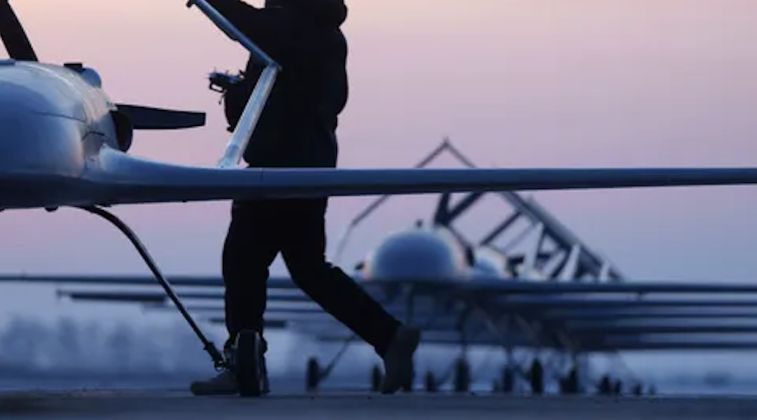
Russian analysts have increasingly highlighted the Armed Forces’ inability to provide a viable defence against the increasingly frequent launches of large scale Ukrainian drone attacks, publishing images showing large urban blocks in flames across multiple population centres in the country. A repeated strike on the refinery in Tuapse, carried out by Ukrainian forces, for example, was launched immediately after reports of the completion of fire extinguishing from the previous drone attack, with such attacks posing a critical threat to the Russian economy and to the civilian population. In late March Secretary of the Russian Security Council Secretary Sergei Shoigu confirmed that Ukrainian long-range drones had begun to pose a direct threat to regions deep inside Russia, including the strategically critical Ural industrial area, raising the possibility that the air campaign will significantly further expand in scope. The pace of development and use of Ukrainian unmanned systems had changed the security environment, he observed, warning: “Thus, until recently, the Urals were out of reach for strikes from Ukrainian territory, and today they are already in the zone of immediate threat.”
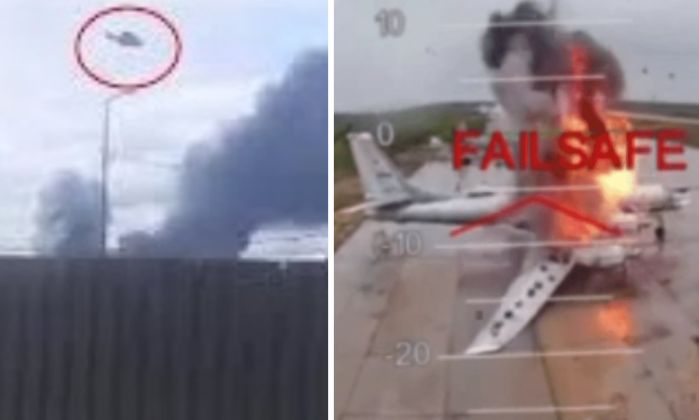
Ukrainian attacks on key strategic targets in Russia have received tremendous support from across the Western world, particularly within Europe. In July 2025, for example, German Army Major General Christian Freuding advocated for further Ukrainian attacks targeting Russian airfields and defence related production facilities. “Use long-range air warfare assets to strike aircraft and airfields before they are used. Also, target weapons production facilities,” he stated at the time. The Ukrainian Armed Forces achieved their most significant success in targeting Russian airfields on June 1, when a large scale drone attack was launched under Operation Spider’s Web, destroying multiple Tu-95MS and Tu-22M3 strategic bombers at airbases across the country. The strikes caused losses from which the Russian strategic aviation fleet is expected to take years to recover. There remains a significant possibility that the continued escalation of attacks from Ukrainian territory on Russian civilian, military, and strategic targets will lead Moscow to respond by expanding the scope of its retaliatory strikes into Europe, particularly if the sole alternative is to suffer a rapid increase in casualties and a potential economic crisis.
