
Ukrainian Drone Operations Expanding Reach Into Russia’s Vital Asian Industrial Heartlands
Military Watch Magazine Editorial Staff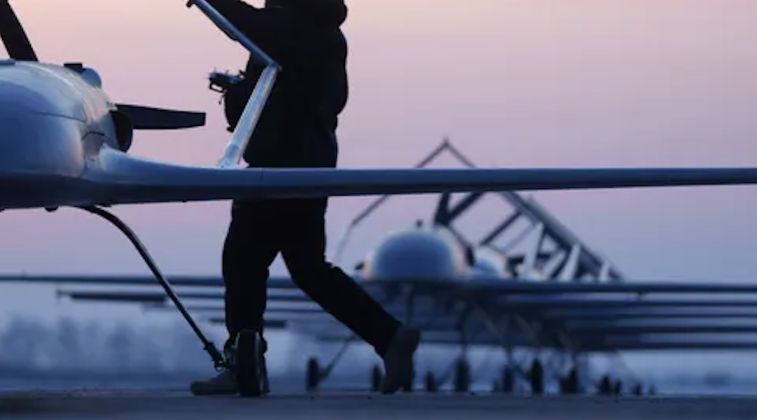
Ukrainian AN-196 Attack Drones
Secretary of the Russian Security Council Secretary Sergei Shoigu has confirmed that Ukrainian long-range drones now pose a direct threat to regions deep inside Russia, including the strategically critical Ural industrial area. The pace of development and use of Ukrainian unmanned systems has changed the security environment, he observed, warning: “Thus, until recently, the Urals were out of reach for strikes from Ukrainian territory, and today they are already in the zone of immediate threat.” The Soviet Union concentrated industries in the Ural region for strategic reasons, with their central location allowing supplies and supply chain inputs to be distributed and drawn from across the country. Distances from the western and eastern borders provided security against invasions from Europe, or attacks from Japanese and later U.S. forces in East Asia.
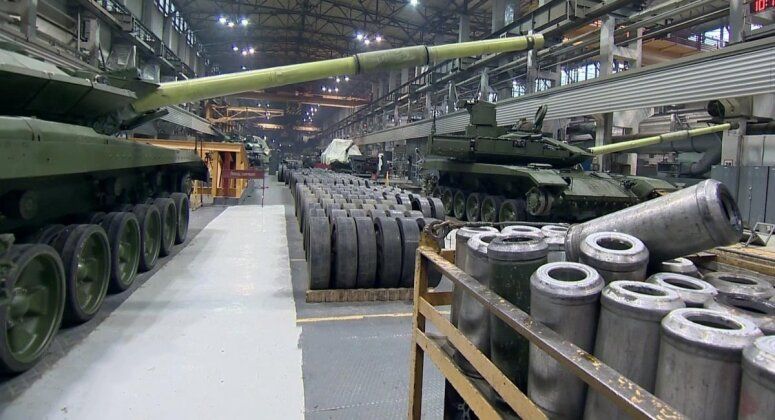
The Ural region hosts key defence production, energy facilities, and chemical industry, facilities, as well as major oil and gas fields that are vital to Russian security interests. Its extensive transport infrastructure, including key railway corridors, major road networks, and logistics hubs are also of vital strategic importance. With countries across NATO, and in particular the United Kingdom, Germany, and Poland, having invested heavily in bolstering Ukraine’s ability to destroy targets deep inside Russia, it is likely that the causing of severe setbacks to Russia’s industrial capacity by striking the Ural region is a medium term goal to advance broader Western Bloc objectives. Ukraine’s drone strike capabilities are heavily reliant on components, technologies, targeting data, intelligence, and industrial and operational advisors from multiple NATO member states.

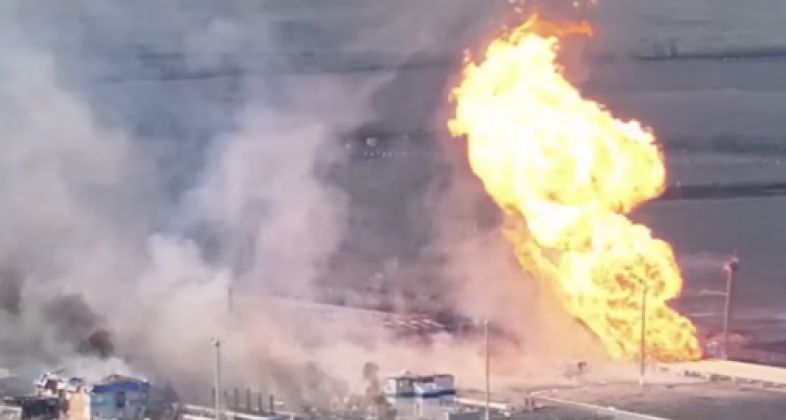
Ukrainian attacks on key strategic targets in Russia have been openly supported by military and political leaders across the Western world. In July 2025, for example, German Army Major General Christian Freuding advocated for further Ukrainian attacks targeting Russian airfields and defence related production facilities. “Use long-range air warfare assets to strike aircraft and airfields before they are used. Also, target weapons production facilities,” he stated at the time. Russian sources have accused multiple NATO member states of playing a central role in Ukraine’s attacks on key strategic targets. An example was Foreign Ministry spokeswoman Maria Zakharova’s assertion in March 2205 that British personnel’s involvement in rocket artillery attacks on the Sudzha pipeline infrastructure in Russia’s Kursk Region had extended to inputting target coordinates, while both the UK and France provided satellite targeting support.
Supporting the expansion of Ukrainian attacks on Russia represents part of a broader campaign by countries across NATO to maximise pressure on the country, with Western Bloc states having more recently begun to deploy forces to board and forcefully take over civilian cargo ships trading Russian goods in international waters. These boarding operations have been widely criticised as illegal, and lack justification in international law, but have the potential to be highly effective and to complement the effects of Western economic sanctions. Following the major rise in oil prices as a result of the U.S.-led military assault on Iran from February 28, it is also highly possible that Ukraine and its partners in the Western world will seek to target infrastructure related to Russian energy exports to clients in East and South Asia, most notably China and India, to deny Moscow a major increase in revenues from these exports.
