
Sweden Deploys Gripen Fighter to Intercept Russian Kilo Class Attack Submarine
Military Watch Magazine Editorial Staff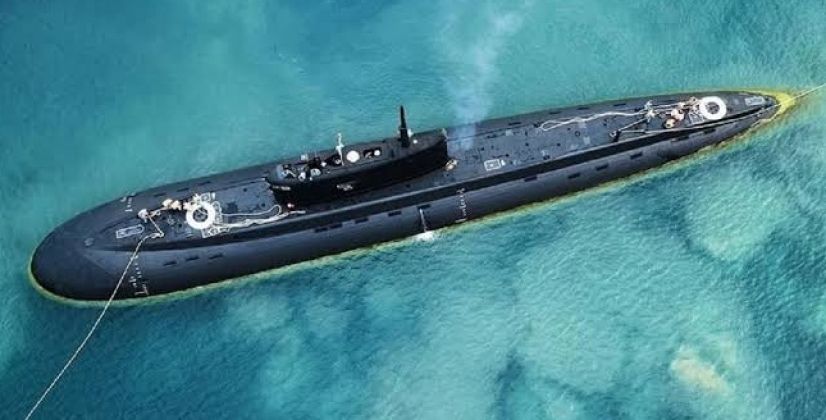
Russian Navy Kilo Class Attack Submarine
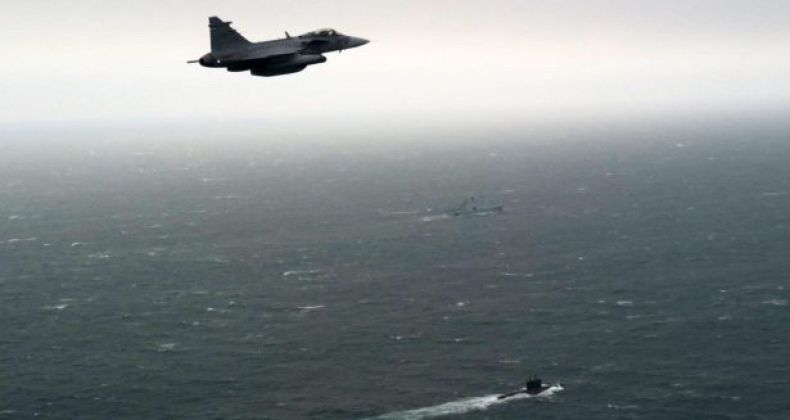
On April 10 a Swedish Air Force Gripen fighter intercepted a Russian Navy Kilo class attack submarine, with the aircraft tracking the ship’s movements into the Baltic Sea in coordination with allied countries. The Swedish Armed Forces described the operation as part of regular activities aimed at maintaining situational awareness in the country’s surrounding waters and ensuring the territorial integrity of Sweden and its allies. The intercept occurred in the Kattegat, the body of water between Sweden’s west coast and Denmark’s Jutland peninsula, which connects the North Sea to the Baltic Sea. This choke point constrains travel between the Baltic and both the North Atlantic and North Sea.
Although the Russian Baltic Fleet deploys no nuclear powered submarines, smaller Kilo class diesel electric submarines serve as its workhorses and are highly operationally active. Alongside their advanced cruise missile strike capabilities, the ships are capable of intelligence gathering and mine warfare. The Kilo Class serves as a lighter and shorter ranged counterpart to Russia’s nuclear powered attack submarines, and has a hull shaped like a drop of water and a propulsion plant isolated on a rubber base so it does not touch the hull, to prevent vibrations from turning into noise. The class’ air regeneration system can supply the crew with oxygen for up to 260 hours, giving the ship an underwater endurance of almost two weeks.
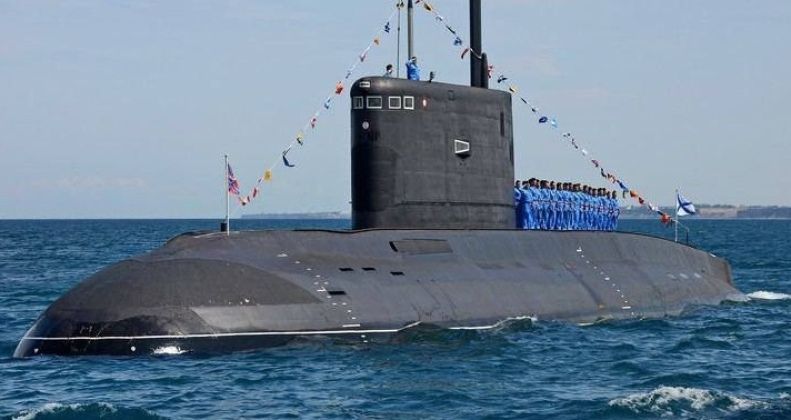
Although cutting edge for its time, the Kilo Class’ capabilities are today considered far from outstanding, particularly when compared to the advanced Japanese and South Korean vessels using lithium-ion batteries. Although the Soviet Union consistently led the world in submarine technologies, a much slowed rate of advances in post-Soviet Russia has meant that the standing of the Kilo class has diminished considerably, with the lack of an air independent propulsion system being a leading example. The recent service entry of the Zircon hypersonic cruise missile, however, has very considerably improved their offensive capabilities particularly against enemy warships.
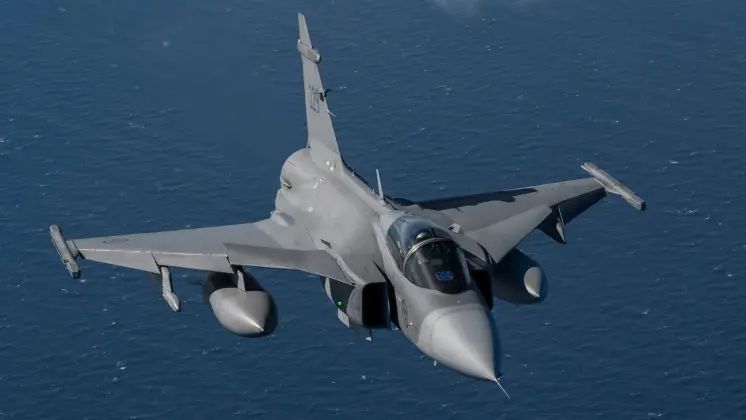
The Gripen C/D fighters currently relied on by the Swedish Air Force have long faced significantly obsolescence issues, with the aircraft using mechanically scanned array radars that are among the weakest of any fighters built in the post-Cold War era, while being highly susceptible to jamming. The Gripen E/F addresses some of the older variant’s leading shortcomings, although the Air Force received its first of the aircraft only on October 20, 2025, with planned production numbers remaining limited. Serious questions regarding the sufficiency of even the newer variant’s combat capabilities, with its radar being significantly less advanced that cutting edge new radars such as the F-35’s new AN/APG-85, while also being among the smallest carried by any fighter in the world, with heavier fighters such as the Russian Su-30SM2 carry radars over four times as large. The limited power of the radar not only creates electronic warfare vulnerabilities, but also limits situational awareness, forcing the Gripens to rely on supporting aircraft such as F-35s or E-7 AEW&Cs to be able to engage targets at longer ranges.
