
Russia Deploys Su-57 Stealth Fighters For High-Tempo Operations Across the Ukrainian Frontlines: Growing Fleet Increases Availability
Military Watch Magazine Editorial Staff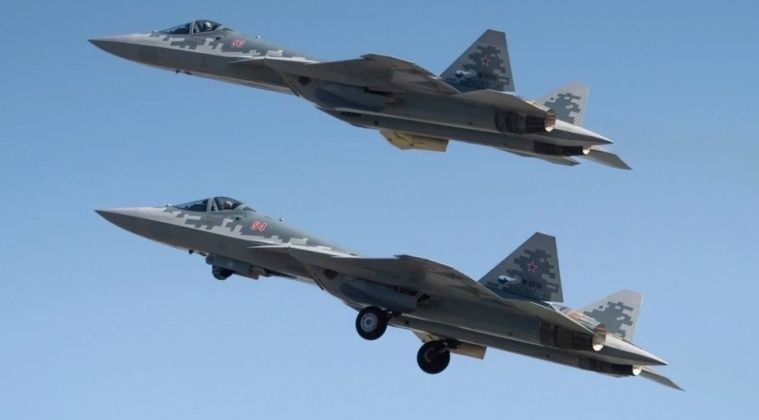
Su-57 Fifth Generation Fighters From Early Production Batches in Russian Aerospace Forces Service
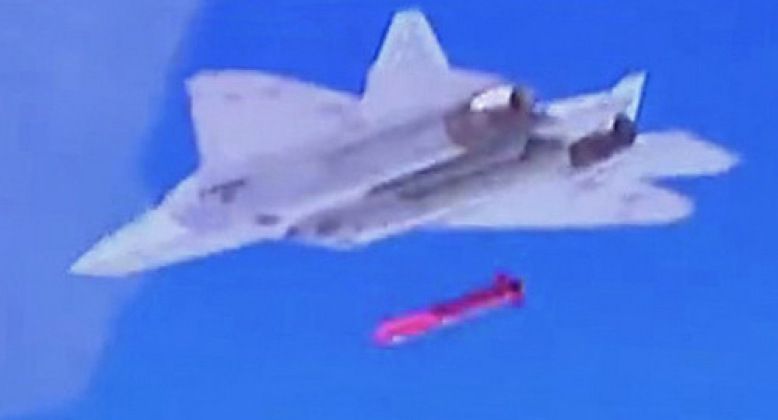
The Russian Aerospace Forces were reported on March 29 by multiple Western and Ukrainain sources to have deployed Su-57 fifth generation fighter aircraft for high-tempo operations along nearly the entire length of the Ukrainian front. Alerts, documented across multiple Ukrainian air raid warning channels show a consistent operational pattern of the advanced stealth aircraft operating in the Russian Kursk region to the north, over the Azov Sea near Mariupol, and over the disputed Crimean Peninsula to the south, launching Kh-59 and Kh-69 cruise missile attacks. Ukrainian sources indicate that the fighters operated deep inside Russian-controlled airspace, launching missiles from 200-400 kilometres behind the frontlines.
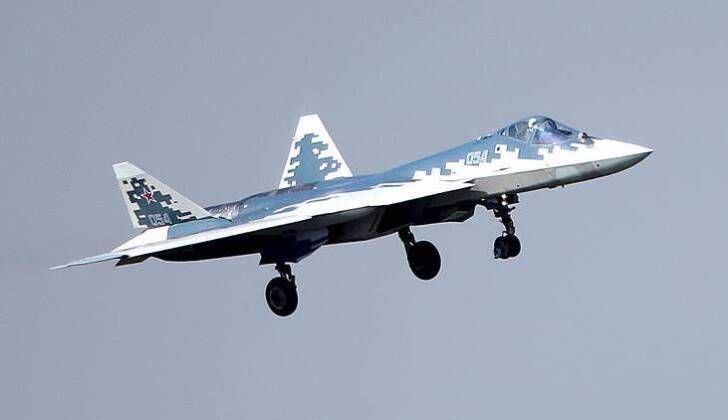
The Su-57 is the only fifth generation fighter type in service in Russia, and while the Aerospace Forces fielded an estimated four fighters when high intensity Russian-Ukrainian hostilities began in February 2022, the fleet has been expanded to a current size estimated at close to 50 aircraft as a result of the expansion of production rates. The fighter’s high survivability has allowed them to operate in Ukrainain-controlled airspace, with the aircraft confirmed in mid-2024 to have operated on penetration missions to shoot down a malfunctioning S-70 Okhotnik unmanned stealth aircraft to prevent it from falling into Western hands. The S-70 was operating near Konstantynivka in the disputed Donetsk region, around 15 kilometres behind Ukrainian lines, which was some of the best defended Ukrainian-held airspace in the theatre. The Su-57’s ability to operate in the area to achieve a visual range kill using an R-74 short range air-to-air missile indicated an advanced radar evading stealth capability. Nevertheless, even highly survivable fighters face much greater risks on such missions, making it preferable to give hostile air defences a wide berth.
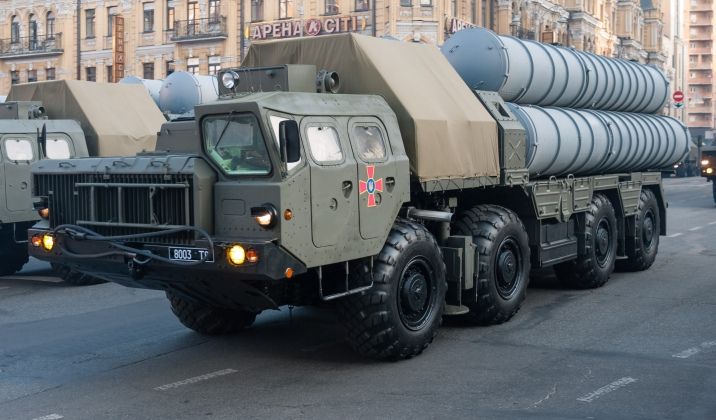
CEO of Russia’s state-run corporation Rostec Sergey Chemezov in late December 2025 revealed that Su-57s demonstrated their ability to evade detection by multiple kinds of radar systems, as well as electronic attacks, when deployed for operations in the Ukrainian theatre. “At least our military is satisfied. The aircraft evades all kinds of obstacles very well, I mean radars and electronic warfare systems,” he stated. Ukraine’s ground-based air defence network is widely considered the most formidable in Europe, with the sole exception of that of Belarus, largely due to both the Soviet Union, and most recently multiple NATO members, heavily concentrating much of their most advanced air defence equipment in the country. The network includes multiple variants of the Soviet S-300, American MIM-104 Patriot systems, and very long ranged S-200D systems, complemented by medium range Soviet BuK-M1 and S-125 and U.S. MIM-23 systems, and short range anti-aircraft guns as well as very large quantities of man-portable Soviet and Western short range missile systems.
Su-57 combat operations in the Ukrainian theatre have included air defence suppression, air-to-air combat, and a wide range of precision strike missions. The fighter’s avionics, high composite stealth airframe, and weaponry, are markedly superior to those of other Russian fighter types, which has made its service entry in large numbers a significant threat to Western Bloc and Ukrainian interests. The fighter program has nevertheless suffered from considerable delays, with service entry initially having been scheduled for the mid-2010s, while a fleet of 200 aircraft was projected to be fielded by 2025. NATO members collectively field over 1,200 fifth generation fighters, and China by some estimated close to 500, which has dwarfed the Russian fleet of around 50 fighters.
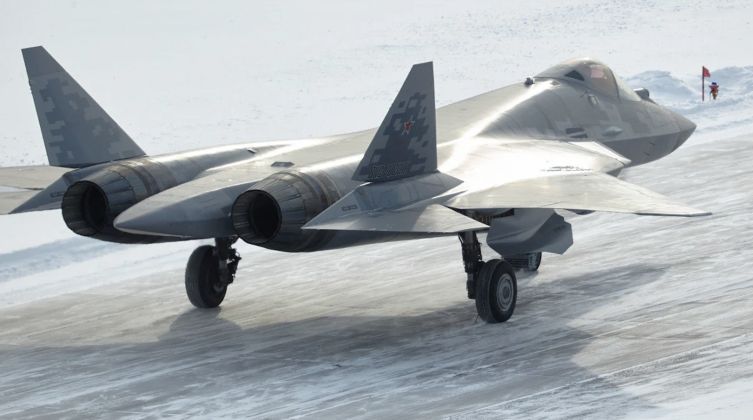
Significant investment both in expanding the Su-57’s scale of production, and in significantly enhancing the design, including with the development of the Su-57M1 and Su-57D variants, nevertheless have the potential to very significantly raise the standing of the Russian fighter fleet. In August 2025 Deputy Commander-in-Chief of the Russian Aerospace Forces Lieutenant General Alexander Maksimtsev confirmed that preparations were underway for deliveries of Su-57 fighters at an accelerated rate, following the opening of new production facilities in August. The latest batch of the fighters delivered in February 2026 are reported to have benefitted from a wide range of avionics upgrades. Head of the Sukhoi Design Bureau’s flight service Sergey Bogdan previously observed that extensive combat testing in the Ukrainian theatre, which far exceeds the combat testing which any other fifth generation fighter type has been put through, had allowed the Su-57’s design to be further refined and updated.
