
Russian Stealth Fighter Test Pilot Reveals New Twin Seat Su-57 Jet’s Future Role
Military Watch Magazine Editorial Staff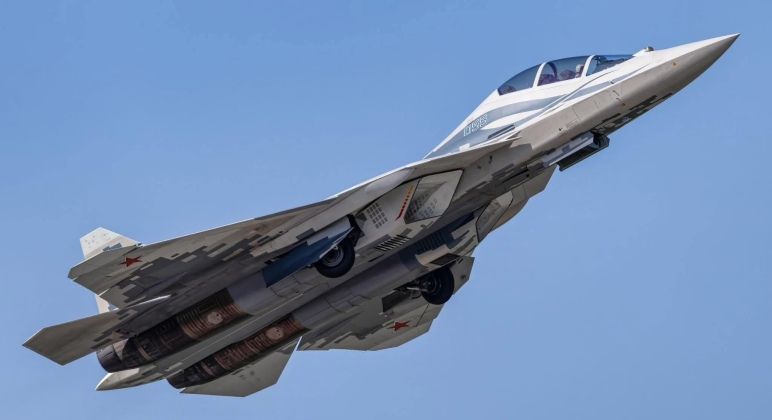
Su-57D Twin Seat Fifth Generation Fighter Variant
Following the maiden flight of Russia’s first twin seat fifth generation fighter, the Su-57D, Chief Test Pilot of the Sukhoi Design Bureau which developed the aircraft, Sergey Bogdan, has provided new details on the aircraft’s likely future roles. The aircraft made its first flight on May 19, a day after its unveiling, and is the first fifth generation fighter with a twin seat configuration to enter flight testing outside China. Bogodan observed that the aircraft could be used to accommodate a commanding officer near the frontlines, serving as an in-air command post for directing combat operations. “Regarding the role of the second pilot for the Su-57D, I am convinced that in certain combat formations, especially during a major operation, it is essential to have a leader in the group who can make decisions directly in the air,” he stated.
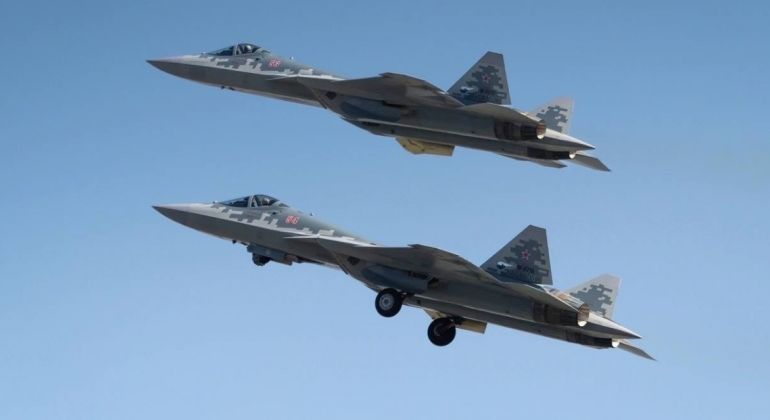
Bogdan elaborated that having an experienced commander in the crew would allow for more effective operations if there was interference with communications, facilitating a more rapid response to conditions in the surrounding environment. "It’s one thing to command from the ground, when people may be thousands of kilometres away. In such a case, radio interference can occur, requiring switching between communication channels. But if a unit is flying and there’s a pilot with extensive experience among the pilots, they can perform certain functions and assist the pilot in the front cockpit, while also making decisions based on the situation they see," he observed. Bogdan has served as Sukhoi’s chief test pilot since the year 2000, and before piloting the Su-57D on its first flight, had flown prototypes and production models for multiple demonstrations.
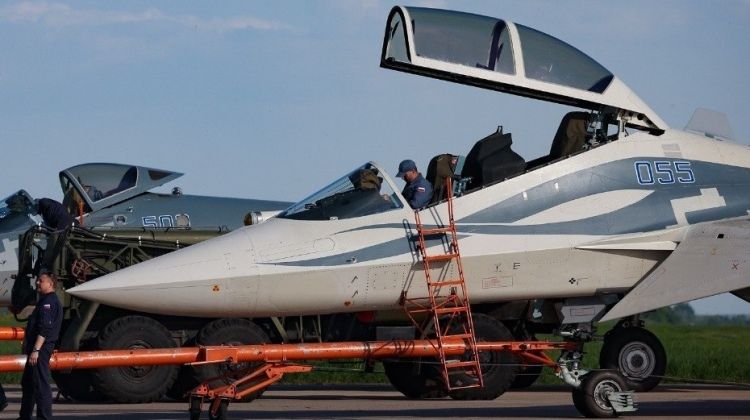
Preceding the first flight of the Su-57D, Russian officials had repeatedly alluded to its development for over half a decade, pointing specifically to requests from potential foreign clients for a twin seat variant of the aircraft. Bogodan’s comments, however, indicate that the fighter could also be seen to have significant utility in service in the Russian Aerospace Forces. Second seats have filled a variety of roles in the past, including accommodating weapons systems officers, with command and control over unmanned aircraft considered a primary factor stimulating interest in future twin seat aircraft. Russia’s most capable tactical combat jet before the Su-57, the MiG-31 interceptor, was developed with a second seat as its standard configuration to accommodate a senior officer in the rear seat, in part due to the sensitivity of its missions and its carriage of nuclear weapons. The aircraft’s very long range and complex avionics also made it desirable to be able to share workloads to avoid exhausting the airmen onboard.
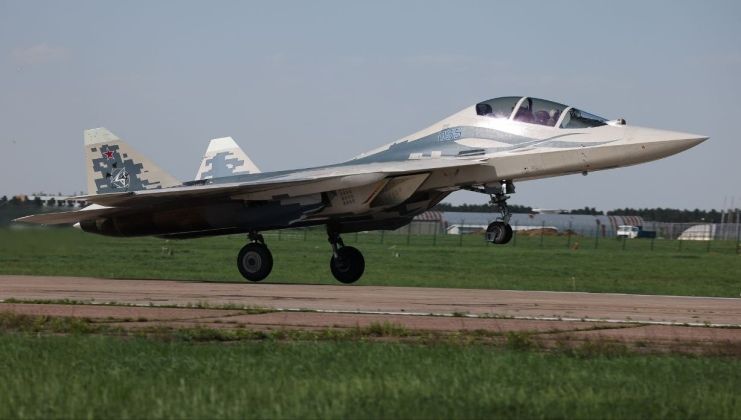
The United States’ first sixth generation fighter, the F-47, is expected to be developed as a twin seat aircraft to provide command and control over unmanned collaborative combat aircraft. The F-35 itself has benefitted from high levels of automation, which have transformed the primary task of the pilot from flying to data management. It is expected that a number of clients, most notably India, will primarily or exclusively procure twin seat variants, in line with longstanding doctrine. The Su-57’s extreme manoeuvrability, and the resulting significant demand for pilots’ attention on flight controls, could make a second seat beneficial to allow a weapons systems officer to operate air-to-air weaponry during such manoeuvres, much as was the case with the Su-30MKI which was the fighter that first introduced supermaneouvrability with threat vectoring controls.
