
Norwegian F-35s Engage Russian Knights Su-35s During Strategic Bomber Escort Mission
Military Watch Magazine Editorial Staff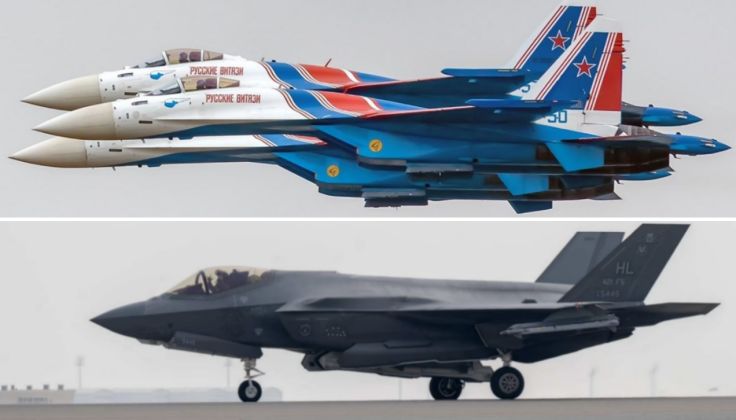
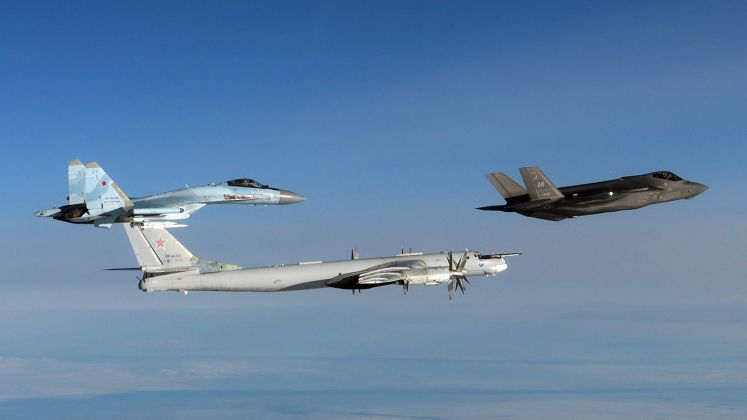
Russian Knights Su-35s (top) and F-35
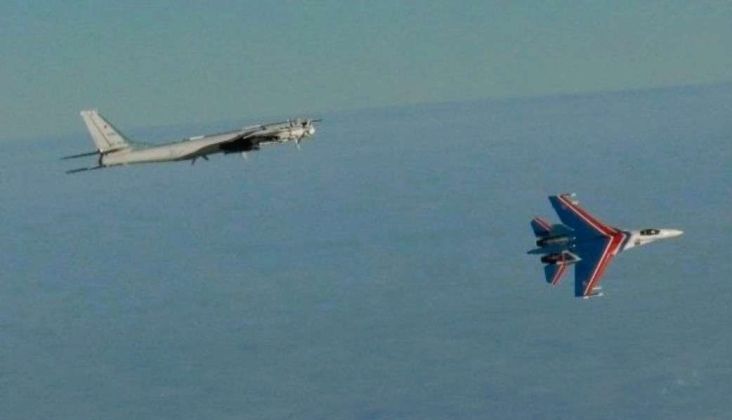
The Royal Norwegian Air Force deployed two F-35A fifth generation fighters to engage a pair of Russian Tu-95MS strategic bombers and their Su-35 fighter escorts in international airspace over the Barents Sea. The F-35s established positive identification, maintained a controlled escort profile, and sustained continuous tracking while the Russian aircraft remained outside Norwegian airspace. The engagement was particularly notable due to the deployment of Su-35s from the Russian Knights, which have primarily been deployed for aerobatics at air shows and military parades, rather than for frontline operational duties. The Knights place a particularly high emphasis in utilising the Su-35’s unique flight performance attributes, including the extreme levels of manoeuvrability provided by its three dimensional thrust vectoring capabilities.
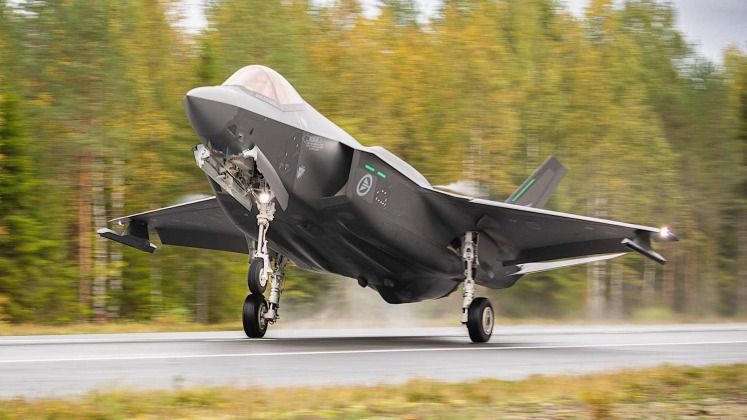
The Royal Norwegian Air Force was the first service in the world to fully convert from fielding fourth to fifth generation fighters, retiring Cold War era F-16s to operate the F-35A. These have been involved in engagements with Russian military aircraft at higher levels of intensity than the F-35s fielded by any other country. Beyond the Barents Sea, the Air Force in December 2025 concluded a deployment of F-35s as part of an integrated air and missile defence mission to Rzeszow Airport, just over 70 kilometres from Poland’s border with Ukraine, with the Norwegian Defence Ministry reporting that the fighters’ presence “supports the protection of Polish airspace and a key logistical hub for aid to Ukraine.” Procurement of the F-35 has significantly shifted the balance of power over the Barents Sea, where Russian Northern Fleet MiG-31 interceptors previously held overwhelming dominance against Norway’s F-16s.
Although the Soviet Union had been a peer level competitor to the United States in developing fifth generation fighters, following the state’s disintegration and the collapse of the highly ambitious MiG 1.42 fighter program, the Russian Aerospace Forces were forced to rely heavily on modernised fourth generation designs. The Su-35 is one such aircraft, and while significantly more advanced than the Soviet Su-27 on which its design was based, its ability to operate on a peer levels to fighters such as the F-35 remains limited. Significant discrepancies remain not only in their survivability, due to the Su-35’s almost total lack of stealth features, but also in their avionics, with the F-35’s data links and passive sensors providing a particularly distinct advantage, while the Su-35’s late 1990s data link technologies are far from cutting edge.
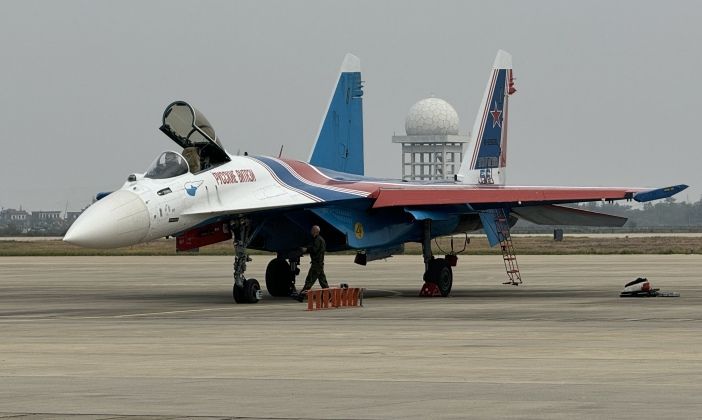
The Russian defence sector has significantly increased the Su-35’s scale of production from 2025, in part due to the unprecedented export successes that were achieved that year. Deliveries were reported in December, early November, late September, mid-August, late June, mid-May, and late March. While numbers have grown more rapidly, the fighters were in late July confirmed to have integrated the new R-77M air-to-air missile, which has revolutionised their beyond visual range combat capabilities and bridged the gap with the latest AIM-120D missiles integrated onto U.S. Air Force F-35s. Although lacking comparable stealth capabilities or similarly advanced avionics to the F-35, the Su-35 benefits from a much larger and more powerful radar, a far superior flight performance, a much longer engagement range, and a far greater weapons carrying capacity.
The Su-35 has been more intensively combat tested in air-to-air engagements than any post-Cold War era fighter type, with reports from November 2025 having indicated that fighters had forced the Ukrainian Air Force’s newly delivered F-16 and Mirage 2000 fighters to operate exclusively at low altitudes in airspace far behind the frontlines. While minimising the possibility of Russian targeting, this has also limited the kinds of support the Ukrainian aircraft are able to provide for their forces. Ukrainian sources have consistently warned that new Western-supplied F-16 and Mirage 2000 fighters are wholly incapable of matching the Su-35’s capabilities. Pressure on the Su-35 fleet has diminished as the Aerospace Forces have expanded the fleet of more advanced Su-57 fighters, and bringing them into service at an accelerated rate and with incrementally superior capabilities.
