
The Su-35 Fighter Was an Export Failure Until 2025: Quadrupled Sales Have Now Made it a Major Success
Military Watch Magazine Editorial Staff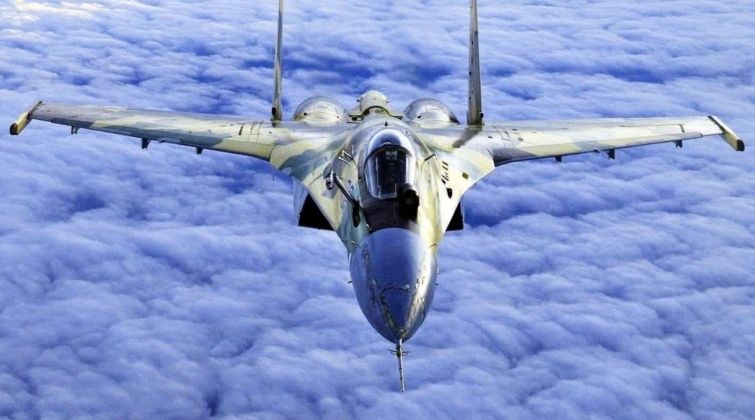
Russian Su-35 Fighter Prototype
The Russian Su-35 air superiority fighter program was conceptualised in the late 2000s both to serve as a stopgap for the Russian Armed Forces until the Su-57 fifth generation fighter could be brought into service, and to provide a more advanced and higher level capability to export clients following the successes of the Su-27 and Su-30 on foreign markets. The Su-27 fourth generation air superiority fighter had first been delivered abroad in 1991, and over the next decade saw the large majority of aircraft produced build for the Chinese People’s Liberation Army Air Force, while also being sold to a wide range of clients including Vietnam, Indonesia, and Ethiopia among others. Its export successes were superseded by those of the Su-30, which generated revenues several times as high for the Russian defence sector with over 600 aircraft sold abroad. Developed a further enhanced derivative of the Su-27 design, the Su-35 was projected by Russian industry officials to see approximately 100 build for domestic use, and 100 more for export, at a conservative estimate.
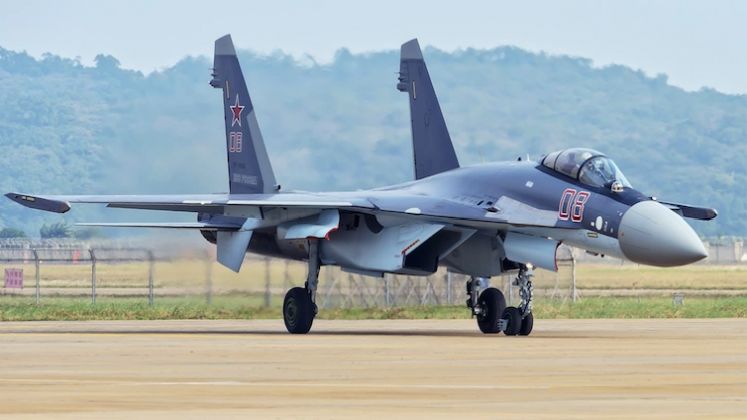
The Su-35 was far from the first ambitious program to develop a derivative of the Su-27 with cutting edge air superiority capabilities, with the Su-27M and Su-37 developed in the 1990s both having been more impressive for their time than the Su-35 was when brought into service in the 2014. These fighters could never be brought into production, however, as the Russian Defence Ministry had no funding to do so with domestic orders. It was hoped that after the Su-35 was brought into service in the Russian Aerospace Forces in 2014, and subsequently began to see combat deployments from December 2015, foreign interest would grow. Although the fighter performed favourably in multiple engagements with major foreign air forces, and program attracted significant interest from multiple parties, political factors prevented the fighter from gaining traction on export markets.
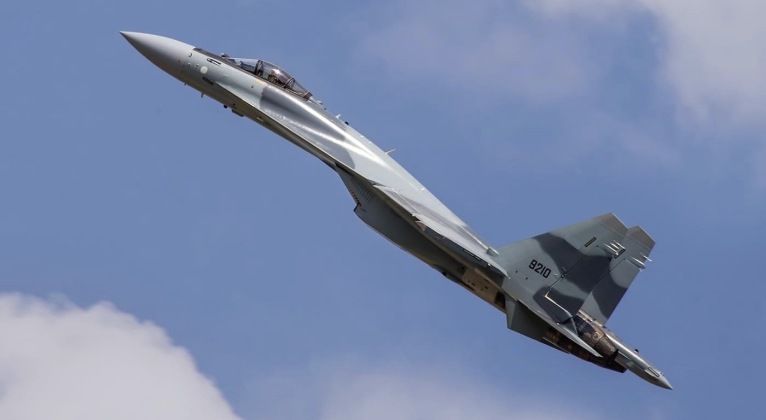
Although countries across the Western world had for decades placed pressure on countries across the world not to procure Russian armaments, the signing of the Countering American Adversaries Through Sanctions Act in the United States in 2017, which obliged Washington to place economic sanctions on any major client for Russian armaments, significantly escalated pressure on potential Su-35 clients. As a direct result both Indonesia and Egypt cancelled plans to procure Su-35s despite already having signed contracts to do so, and in Egypt’s case despite already having begun payments, while a significantly greater number of expected clients were deterred from signing contracts from the outset. A further major factor was the attractiveness of both the significantly less costly but similarly capable Su-30SM and Su-30MKI/A, which continued to gain considerable foreign orders, and the perceived greater cost effectiveness of the Su-57, which all competed with the Su-35 for export funding.
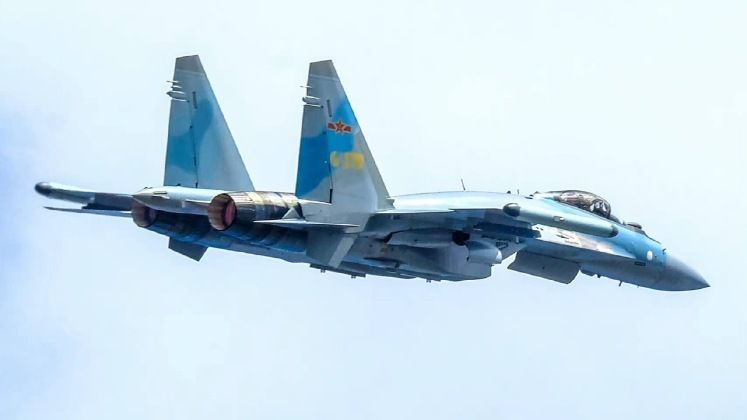
Before 2025 only 24 Su-35 fighters were delivered for export, namely to fulfil a Chinese order placed in 2015. China’s development of more sophisticated fighters domestically, however, limited interest in large scale procurements of the Su-35, with the aircraft acquired primarily to facilitate technology transfers, send a signal of solidarity to Russia at a time of high tensions with the West, and support dissimilar combat training. In February 2025, however, Russia began unexpected deliveries of the Su-35 to Algeria, which is estimated to have procured 18 of the fighters under a deal valued at approximately $1.5 billion. Leaked Russian government documents subsequently showed that Russia was scheduled to deliver of 48 Su-35 fighters to re-equip the Iranian Air Force, and six more Su-35s to Ethiopia, which marked marked a major breakthrough for the program and would bring total exports to 96 fighters. This represented a fourfold increase in confirmed known export orders compared to 2024, and brought the program close to its original target of 100 fighters sold abroad.
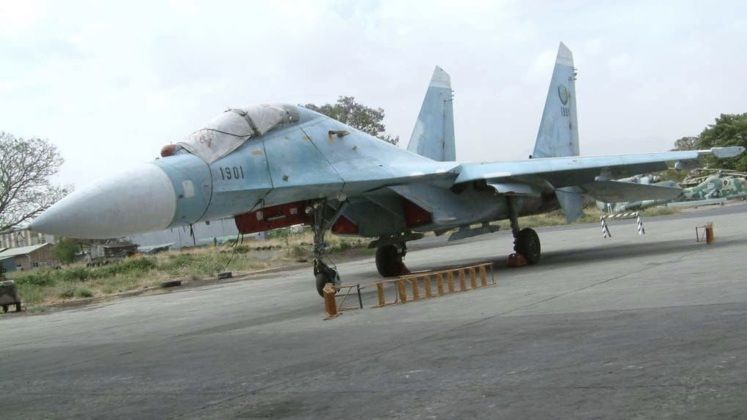
Both Ethiopia and Iran are considered likely potential clients for further Su-35s, with the former potentially doubling its order alongside procurements of further Su-30 fighters to serve as trainers, allowing it to fully phase out its 18 ageing Su-27 fighters out of service. A number of reports indicate that the Iranian Defence Ministry is planning to increase its orders 64 Su-35s, and possibly significantly more, to phase out a greater portion of its close to 300 obsolete Vietnam War era fighters. The reported total ineffectiveness of its air power during high intensity clashes with Israel and the United States in June may have stimulated a greater interest in making such an investment. Algeria is not expected to place followup orders, with its significantly higher defence spending levels allowing it to procure the more advanced Su-57, the first two of which reportedly arrived in the country in November.
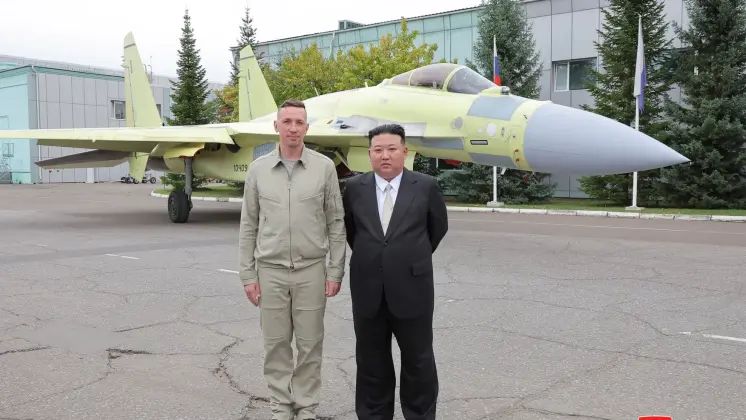
Before 2025, the Su-35 appeared to be a failure on export markets, primarily for political reasons including intensive Western pressure on potential clients, but also because of a number of the aircraft’s performance shortcomings. The fighter program is now expected to generate sales of at least 100-150 fighters, more than half of which are expected to be built for the Iranian Air Force. The possibility of sales to North Korea also remains significant to help Russia cover the costs of its tens of billions of dollars worth of arms imports from the country from 2022, although it remains uncertain whether the East Asian state will accept the aircraft or will prioritise procurements of the more advanced Su-57. Where the Su-27 and Su-30 relied on China and India respectively for the majority of export sales, with the Su-57 also expected to receive very large scale Indian orders, the Su-35’s export profile has been more focused on other clients, with the possibility of large scale Iranian procurements of Russian fighters, which has been anticipated since the late 1980s, belatedly materialising and playing a central role in making the program an export success. Although the Su-35 is not expected to come close to matching the Su-30 or the Su-57 in its performance on foreign markets, its export profile is likely to continue to improve over the next decade.
