
New Bach of Su-35 Air Superiority Fighters Delivered to the Russian Aerospace Forces
Military Watch Magazine Editorial Staff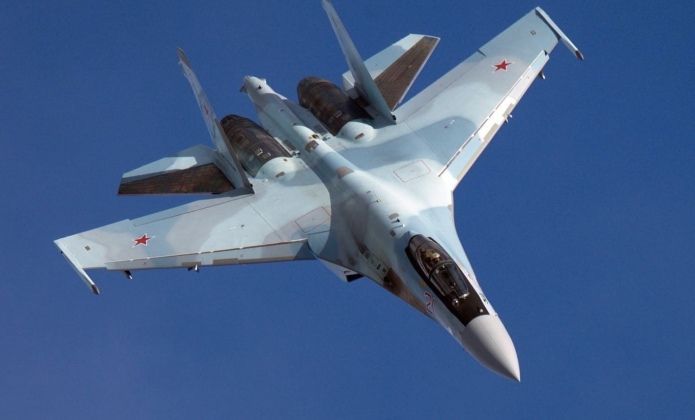
Russian Aerospace Forces Su-35 Fighter
A new batch of Su-35 fighter aircraft has ben delivered to the Russian Aerospace Forces, marking the latest delivery of the year following successful efforts to significantly expand the type’s scale of production. Russian state defence conglomerate Rostec reported regarding the delivery: "The United Aircraft Corporation of the Rostec State Corporation has manufactured and delivered another batch of Su-35S multirole fighters to the Russian Defence Ministry. The aircraft have completed a series of required ground and flight factory tests and have been handed over to the Russian Aerospace Forces.” It added that this was the last delivery of 2025, following prior deliveries in early November, late September, mid-August, late June, mid-May, and late March, for a total of seven batches delivered this year.
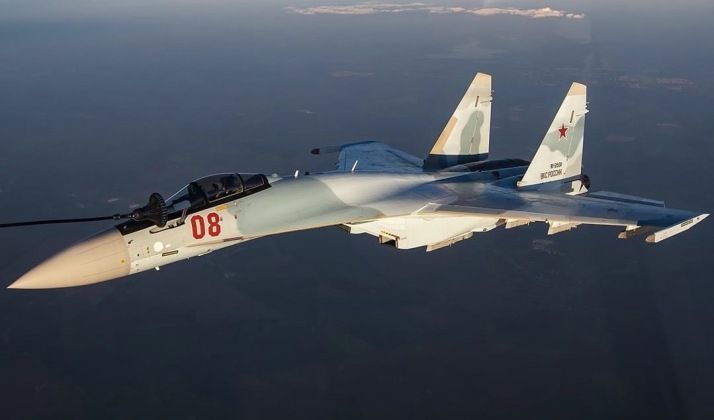
General Director of the Russian state run United Aircraft Corporation Vadim Badekha in May confirmed that work was underway to increase production of the Su-35, reflecting both growing demand from the Aerospace Forces, and a significant surge in export demand. The Su-35 saw deliveries to its first new foreign client in a decade in February when the first aircraft were delivered to Algeria, which is estimated to have ordered 18 of the aircraft alongside its orders for newer Su-57 fifth generation fighters. In late November leaked Russian military industrial correspondence revealed that 16 Su-35s were in production to meet orders from the Iranian Defence Ministry, after leaked Russian government documents released in late September indicated that 48 of the aircraft had been ordered. The documents indicated that Ethiopia had also placed a small order for six aircraft. Unconfirmed reports in November indicated that the Russian Foreign Ministry was also offering the Su-35 to Sudan as a means to secure access to facilities on the Red Sea for the Russian Navy.
Increased exports of the Su-35 are considered a primary factor allowing Russia to reverse the significant annual decline in defence exports that began in 2022 this year, with 2025 marking a major turning point in the program’s previously underwhelming record on foreign markets. Commenting on the fighter’s combat performance at the time of the delivery of the latest batch, a Russian Aerospace Forces Su-35S pilot observed: “It very comfortable, ergonomic, and highly reliable. The aircraft is in demand by the troops, and pilots love it. The Su-35S has performed well during the special military operation [against Ukraine}.”
Rostec noted at the time that the corporation's aircraft manufacturers were already working on a fighter production plans for 2026. “The outgoing year was record-breaking in terms of combat aircraft production. The Su-35S fighter production plan has been fulfilled. Our aircraft manufacturers are already working on next year’s program. The Su-35S is one of the most sought-after aircraft in the troops. It has destroyed the largest number of targets during the special military operation,” it observed.
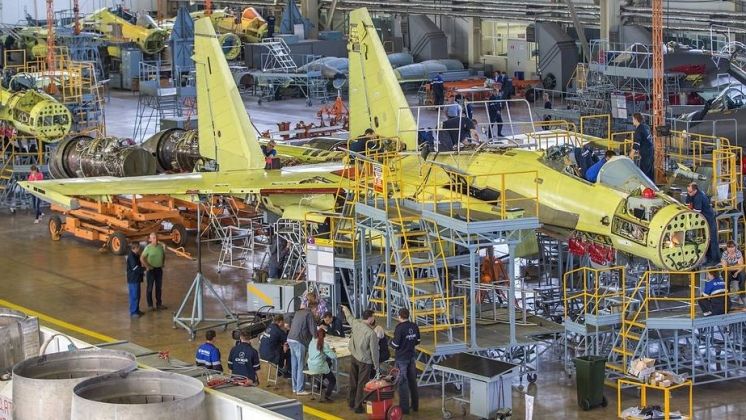
Elaborating on production plans for the Su-35, United Aircraft Corporation CEO Vadim Badekha said that 2025 will be a year of intensive work for the corporation’s enterprises in fulfilling the government defence order. "A number of our plants have already completed this year's production program. The rest are completing the implementation of their contracts. We are consistently increasing the production volume of in-demand military equipment, fulfilling our obligations to the Russian Aerospace Forces," he added. It remains highly possible that deliveries of the Su-35 to the Aerospace Forces will be lower in 2026 than they were in 2025, primarily due to the allocation of a significant portion of productive capacity to meeting orders from Iran. The Komsomolsk-on-Amur Aviation Plant in the Russian Far East remains as the main assembly site for the fighters, and from a prior production rate of around 14 Su-35s per year, it is predicted to see this increased to around double that number, of which close to half are expected to be delivered to Iran over the next two years.
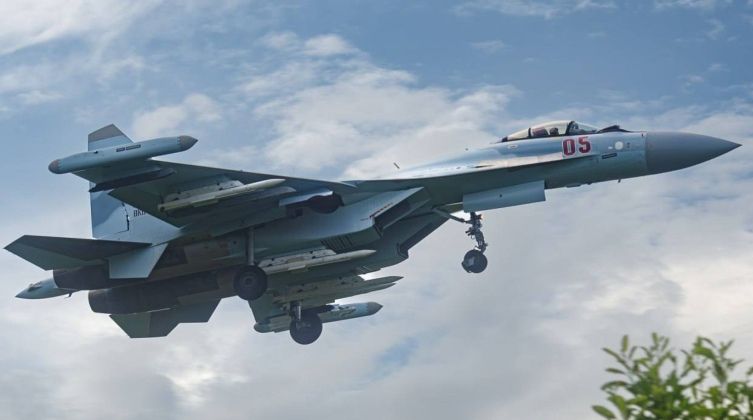
Although the Su-35 has played a much less central role in the Russian war effort against Ukraine and its strategic partners than other types of combat jet, most notably the Su-34M strike fighter and multiple variants of the MiG-31, the aircraft’s contributions have nevertheless been significant. Reports in late November indicated that the fighters had forced the Ukrainian Air Force’s newly delivered F-16 and Mirage 2000 fighters to operate exclusively at low altitudes in airspace far behind the frontlines, minimising the possibility of targeting, but also limiting the kinds of support the Ukrainian aircraft could provide for their forces. Ukrainian sources have consistently warned that new Western-supplied F-16 and Mirage 2000 fighters are wholly incapable of matching the capabilities of the Su-35, which is expected to remain the case for the foreseeable future despite planned future procurements. The Su-35’s capabilities are expected to continue to be improved through the integration of a growing range of armaments and subsystems that have been developed for the newer Su-57. In late July the fighters were confirmed to have integrated the Su-57’s R-77M air-to-air missile, which has revolutionised their beyond visual range combat capabilities.
