
How Did Russia Reverse Defence Export Decline in 2025? What Challenges Still Hinder Future Arms Sales?
Military Watch Magazine Editorial Staff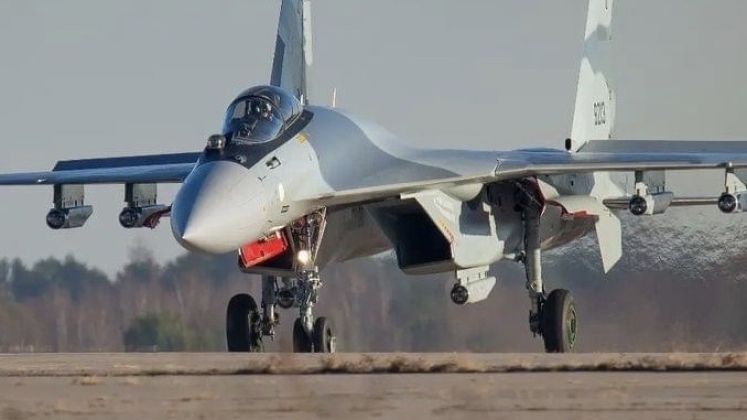
Export Configured Su-35 Fighter
Russian Defence Minister Andrey Belousov on December 17 confirmed that efforts to reverse the wartime decline in Russian arms exports had been successful, observing: "We have transitioned to a new system for promoting Russian weapons to our allies and partners. Demonstrations of the weapons' combat capabilities are held for foreign delegations, in conjunction with foreign armies’ modernisation programs.” “Representatives from more than 20 countries went through this system this year. This positively impacted military-technical cooperation. For the first time in recent years, we managed to reverse the negative trend of declining military exports and increase the portfolio of contracts," he added. Although Russia during the 2010s remained the world’s second largest arms exporter by a considerable margin, and during the Cold War often surpassed the United States in overall exports, its position has diminished significantly due to multiple converging factors.
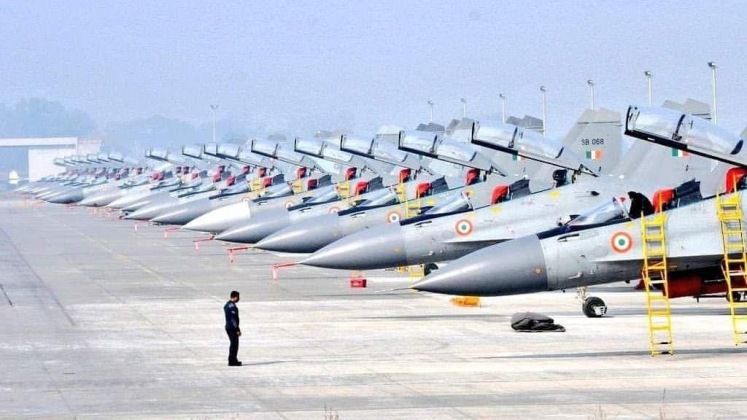
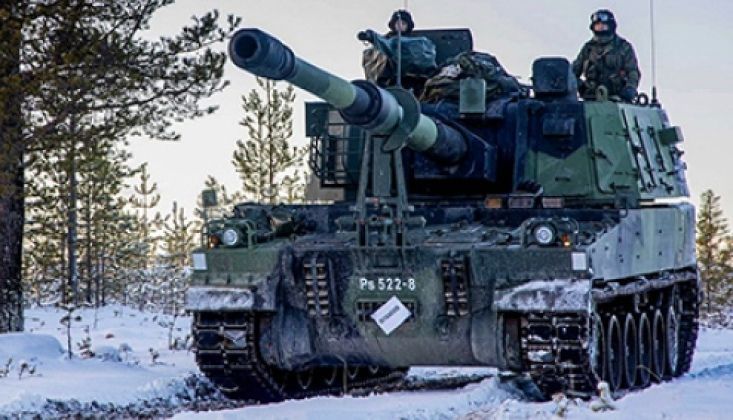
Reflecting broader concerns that Russia’s position as an arms exporter faced decline, Rostec state corporation Executive Director Oleg Yevtushenko in early November observed: “The difficult situation in the world and pressure from our main foreign competitors cannot change our strategic goal, which is to preserve second place in the global rankings of weapons-exporting countries until 2030 and through 2036.” He highlighted competition from France and South Korea in particular as a leading challenge to Russia’s ability to retain second place on global markets. South Korea in particular has had significant successes exporting both to NATO members and to the Third World, while infringing on markets such as India and Vietnam which previously relied more heavily on Russian armaments.
A primary challenge to Russia’s position on global arms markets has been the escalation of Western political pressure on countries across the world not to acquire armaments from the country. While this has remained policy since the late 1940s, efforts escalated from the mid-2010s, and particularly from 2017 when the U.S. President Donald Trump signed the Countering American Adversaries Through Sanctions Act into law, which obliged Washington to place economic sanctions on any major client for Russian armaments. Several clients have backed out of major deals as a result, with notable examples being Indonesia and Egypt’s cancellation of plans to procure Su-35 fighter aircraft, while a significantly greater number have been deterred from signing contracts from the outset. The Su-35 fighter was one of the most high profile programs affected by this.
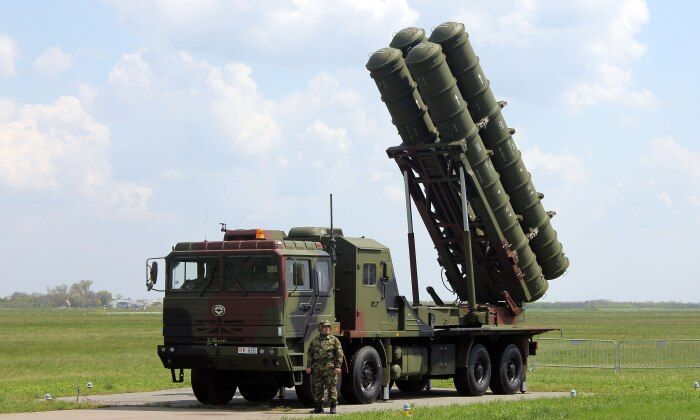
In markets which are less sensitive to Western pressure, Russian arms exports have faced growing Chinese competition, with Chinese armaments increasingly demonstrating significant technological advantages over their Russian counterparts, often for only marginally greater prices. Russian market share in Central Asia and Africa has declined particularly rapidly as a result. Although potential clients for Chinese armaments have also faced significant Western pressure to avoid selecting non-NATO standard armaments, which similarly advantages Western-aligned manufacturers such as South Korea, France and Israel, the lack of an equivalent to the Countering American Adversaries Through Sanctions Act targeting Chinese exports has often made them a politically safer option. A notable example was Serbia’s reversal of plans to procure Russian S-300 or S-400 long range air defence systems, and procurement the Chinese HQ-22, which although unfavourable for the country’s European neighbours, elicited less vehement opposition.
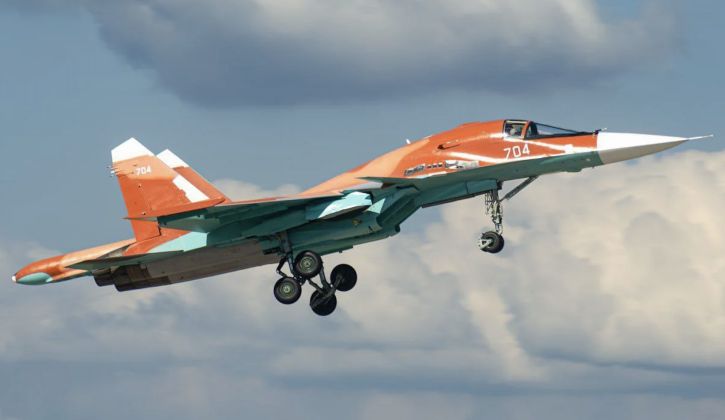
A potential cause for the reversal in the decline of Russian arms export volumes in 2025 may be the sale of high value Su-35 and Su-57 fifth generation fighter aircraft to multiple clients. Leaked government documents showed that Russia is scheduled to deliver of 48 Su-35 fighters to re-equip the Iranian Air Force, as well as 14 Su-34 strike fighters and two Su-57 fifth generation air superiority fighters to Algeria, and six Su-35s to Ethiopia. This marked a major breakthrough for both fighter types. Following the transfer of Su-35s to Algeria near the beginning of the year, both Su-57s were delivered in November, with a larger number expected to arrive in the country in 2026. Nevertheless, Russia’s ability to sustain its export profile remains in serious question, with the country having struggled to complete clean sheet weapons programs, meaning many of the performance advantages its equipment had when the USSR disintegrated have gradually been lost.
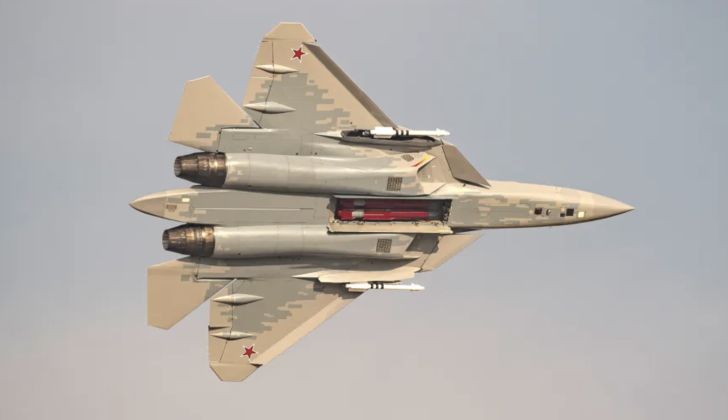
The decline in Russia’s position on global defence markets may accelerate as both China and the United States increase investment in defence related research and development at a time of escalated geopolitical conflict. A great deal currently hedges on whether Russia will be able to secure a major contract to supply Su-57 fighters to India, which has been under discussion for much of the year, and would represent the largest single source of export revenues for the country if it materialises. India and Algeria are by far the largest clients for complete Russian weapons systems today, although improving ties with Iran have the potential to also make it a major buyer to replace its obsolete Vietnam War era ground and air inventories. The possibility of Russia supplying fighter aircraft to North Korea to help pay for the tens of billions of dollars of armaments it has procured from the country has also been raised, with the East Asian state fielding a particularly large fighter fleet that can absorb very large numbers of Russian exports.
