
Russian Su-35 Fighter Achieves First Shootdown of Ukrainian F-16 Using Radar Guided Missiles
Military Watch Magazine Editorial Staff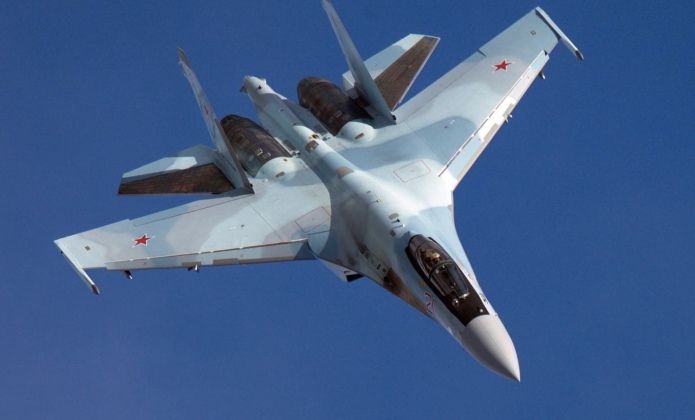
Russian Aerospace Forces Su-35 Fighter
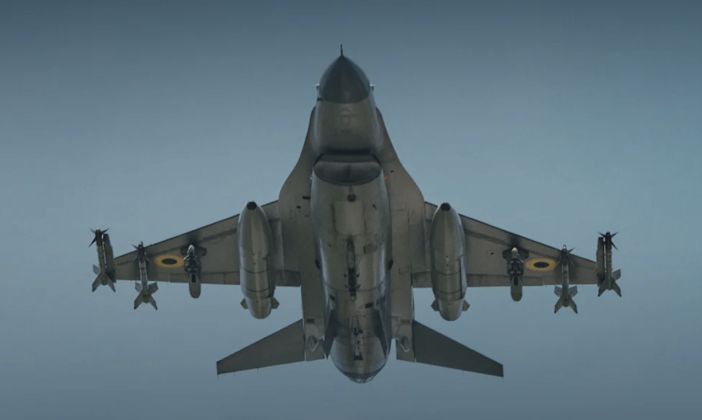
A Russian Aerospace Forces Su-35S long range air superiority fighter has engaged and shot down a Ukrainian Air Force F-16AM fighter at beyond visual ranges using a radar guided air-to-air missile, according to local sources. The missile launch, an R-77 or R-37M, is reported to have been recorded by Ukrainian monitoring channels. The engagement, if confirmed, would make a landmark in Ukraine’s operation of the F-16, as while several of the aircraft having already been lost in combat, none were previously reported to have been shot down in air-to-air combat. The Su-35 is an advanced derivative of the Soviet Su-27 air superiority fighter, which was designed specifically to be able to outperform NATO F-15 and F-16 fighters, and proved capable of doing multiple of simulated engagements. The F-16 was designed as a lighter and less costly counterpart to the U.S. Air Force’s premier Cold War era air superiority fighter the F-15, and is a lightweight single engine aircraft where the F-15 and Su-35 are heavyweight twin engine aircraft.
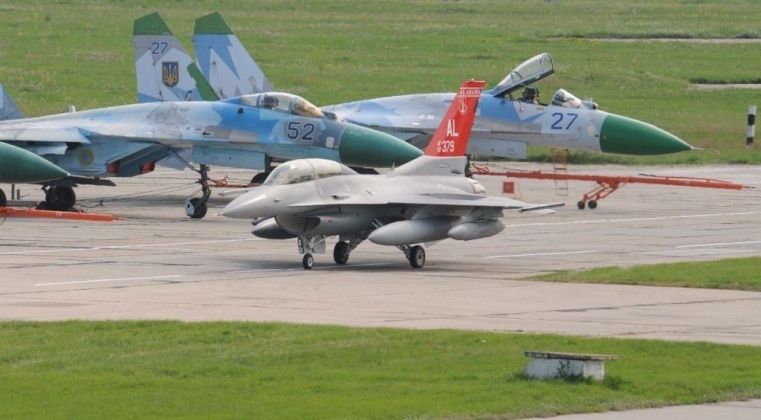
Significant questions remain regarding the personnel flying the F-16, with French security outlet Intelligence Online being among multiple sources to have reported that a squadron of veteran U.S. Air Force and Royal Netherlands Air Force pilots were operating the aircraft for the Ukrainian Air Force. A shortage of trained Ukrainian pilots was identified at an early stage as the primary obstacle to integrating the NATO-standard fighters into the Air Force, which has throughout its history operated only Soviet origin fighter types. The decision to supply F-16s to Ukraine followed heavy losses to its large Soviet-built MiG-29, Su-24M and Su-27 fighter fleets, despite a replenishment of MiG-29s which were supplied from across Eastern Europe. The F-16s supplied second hand from European inventories have not been modernised to 21st century standards, and have long since been considered obsolete.
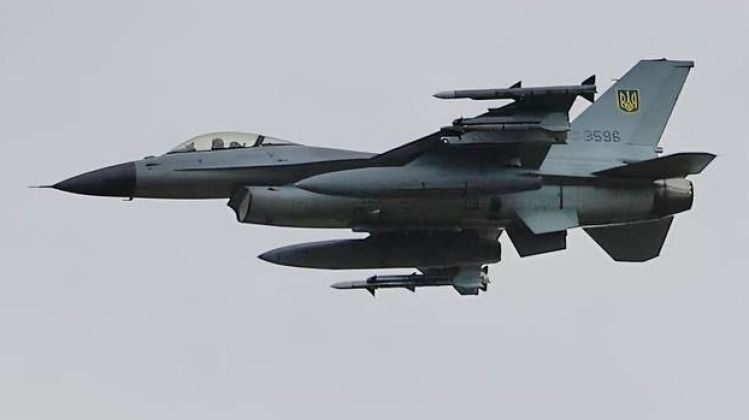
Ukrainian sources have repeatedly warned that F-16s and French supplied Mirage 2000 fighters are wholly incapable of matching the capabilities of advanced Russian fighters like the Su-35, with Ukrainian Air Force spokesman Yuri Ignat having observed on June 3, 2025: "Unfortunately, today Russia has jets that see farther and missiles that fly farther. That’s even when compared to F-16s. They also have powerful air defences, which work in tandem with aviation.” Ignat in March compared the F-16 to the Su-35 specifically stating: “The modifications that Ukraine has cannot compete one-on-one in an air battle. We need a comprehensive approach as the [Russian] Su-35 is a relatively new jet… This includes ground-based air defence, electronic warfare systems, and ideally, an airborne radar. Also crucial are onboard radars for our aircraft and air-to-air missiles.”
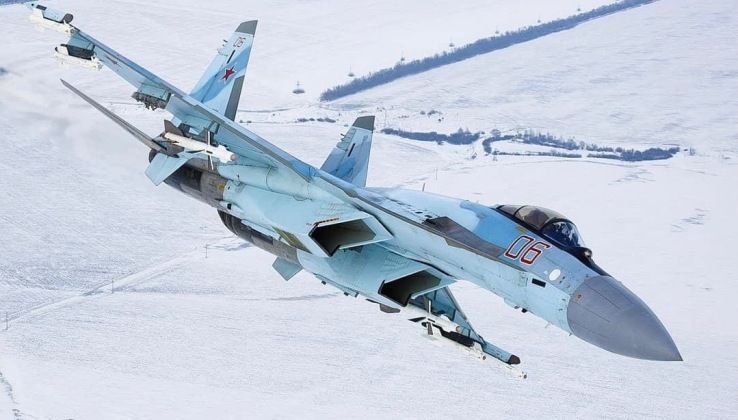
Reports from Ukrainian sources indicate that the Air Force has been forced to adopt new tactics to operate its F-16s in the face of a significant Russian air superiority advantage. Commenting on the changes to operational tactics, a Ukrainain F-16 pilot reported in January that Russian Aerospace Forces Su-35 and Su-57 fighters and MiG-31 interceptors constituted the main aerial threat, and conducted combat air patrols at high altitudes, waiting for Ukrainian fighters to take off. Ukrainian F-16s thus could not operate at higher altitudes, and were forced to adopt a "low-altitude flight" strategy. Terrain masking proved able to significantly reduce the effectiveness of Russian radar tracking and missile seekers, as ground clutter interferes with Russian sensors and made it difficult for them to lock onto targets.
Corroborating Ukrainian reports, a report by CEO of the Russian state technology conglomerate Rostec Sergey Chemezov in November 2025 reported that Ukraine’s F-16 and Mirage 2000 fighters had been forced to operate exclusively at low altitudes in airspace far behind the frontlines to avoid being targeted by Russian fighters, singling out the role of the Su-35 specifically. “The Su-35S has driven enemy aircraft low, forcing them to fly at minimal altitudes and in rear areas. Meanwhile, the Su-35S engages targets at distances of hundreds of kilometres. That is why enemy aircraft cannot approach the frontlines to launch air-to-air missiles. This includes American F-16s and French-made Mirages,” he observed. Although the Su-35 retains comfortable dominance over Ukraine’s F-16s, its ability to engage new generations of U.S. and Chinese fifth generation fighters such as the F-35 and J-20, which currently lead the world in terms of sophistication, has increasingly been called to question.
