
Ukraine Develops Entirely New Tactics For its F-16 Fighters: Officers Slam Western Air Doctrine as Unsuitable
Military Watch Magazine Editorial Staff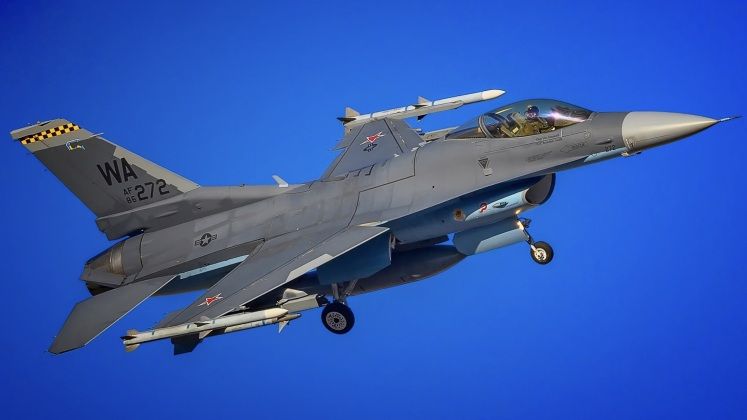
F-16 Fighter
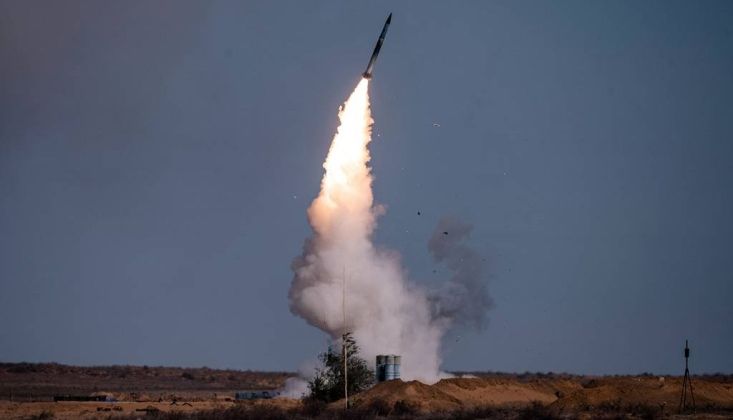
Ukrainian Air Force officers have developed an entirely new clean sheet set of tactics to operate F-16 fighter aircraft in the country’s ongoing war effort against Russia. Highlighting the necessity of this, F-16 pilots and other officers have recently criticised the air combat tactics taught by NATO members as "unsuitable" for engagements with Russian forces, particularly singling out their limited suitability to operate in a theatre where Russia fields a particularly dense and capable ground-based air defence network. New rules of engagement have particularly stressed "low-altitude, terrain-hugging" flights and "decoy" tactics. The Ukrainian Air Force is confirmed to have lost at least four F-16s, with targeting by ground-based air defence systems widely speculated by analysts to have been a primary cause of losses.
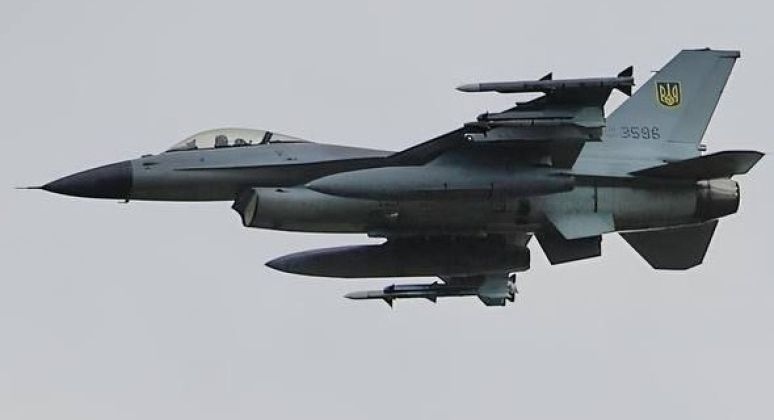
Commenting on the changes to operational tactics, a Ukrainain F-16 pilot reported: "When we returned from training and faced reality, we found that the tactics taught abroad were not entirely applicable to this war." He pointed out that Western tactics are largely based on past conflicts where air superiority was held, and did not adequately consider the extremely dense air defence systems and threats from Russian combat aviation assets. "We had to sit down and rethink how to destroy cruise missiles, strike drones, and survive near the front lines." The F-16 lacks a comparably powerful radar to Russian combat aircraft to be able to engage them at longer ranges, with the aircraft supplied to Ukraine not only using obsolete Cold War era mechanically scanned array radars, but also carrying radars that are only around one quarter to one seventh the sizes of those carried by Russian fighters and interceptors respectively.
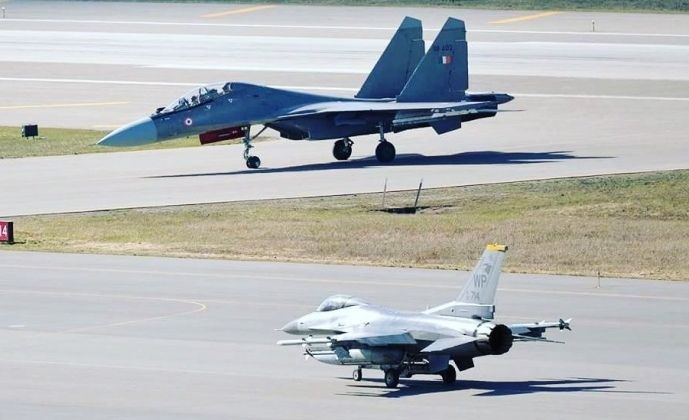
Providing further insight, the pilot added that Russian Aerospace Forces Su-35 and Su-57 fighters and MiG-31 interceptors constitute the main aerial threat, and conduct combat air patrols at high altitudes, waiting for Ukrainian fighters to take off. As a result Ukrainian F-16s cannot operate higher altitudes in line with NATO doctrine, and are forced to adopt a "low-altitude flight" strategy. Terrain masking has proven able to significantly reduce the effectiveness of Russian radar tracking and missile seekers, as ground clutter interferes with Russian sensors and makes it difficult for them to lock onto targets. This also makes it significantly more difficult for ground-based air defence systems to engage targets over long distances. The vulnerability of Russian A-50 airborne warning and control systems in the theatre has further contributed to Ukrainian fighters’ survivability in this regard.
The latest report on the shift in F-16 operational tactics notably strongly corroborates with a report by Rostec CEO Sergey Chemezov in November that Ukraine’s newly delivered Western F-16 and Mirage 2000 fighter aircraft had been forced to operate exclusively at low altitudes in airspace far behind the frontlines to avoid being targeted by Russian fighters, singling out the role of the Su-35 specially. “The Su-35S has driven enemy aircraft low, forcing them to fly at minimal altitudes and in rear areas. Meanwhile, the Su-35S engages targets at distances of hundreds of kilometres. That is why enemy aircraft cannot approach the frontlines to launch air-to-air missiles. This includes American F-16s and French-made Mirages,” he observed. Although the Su-35 has significantly less capable beyond visual range targeting capabilities than the MiG-31BM and Su-57, the fighter type is operated in the theatre in considerably greater numbers.
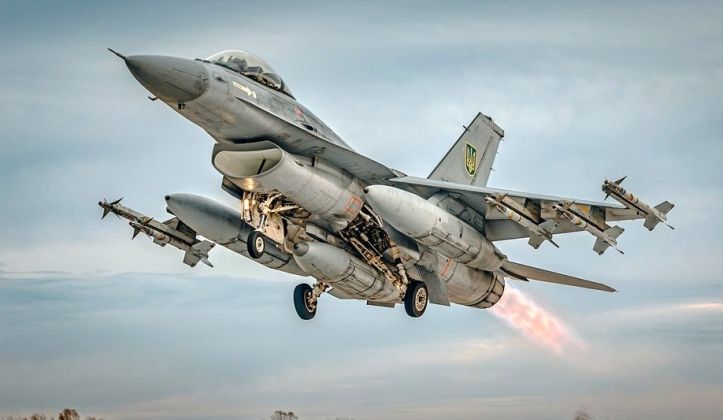
Further elaborating on the changes in tactics that had been adopted in response to prevailing threats, the Ukrainian F-16 pilot observed that high-risk "decoy" tactics had also been developed. These saw F-16s deliberately expose their positions to attract Russian aircraft to fire missiles, thereby depleting the ammunition of the aircraft on patrol at the time, and thus allowing friendly aircraft carrying precision-guided bombs to complete their bombing missions. In one engagement, a formation of three F-16s successfully forced Russian aircraft to fire from different directions, which was key to allowing the attack aircraft to successfully hit their targets and return safely. Should this statement be correct, it may indicate a deficiency in training standards among Russian pilots as they expend ammunition engaging beyond an effective kill range. The ability of Ukrainian F-16s to take cover behind the country’s network of ground-based air defence systems nevertheless remains in question in the medium and long term, as these have been rapidly depleted while replenishments from the Western world have met only a fraction of demand.
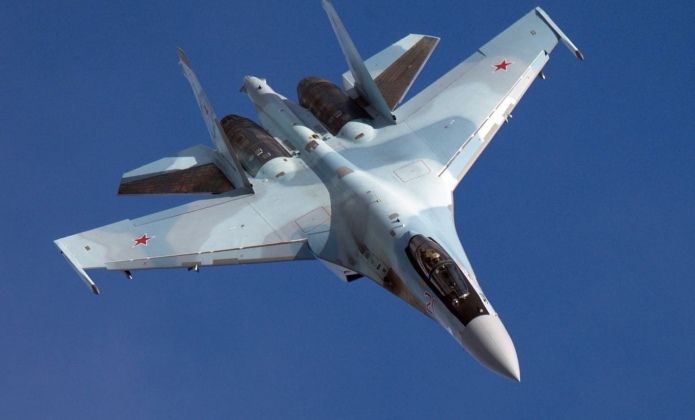
Ukrainian sources have consistently warned that F-16s and French supplied Mirage 2000 fighters are wholly incapable of matching the capabilities of advanced Russian fighters, with Ukrainian Air Force spokesman Yuri Ignat having observed on June 3, 2025: "Unfortunately, today Russia has jets that see farther and missiles that fly farther. That’s even when compared to F-16s. They also have powerful air defences, which work in tandem with aviation.” Ignat in March compared the F-16 to the Su-35 specifically stating: “The modifications that Ukraine has cannot compete one-on-one in an air battle. We need a comprehensive approach as the [Russian] Su-35 is a relatively new jet… This includes ground-based air defence, electronic warfare systems, and ideally, an airborne radar. Also crucial are onboard radars for our aircraft and air-to-air missiles.”
