
S-400 Air Defence System’s Developer Details Combat Record and Ongoing Enhancements
Military Watch Magazine Editorial Staff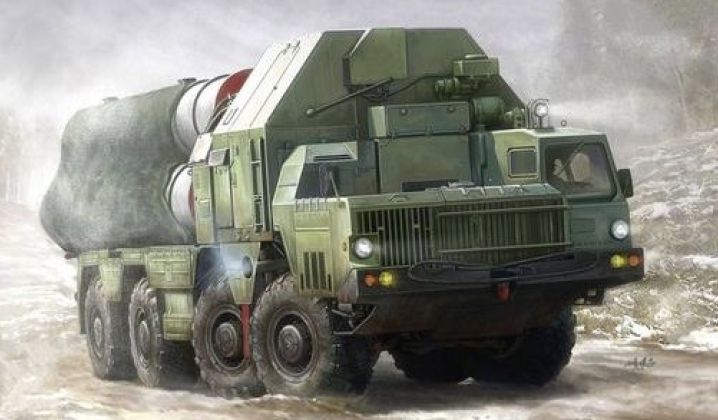
Missile Launcher From S-400 System - Artwork
The Russian S-400 long range air defence system has gained growing attention in 2025 due to both its ongoing use in combat operations in the Ukrainain theatre, as well as its first combat in the service of an export client as it played a central role in the Indian air campaign against Pakistan in May. The Russian Aerospace Forces have invested several times as heavily procuring S-400s over the past 20 years than they have procuring all types of fighter aircraft combined, with over 30 regiments now in service forming the backbone of the country’s air defence capabilities. CEO of the Almaz-Antey Group responsible for developing the system, Yan Novikov, in a recent interview shed further light on the system’s features and combat record, observing: "The parameters of its effectiveness have been proven in actual combat, and no foreign air defence system can rival the S-400 in its class so far.”
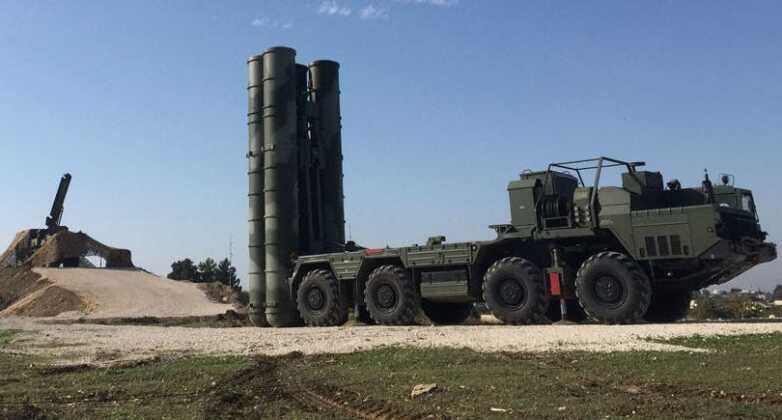
Commenting specifically on the modernisation potential of the S-400, which allows it to quickly be adapted to countering emerging threats, Novikov observed:
"The world today is experiencing a rapidly evolving scientific and technological revolution, with the defence industry being one of its hottest spots. The speed of change leaves us no room for delay in responding to new challenges. One such response is the enormous modernisation potential of the S-400 air defence missile system, which allows us to quickly mitigate emerging threats during the special military operation. Owing to this potential, the Triumph has acquired new capabilities and properties that are generally uncharacteristic of air defence systems.”
Concluding remarks on the S-400, the Almaz-Antey CEO noted: "The S-400 Triumf is one of the world’s most advanced and renowned surface-to-air missile systems. Its operational range and capacity to utilise different missile types make the Triumf the most powerful air defence system.”
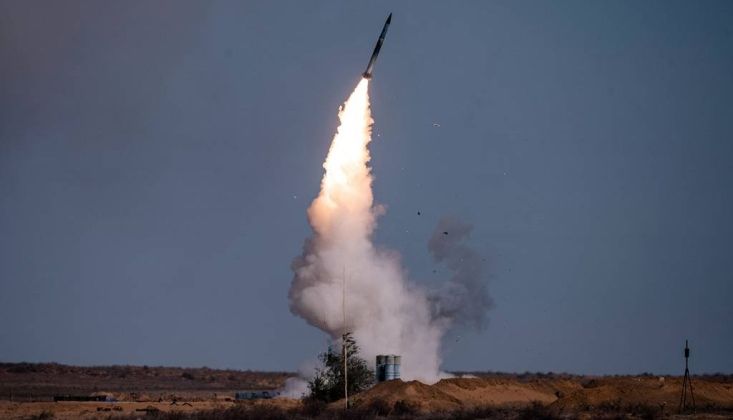
Although the S-400 entered service in 2007, it has continued to be incrementally modernised, with a major milestone in the enhancement of the system being the integration of the 40N6 long range surface-to-air missile, which is estimated to have occurred around 2018. The missile can engage targets up to 400 kilometres away, striking targets over the earth’s curvature by using targeting data either from forward deployed ground based radars, or from airborne radars, such as those carried by A-50U AEW&C systems. The missile’s two part trajectory first sees it ascend into space to altitudes of close to 30,000 meters, before descending using this targeting data to strike aircraft at altitudes between 30,000 metres and 5 meters off the ground. The missile has been successfully combat tested against both Ukrainian and Pakistani targets.
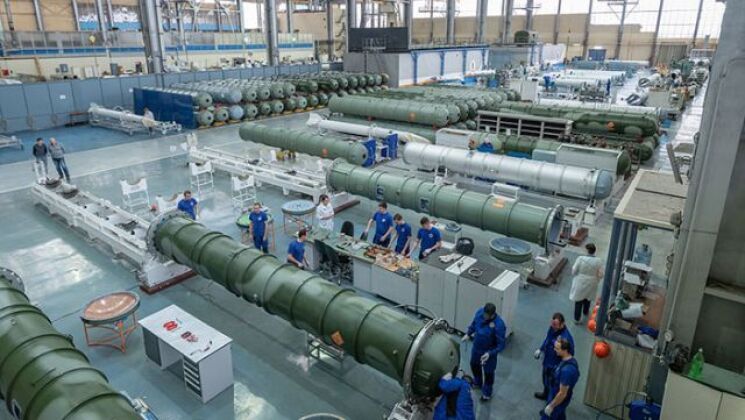
Large scale production of the S-400 has been facilitated by major investments in the rejuvenation of the Russian surface-to-air missile industry, which was authorised by the Kremlin in the year 2000. Three major new facilities built primarily to allow for expanded production include a new wing of the Obukhov Plant, the Avitek Plant in Kirov which was throughly modernised, and the NMP Plant in Nizhniy Novgorod. These facilities were only ready for large scale production in the mid-2010s, however, due to major delays, with deliveries having accelerated significantly since then. No successor to the S-400 is known to be under development, although new radars and missile types are expected to continue to be integrated, including a rumoured longer ranged successor to the 40N6 which is expected to become operational in the mid-2030s.
