
Russian Air Force Receives New Batch of MiG-31BM Interceptors: Why Foxhounds Have Become Particularly Highly Prized
Military Watch Magazine Editorial Staff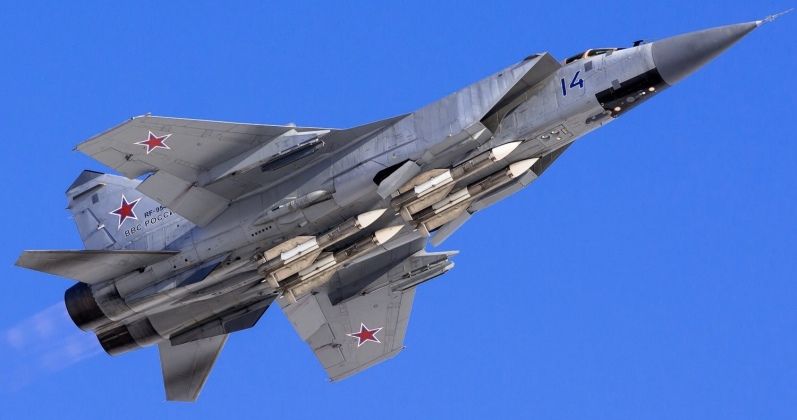
MiG-31 Interceptor
The Russian Defence Ministry on July 15 received the year’s first new batch of MiG-31BM Foxhound interceptors, following their refurbishment and modernisation at the Sokol aircraft manufacturing plant. Although the MiG-31 saw production concluded in 1994, with the decision taken due to unprecedented economic crisis in post-Soviet Russia, the sharp contraction of the fleet after the Soviet Union’s disintegration means that over 100 relatively unused airframes are still in storage and available for refurbishment and return to service. This has allowed the Russian Defence Ministry to invest in increasing the number of operational MiG-31s since the escalation of Russian-Ukrainian hostilities in 2022. The MiG-31 was designed for long range patrols to secure the Soviet Union’s vast Arctic and Central Asian regions, which lacked protection from dense networks of ground based air defences and did not have sufficient bases for lighter shorter ranged aircraft to provide security. The Foxhound thus not only has a long range, but also by far the world’s highest cruising speed at close to Mach 2.3, and by far the world’s largest radar the N007 Zaslon - which is well over three times the size of the largest radars carried by Western fighters.
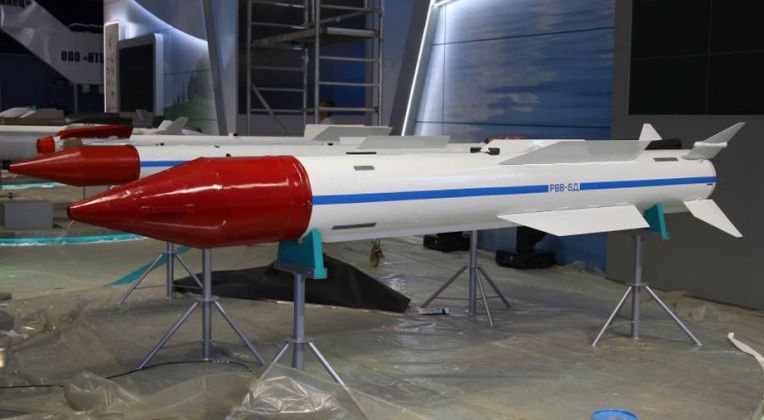
The MiG-31BM entered service from 2009 as a heavily enhanced variant of the Soviet era aircraft with a new radar and avionics, a number of improvements to the airframe, and integration of new R-77-1, R-37M and R-74 air to air missiles as its primary armament. Although long considered the most capable aircraft in Russia in terms of its air to air combat capabilities, the MiG-31BM’s uniquely high performance was demonstrated in the Ukrainian theatre. The interceptor’s powerful radar in particular allowed it to engage enemy aircraft at extreme ranges, using its 400 kilometre range R-37M, without support from other assets such as ground-based radars or airborne early warning and control systems. The radar was designed to be able to ‘burn through’ electronic warfare countermeasures using its sheer power. Furthermore, the aircraft’s much higher cruising speeds and operational attitudes meant that missiles fired had significantly more energy when launched compared to the same missiles fired by aircraft such as Su-35 fighters. The MiG-31BM’s value has only grown, both as the Arctic has become increasingly contested, and as new ground-based air defence systems have become reliant on targeting data from accompanying aircraft to be able to use the full extent of their ranges - data which the Foxhound is optimised for providing.
