
Russian Evaluations of Su-35 Air Superiority Fighter Raise Questions Regarding Combat Potential
Military Watch Magazine Editorial Staff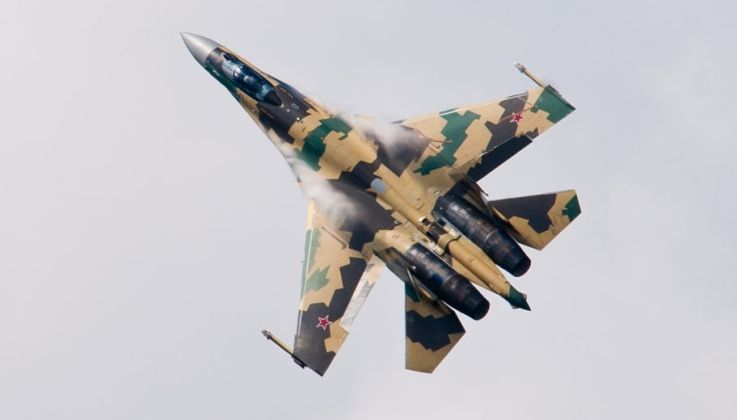
Su-35 Fighter
Russian state media outlet TASS has cited local analysts evaluating the capabilities of the Su-35 air superiority fighter, and in particular the outstandingly high levels of combat testing to which it has been put through primarily during its operations in the Ukrainian theatre. Head of the Center for Analysis of Strategies and Technologies Ruslan Pukhov, who was one of the analysts cited, observed thot his effect regarding the Su-35: "Today it is a fighter with probably the world’s largest modern experience of combat employment against enemy combat aircraft and, apparently, with the biggest record of downed adversary combat planes among all fourth-generation fighters.” Pukhov asserted that target detection and engagement range are crucial for the success of air-to-air combat operations, stressing that the Su-35 is unrivalled in its class in these respects.
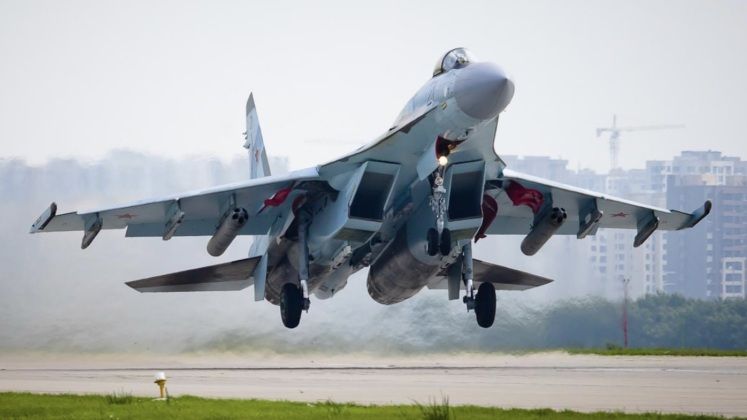
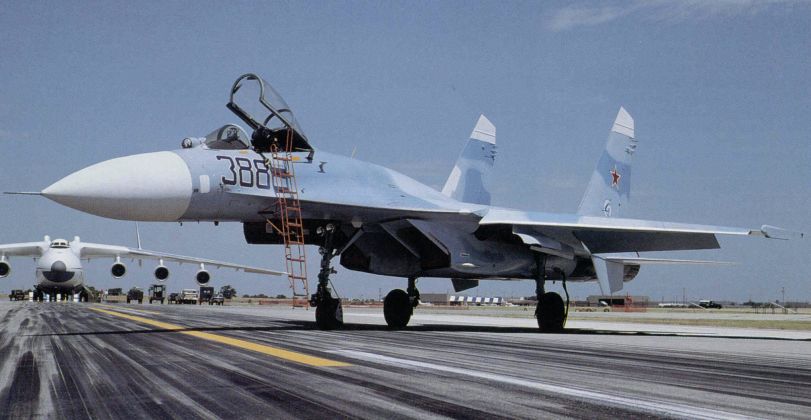
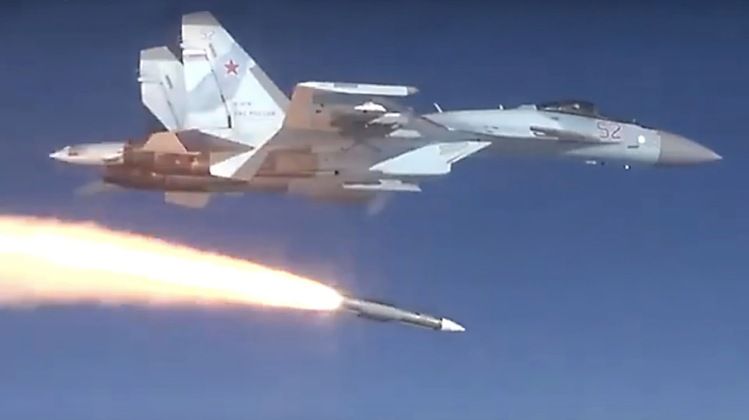
Pukhov elaborated that the Su-35’s radar, combined with a considerable detection range, and air-to-air long-range missiles capable of hitting targets at a distance of several hundred kilometres, between them allow the fighter to dominate other aircraft in air-to-air engagements, achieving a “first see, first strike.” His assessment was published shortly after the delivery of a new batch of Su-35s to the Russian Aerospace forces, which was announced on April 17. The Su-35 first entered service in early 2014, and was developed as a heavily enhanced derivative of the Soviet Union’s most capable air superiority fighter, the Su-27 Flanker, which first joined the fleet in 1984. A Su-35 derivative with many of the same features of the Su-35, the Su-37, was initially intended to enter service in the late 1990s, although post-Soviet economic decline prevented this from being financed.
Ruslan Pukhov’s assessment of the Su-35’s capabilities raise a number of questions, as while the aircraft has been assessed near unanimously by Russian and Ukrainian sources to hold vast superiority over Ukrainian Air Force fighters, including its newly delivered U.S. F-16s and French Mirage 2000s, its standing against more modern fighter types has long been in question. The Su-35’s ability to detect and fire on targets first is highly questionable when engaging modern fifth generation fighters, including the F-35 and J-20 which have increasingly formed the backbones of the respective NATO and Chinese fleets. Although the Soviet Union was previously poised to leading the world in fielding fifth generation fighters, with the MiG 1.42 program intended to bring such an aircraft in to service at regimental strength in 2001, the state’s disintegration delayed this by over two decades.
Aside from its lack of stealth capabilities, which allows it to be detected relatively early on by modern fifth generation aircraft, the capabilities of the Su-35’s Irbis-E radar have long been in question. Chinese evaluations have highlighted that the Irbis-E is approximately 20 percent weaker than the active electronically scanned array radars integrated onto J-16 fighters - a local enhanced derivative of the Su-27 with a similar radar size. This reflects the diminishing in the standing of the Russian electronics industry after the end of the Cold War. While the Su-35’s radar is far larger and more powerful than those integrated onto Western fighter types, it is considerably less advanced, particularly when compared to the new Gallium Nitride array radars which have been integrated onto Chinese and U.S. fighter types. The Su-35 is thus not only easier to detect, but in many cases also well equipped to attempt to detect potential targets. While the Su-27 was considered the world’s dominant fighter in the 1980s and 1990s, the Su-35’s standing in the world is significantly poorer today, with the aircraft being procured in large numbers in large part due to major delays increasing the production scale of the more competitive Su-57 fifth generation fighter.
