
Russian Air Force Receives New Batch of Su-35 Air Superiority Fighters Following Expansion of Production
Military Watch Magazine Editorial Staff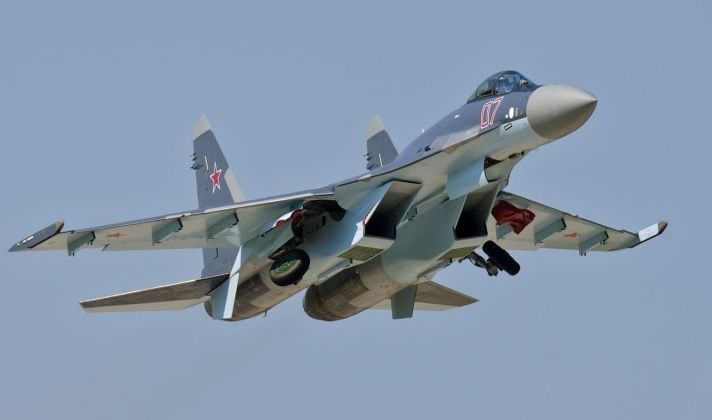
Su-35 Fighter
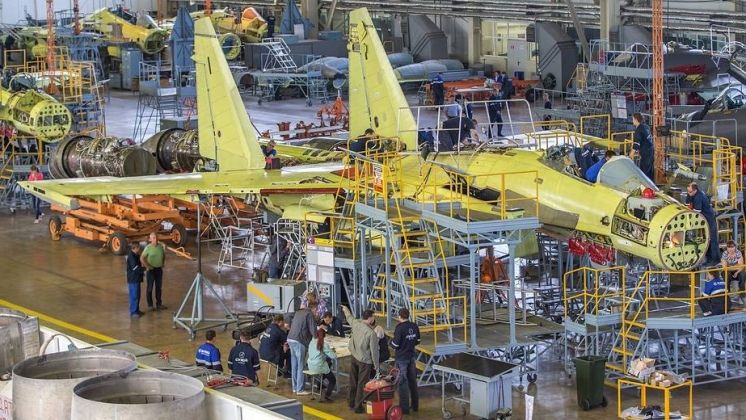
The Russian Aerospace Forces have received a new batch of Su-35S long range air superiority fighters from the state run United Aircraft Corporation, as sustained wartime efforts to expand production have allowed for significantly higher delivery rates. The fighter type has increasingly formed the backbone of the Russian combat fleet, with continued deliveries since the aircraft’s service entry in 2014 now bringing estimated numbers to over 150 aircraft. The aircraft has been more intensively combat tested in air-to-air roles than any other post-Cold War fighter type in the world, and been attributed shootdowns of multiple Ukrainian Air Force MiG-29 and Su-27 fighters, as well as an F-16 in mid-May, among a wide range of other targets. Su-35s first engaged Western combat aircraft at scale when deployed to provide air cover to Syrian government counterinsurgency operations from late 2015, after Turkey, Israel and multiple NATO members provided air support to the insurgency.
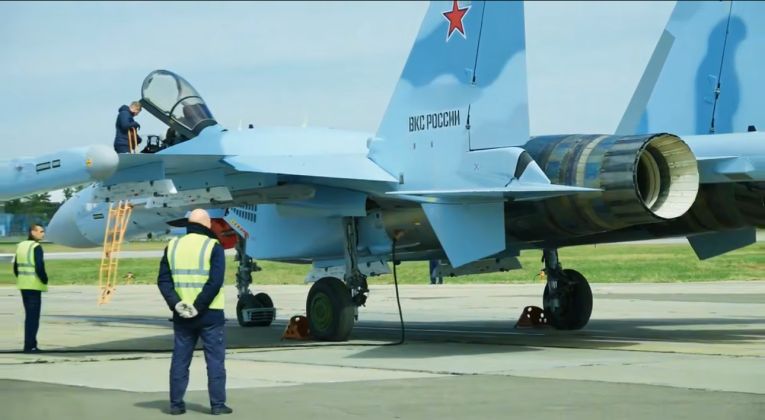
Following the latest delivery, a Russian Aerospace Forces pilot operating the Su-35 described the aircraft’s mission profile as follows: “The Su-35S is a manoeuvrable multifunctional fighter. This equipment works without complaints, and the crew finds it convenient to operate. We perform various tasks on this aircraft: intercepting air targets at long range, covering strike groups and ground objects, destroying unmanned aerial vehicles, as well as delivering precision strikes against ground and surface targets with precision-guided weapons. We also conduct reconnaissance and identify enemy positions at significant depth from the line of contact.” While analysts have become highly familiar with the aircraft’s mission profile in the Ukrainian theatre, however, significant questions remain regarding how the aircraft is expected to operate in the event of high intensity operations against NATO, which deploys several hundred cutting edge F-35 fifth generation fighters.
The Su-35 is designated a ‘4+ generation’ fighter, and not only lacks the advanced radar evading capabilities of advanced fifth generation fighters such as the F-35 and Chinese J-20, but it also uses less sophisticated avionics including a passive rather than active electronically scanned array radar, and data links that are far from cutting edge. The aircraft’s R-77-1 and R-27 air-to-air missiles are also over a decade behind those in U.S. and Chinese service, with the newer R-77M having only belatedly been integrated onto the fighters in 2025, and appearing to have been procured in limited numbers. Its R-74 missiles relied on for visual range combat are also capable of engaging targets at only a relatively limited range of angles compared to the U.S. AIM-9X Block 2 and Chinese PL-10. Thus although the Su-35 is still in many respects a highly formidable fighter, and boasts a significant edge over European fighter types, it remains far behind the most capable U.S. and Chinese fifth and ‘4+ generation fighter types like the F-15EX and J-16.
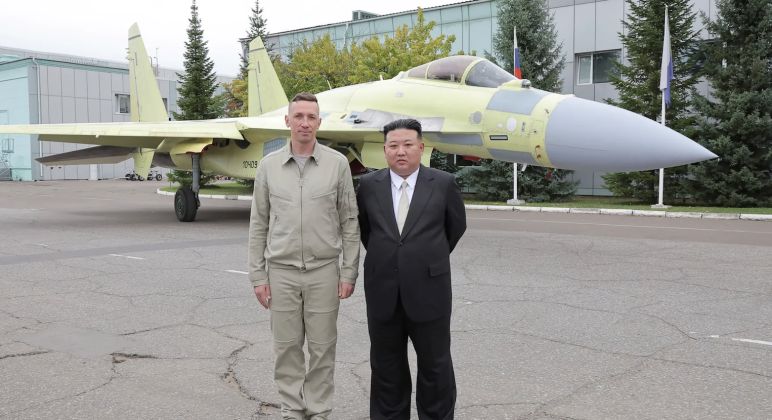
The Su-35 was until 2025 largely considered a failure on export markets, although following the unannounced delivery of 18 aircraft to Algeria from February that year, leaked Russian government documents showed that 48 of the aircraft had been ordered to re-equip the Iranian Air Force, and six more to equip the Ethiopian Air Force. This quadrupled the number of confirmed export orders up from a previous 24 fighters sold to China, to 96 fighters sold to four separate foreign clients. With production to meet Iranian orders reported to have begun in late 2025, it remains uncertain how this will affect delivery rates to the Russian Aerospace Forces. The possibility of Russian marketing the fighter to North Korea has been widely speculated, as has the possibility of Moscow looking for loopholes in the current UN arms embargo to supply its neighbour to help pay off the costs of tens of billions of dollars in defence procurements. Russia’s Su-57 fifth generation fighter is considered a significantly more outstanding aircraft for its time, however, and following the first export delivery to Algeria in November 2025, it is expected to perform significantly better on export markets, and to gain more attention from the Korean People’s Army Air Force.
