
North Korea a Likely Next Client For Russian Su-35 Air Superiority Fighters
Military Watch Magazine Editorial Staff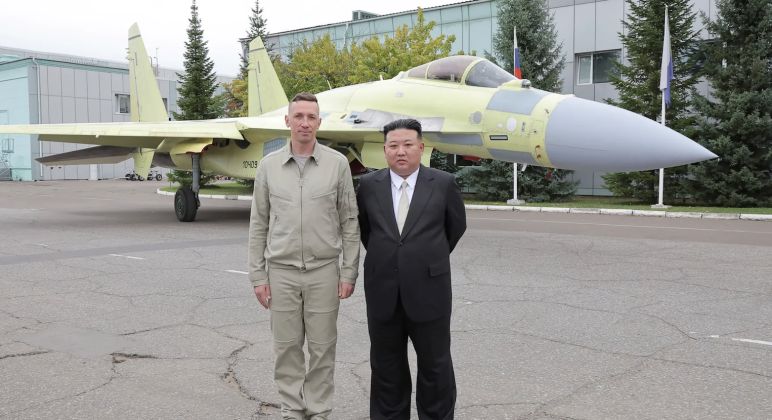
North Korean Leader Chairman Kim Jong Un with Su-35 Fighter and Pilot at the Komsomolsk on Amur Aircraft Plant
The Russian Su-35 long range air superiority fighter in 2025 achieved a major turnaround on global export markets, with leaked Russian government documents that year showing that 48 of the aircraft had been ordered to re-equip the Iranian Air Force, and six more to equip the Ethiopian Air Force. Combined with the delivery of 18 aircraft to Algeria from February that year, this represented a quintupling o confirmed export orders in 2025, from a previous 24 fighters sold to China, to 96 fighters sold to four separate foreign clients. As the Russian defence sector has significantly expanded the scale of Su-35 production, it has been widely speculated that North Korea could be a future client for the aircraft, as the emergence of a close strategic partnership between the two countries may lead Moscow to look for loopholes in the current UN arms embargo to supply its neighbour.
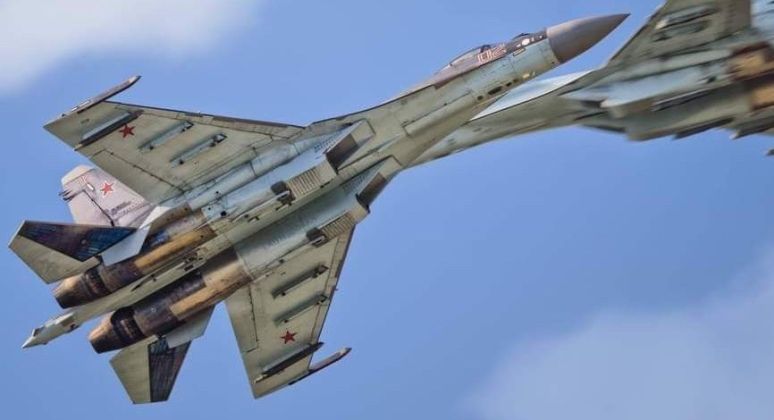
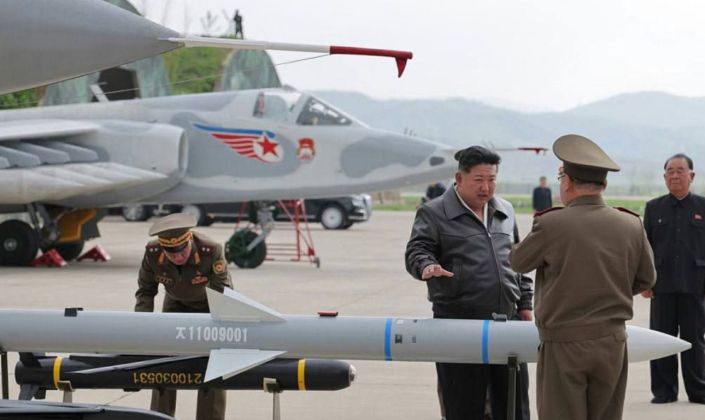
North Korean officials have shown an interest in procuring Russian fighters for several years, and in September 2023 inspected production facilities and a Su-57 cockpit at the Komsomolsk-on-Amur Aircraft Plant, while watching the test flight of a newly built Su-35. As Russia had come to depend increasingly heavily on North Korean support for its ongoing war effort with Ukraine and standoff with NATO, the possibility of Russia seeking to offset the costs of important North Korean equipment not only with technology transfers, but also with fighter sales, has been widely raised by analysts. North Korea reportedly showed an interest in purchasing Su-35s the mid 2010s, although this was reported by South Korean intelligence and has not been verified. While the country produces a range of air launched weapons domestically, which have been used to modernise aircraft such as the MiG-29 and Su-25, options for a more ambitious modernisation program will remain limited unless some acquisitions of foreign fighter aircraft are made.
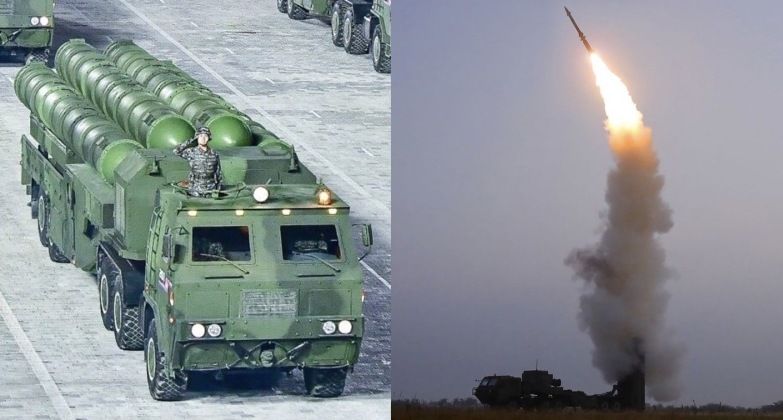
North Korea fields one of the largest and most self reliant defence industries in the world, providing for almost all the needs of the Korean People’s Army (KPA) from advanced nuclear powered submarines and destroyers, to cutting edge main battle tanks. Despite considerable successes overall in modernising the KPA over the past 15 years, the Air Force remains by far the least advanced of its services and is technologically overwhelmingly outmatched. Although North Korea’s surface-to-air missile network is among the most formidable and densest in the world, and has continued to be rapidly modernised through the testing of new subsystem and missile types, the lack of modern fighter aircraft has remained a major shortcoming in the country’s otherwise world leading defences.
While the Su-35 has high operational costs due primarily to its large size, the age of all currently operational North Korean fighter types has meant that even though they are lighter and lower maintenance designs, maintenance needs have increased significantly due to decades of wear in active service. The retirement of two to four battalions of older fighters, such as MiG-19s or MiG-21s, could create the savings needed to finance the sustainment of a Su-35 battalion in service. The fighter’s acquisition cost is relatively affordable, with a battalions’ worth of 12-14 fighters costing approximately $1 billion, where estimates for Russian defence imports from North Korea are estimated at $10-20 billion annually. The Su-35 is thus highly affordable, and would be far more cost effective to sustain in service than the obsolete fighter types that currently equip the large majority of North Korean air units.
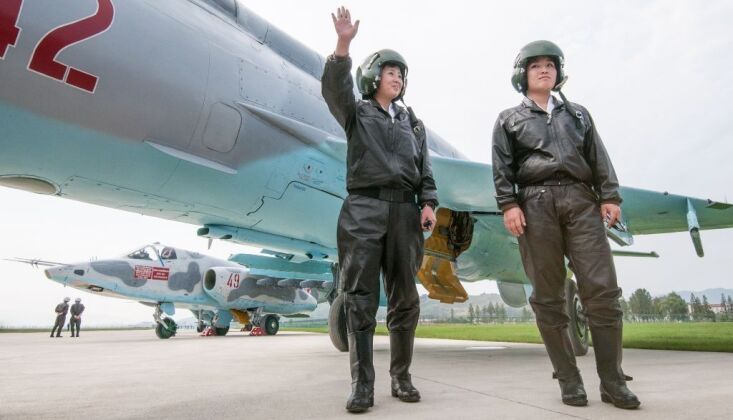
A leading drawback of the Su-35 is that although it is considered capable of going head to head with advanced European fighter types with a considerable performance advantage, in East Asia where fifth generation fighter types are very widely deployed, the ‘4++ generation’ aircraft will be at a disadvantage from its very first day in service. Nevertheless, the KPA Air Force may seek to circumvent this by focusing on deploying the aircraft to support ground-based air defences, with its outstandingly large sensor suite providing a considerable boost to networks’ situational awareness. The Su-35 may be procured in small numbers as a stopgap to familiarise the fleet with more modern combat aviation assets until the Su-57M1 fifth generation fighter becomes available in the early 2030s. The availability of the Su-57 as a much more sophisticated alternative remains a leading factor undermining the potential appeal of the Su-35 and other prospective clients, with the older fighter’s primary advantage other than its lower cost being that it can be delivered significantly more quickly.
