
North Korea Further Strengthens Air Defences With New 200km Range Surface-to-Air Missile
Military Watch Magazine Editorial Staff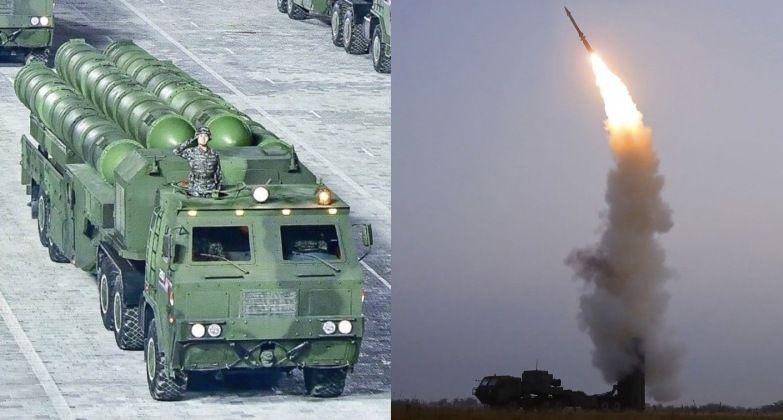
North Korean Pyongae-6 Long Range Air Defence System
The Korean People’s Army has successfully test fired a new type of long range surface-to-air missile, which demonstrated the ability to destroy a target 200 kilometres away. The launch was conducted over the Sea of Japan, referred to in Korea as the East Sea, and was observed by figures from the country’s political leadership including Chairman of the ruling Korean Workers’ Party Kim Jong Un. Commenting on the test, the state run Korean Central News Agency (KCNA) reported: “The test-fire is part of the routine activities of the Missile Administration and its affiliated anti-aircraft weapon system research institutes for the rapid technological development of national air defence means.” The new missile was shown with a mobile launch vehicle that appears be part of the Pyongae-6 long range surface-to-air missile system, which was first unveiled in October 2020, and is considered by experts to be a broad equivalent to the Russian S-400 system.
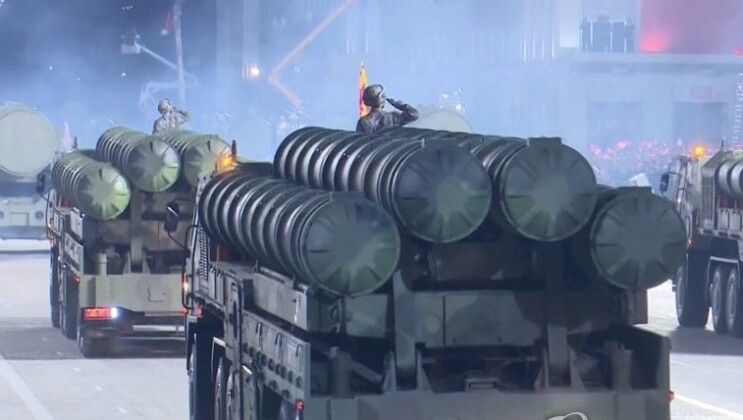
The Korean People’s Army Air Force has for over half a century fielded one of the densest networks of surface-to-air missile systems in the world, which during the Cold War was built around the S-75 system, supplemented in the 1980s with the much longer ranged Soviet S-200. These began to be replaced from 2017 by the Pyongae-5, which was developed and produced fully indigenously with significant support and technology transfers from Russia, providing comparable capabilities to 1990s variants of the S-300 system. A test launch of the Pyongae-6 was first reported to have taken place in September 2021, with missiles deployed by the system confirmed to benefit from twin rudder controls and double impulse flight engines. KCNA reported the “rapid responsiveness and guidance accuracy of [the] missile control system,” as well as a “substantial increase in the distance of downing air targets,” likely when compared to the Pyongae-5.
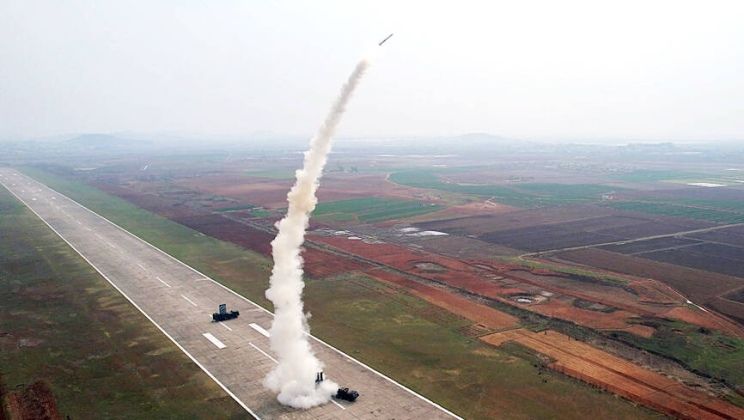
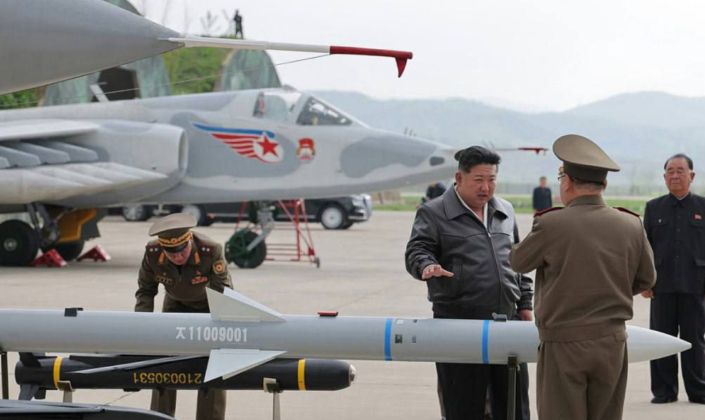
North Korea has continued to develop new types of missiles for the Pyongae-6 system, and in April 2024 the new Pyoljji-1-2 missile was first reported to have been test launched. Development of surface-to-air missiles has been far from isolated, with the country unveiling its first radar guided air-to-air missile at the National Defence Development Exhibition Self Defence 2021 in October 2021, before the bringing of the radar guided type into service in frontline units in May 2025. These use many o the same technologies as surface-to-air missiles, and now equip the country’s MiG-29 fighters, with their integration onto future fighter types expected to be procured from Russia considered likely.
It has been speculated that North Korea could seen technology transfers for Russia’s unique 40N6 surface-to-air missile that equips the S-400 and S-500 systems to develop a similar missile for the Pyongae-6 systems, which could allow for targeting at speeds of over Mach 14 and at ranges of close to 400 kilometres, including over the horizon against low altitude targets. The very large scale of North Korean arms exports to Russia has increasingly raised the possibility of such transfers being made to cover the costs of these procurements. Both Russia and North Korea have prioritised funding for the development and procurement of ground-based air defences to asymmetrically counter the significantly superior air power of their adversaries in the Western world following the end of the Cold War. Russia’s extensive experience operating the S-400 and other long range systems in the Ukrainian theatre may inform future North Korean training and planning for the employment of its own equivalent systems.
