
Russia Denies Iran Sale of S-400 Hypersonic Missile Defence System - Reports
Military Watch Magazine Editorial Staff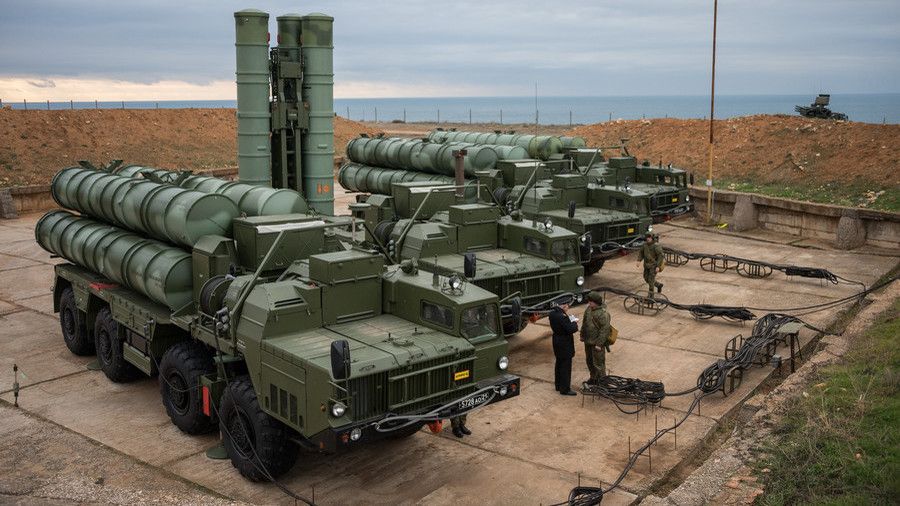
Russian S-400 Surface to Air Missile Batteries
Sputnik
Russia has reportedly denied an Iranian request to acquire the S-400 surface to air missile system, according to a recent publication by New York based news agency Bloomberg. The request was reportedly made in early May 2019, and comes amid escalating tensions between the Islamic Republic and the United States which as seen the U.S. deploy considerable assets to the Persian Gulf in a major show of force aimed at Tehran. Iran acquired the S-300PMU-2 system in 2016, though the delivery was frozen under order from then Russian President Dimitri Medvedev in an overture to the Western Bloc leading to a delay of several years. Explaining the rationale for the Russian refusal to provide the S-400 Ruslan Pukhov, head of the Center of Analysis of Strategies and Technologies in Moscow, stated: “Any real or imaginary strengthening of Iran can lead to escalation - if Russia really refused Iran such a request, it would mean that Russia wants to keep working on relations with Saudi Arabia, Israel and keep a chance for negotiations with Trump… If Russia decides to provide Iran with S-400, it will be direct challenge to Saudi Arabia and Israel, so it will be against Russia’s own national interests.”
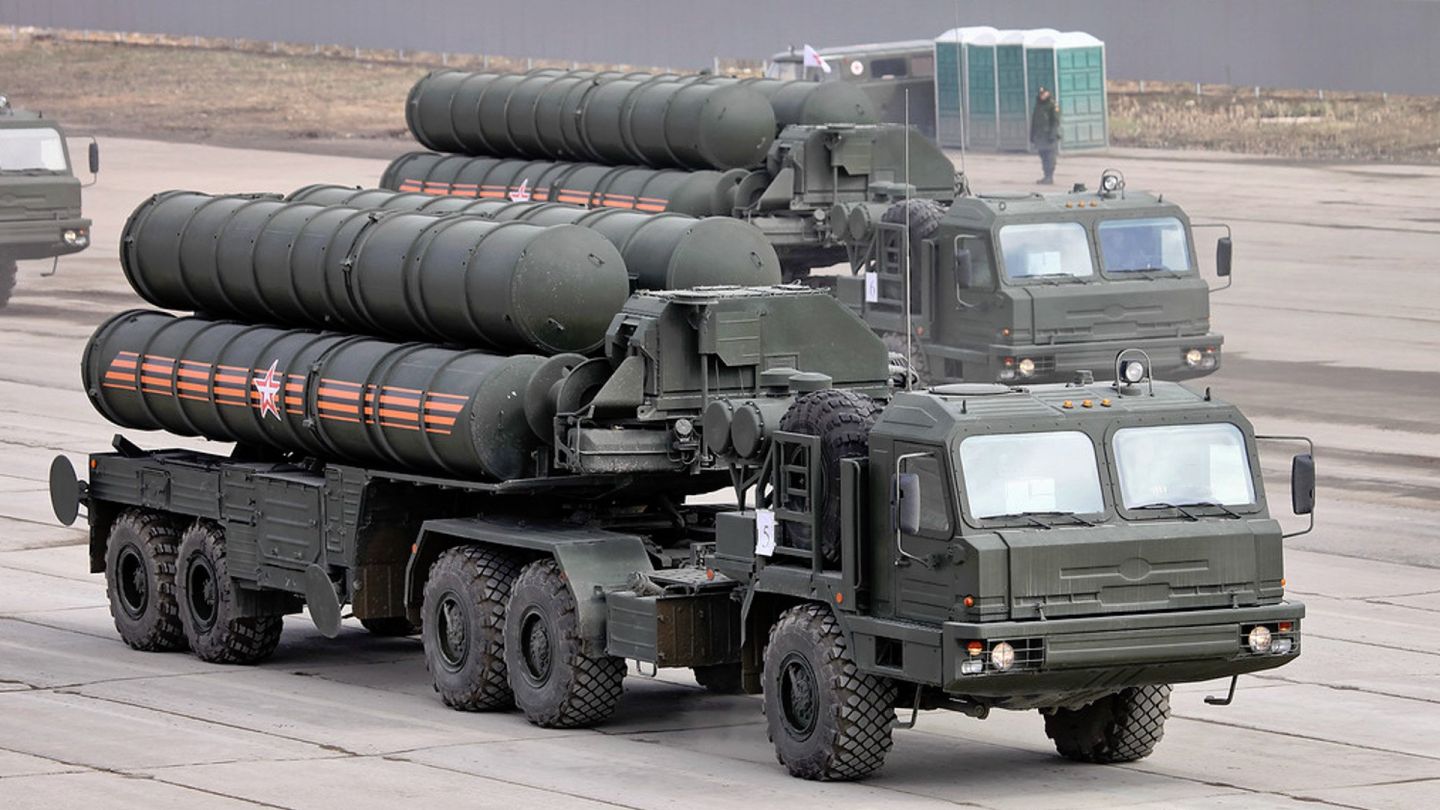
While Russia has widely marketed its long range air defence systems, with the S-400 currently deployed by the air defence forces of China, Belarus and Algeria and set to begin delivery to NATO member Turkey in June 2019, it has notably been hesitant to sell them to Syria or Iran due to pressure from both the Western Bloc and from Israel. Syria was provided with the S-300PMU-2 in late 2018, and only after an Israeli attack on the country led to the loss of over 30 Russian servicemen. Iran for its part was only allowed to purchase the missile system after it had agreed to meet several Western demands regarding its nuclear development in 2015. It is possible that Russia hopes to gain some concessions from the Western Bloc in return for refusing Iran the S-400. Moscow may also be cautious about the possibility of a retaliatory response, such as the arming of Western backed Islamist militants in Syria or the Western backed government in Ukraine with more advanced munitions.
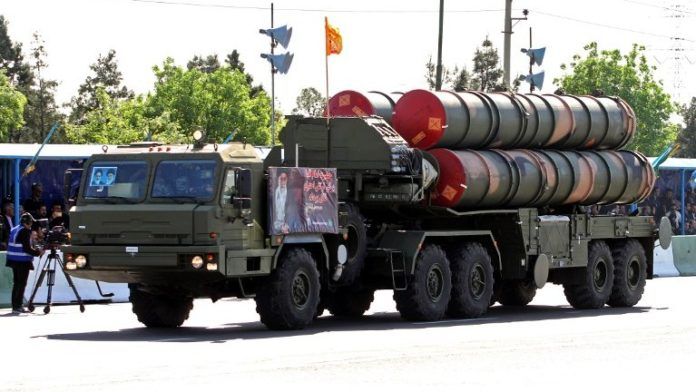
Iran’s air defence capability is currently extremely limited and rests heavily on its fleet of approximately four dozen heavily upgraded F-14 Tomcat air superiority fighters acquired from the United States in the 1970s - which have been outfitted with long range hypersonic air to air missiles. Iranian air defences are otherwise somewhat unremarkable, and while the country does field two squadrons of MiG-29 fighters these are of the older MiG-29A variant and were acquired from the Soviet Union in the 1980s, and have not integrated modern air to air missiles such as the R-77 or R-27ER needed to engage Western fighters on equal grounds. While Iran, like Syria, was able to acquire advanced aerial warfare systems from Moscow under the USSR, the state’s collapse in 1991 has since seen a deterioration in relations with Russia today far more susceptible to Western pressure in its foreign relations and arms sales. The S-300PMU-2 lacks the advanced sensors, electronic warfare and counter stealth capabilities or long range hypersonic missiles of the S-400. Able to engage only 32 targets simultaneously, the platform is vulnerable to being overwhelmed by Western missile attacks from platforms such as the B-52H which can carry several hundred AGM-86 radar evading missiles per squadron - 20 per aircraft. Unlike North Korea, which has developed comparable systems indigenously for mass production and heavily fortified its missile sites, Iran's inability to acquire more modern Russian aircraft or missile systems seriously undermines its ability to defend Iranian airspace against a large scale Western air attack remains limited with the support of large numbers of modern combat aircraft. The S-300PMU-2 was developed in the mid 1990s, and while more capable than most Chinese or Western systems available today its capabilities are somewhat lacking relative to the latest Russian platforms such as the S-300V4 sold by Egypt or the S-400. Saudi Arabia, Morocco, Bahrain and Qatar have all shown considerable interest in the S-400 - with negotiations with Riyadh over the system’s acquisition currently ongoing.
