
Negotiations for Saudi Acquisition of Advanced Russian S-400 Missile System Ongoing; Terms of Sale Remain Highly Complex
Military Watch Magazine Editorial Staff
Russian S-400 Surface to Air Missile Battery
Sixteen months after Saudi King Salman bin Abdulaziz al Saud paid a visit to Moscow, the first ever by a reigning Saudi monarch to the country, the Arab kingdom’s negotiations to acquire the S-400 surface to air missile system are still ongoing. Among a number of bilateral agreements signed during the visit, Moscow and Riyadh reached a preliminary agreement on the acquisition of the S-400 - manufactured by Russia’s Almaz Antey defence company. Saudi interest comes amid the acquisition of similar platforms by regional rivals - the S-400 by Turkey and the less sophisticated and older S-300PMU-2 by Syria and Iran. The Egyptian military reportedly also purchased the S-300V4 - a platform with similar capabilities to the S-400 but more specialised in an anti missile role - placing an order in 2013 which was reportedly paid for with Saudi aid.
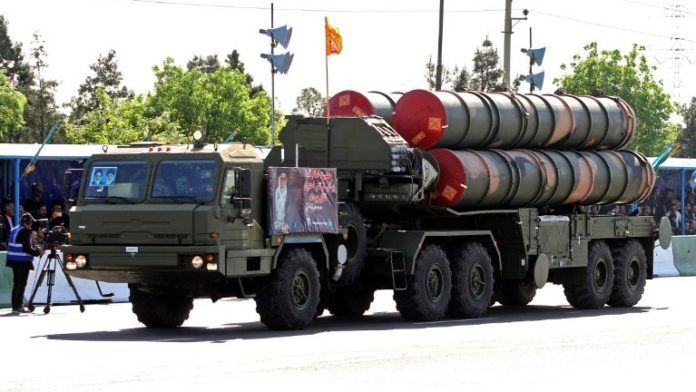
Iranian S-300PMU-2 Surface to Air Missile Battery
Director general of the Russian state arms exporter Rosoboronexport, Alexander Mikheev, stated on February 17th regarding the potential export of the S-400 to Saudi Arabia: "We are holding additional consultations on this project and the contract is being considered now.” Russian Federal Service for Military Technical Cooperation’s spokeswoman Maria Vorobyova stated regarding progress being made on parallel negotiations that the two parties had reached agreements on the deliveries of Russia's Kornet-EM anti tank missiles, TOS-1A Buratino heavy flamethrowers, AGS-30 grenade launchers and Kalashnikov AK-103 assault rifles to modernise the Saudi inventory. Closer Saudi-Russian relations come amid deteriorating relations with the Western Bloc for both parties, with growing calls in both Europe and the United States for a ban on arms sales to the Arab kingdom which has already been imposed by a number of European states.
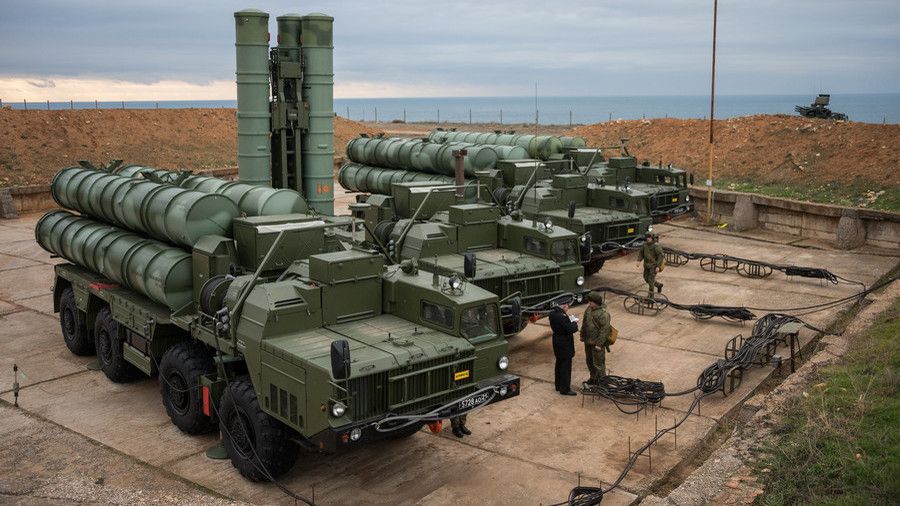
Russian S-400 Surface to Air Missile Batteries
Negotiations for high end weapons systems such as the S-400 are often extremely complex due to a number of factors, including the final price, the technology transfers which will accompany the sale, the schedule for delivery, arrangements for the training of foreign crews, the number of batteries and radars to be purchased and even the types of missiles which will be included. Russia has yet to agree to supply any of its export clients, with the possible exception of China, with the S-400’s signature 40N6 hypersonic surface to air missile - a platform with a 400km range, an unparalleled range of engagement altitudes (5m to 30km) even at extreme ranges, and an unmatched speed of Mach 15. Whether Saudi Arabia intends to acquire the 40N6, which is incidentally also compatible with the S-300V4 batteries of neighbouring Egypt, remains to be seen. Doing so would provide it with a reach well beyond its borders - including coverage over Iranian, Syrian and Iraqi territory. Should Riyadh be intending to acquire these missiles, it would likely seriously complicate negotiations due to the sensitivity of its technologies - with no other platform in the world existing based on a similar concept or fielding similar capabilities.
