
First Shot of an Israeli-Russian Conflict? Moscow Threatens Response After Downing of Il-20 Surveilance Plane Over Syria
Military Watch Magazine Editorial Staff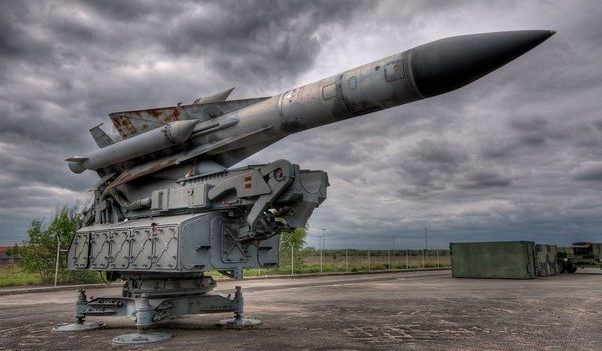
S-200 Surface to Air Missile
Following reports of the disappearance of a Russian Il-20 turboprop aircraft operating from Russia's Khmeimim airbase in Syria’s Latakia province, it emerged that the plane had been brought down by a Soviet made S-200 surface to air missile in service in the Syrian Armed Forces. The S-200 was responding to an incursion by Israeli F-16 Fighting Falcons which, almost simultaneously with a missile strike by a French warship off the Syrian coast, were conducting the latest of several strikes on Syrian government positions on the night of the 17th of September, 2018. The target of the Israeli strike was reportedly a munitions factory in Latakia, and according to the Russian military the Israeli Defence Force has provided only a minute’s warning of the strike - where considerably longer notification was usually given to avoid the potential for clashes between the two powers operating over Syrian airspace. The failure to make proper use of deconfliction mechanisms, and Israeli pilots’ reported use of the bulky Russian Il-20 as cover against the incoming Syrian missile, led to the destruction of the Russian aircraft.
The Il-20 is widely used by the Russian Air Force, and is also used by North Korea for surveillance operations. The aircraft lost was reportedly returning from carrying out surveillance operations over Idlib province, an Al Qaeda stronghold near the Turkish border against which Russian strike fighters have previously launched a number of strikes. The Russian Ministry of Defence stated in the aftermath of the revelation of the circumstances under which the aircraft was lost that the Israeli Air Force must have known it was setting up the Russian plane to be hit by a Syrian counterattack, but the fighters failed to either change their course or to give Russian forces enough time to move the Il-20 to safety. “We consider these provocative actions by Israel as hostile. Fifteen Russian military service members have died because of the irresponsible actions of the Israeli military. This is absolutely contrary to the spirit of the Russian-Israeli partnership,” the ministry stated. The MoD further threatened that Russia would “reserve the right for an adequate response.”
Given the importance of Russia as a key player capable of reigning in Iranian influence in Syria, and Moscow’s ability to provide Syria with more capable air defence systems such as the S-300VM or BuK-M3 within weeks should it so choose - or even seal of Syrian airspace to Israeli jets itself using its own advanced air defence systems, it remains critical for Tel Aviv to take quick steps to mend its relations with the military superpower. Condolences for the lost airmen and possibly even payment of token compensation for the losses remain potential options for Israel to respond to the incident, which could otherwise potentially lead Russia to take a far less tolerant stance to Israeli strikes on its Syrian ally in future and effectively deny the Israeli Air Force access to Syrian airspace - in the process providing Iranian aligned forces such as Hezbollah with the freedom to strengthen their position in the country near the Israeli border unmolested. As Israel’s Western allies have proven almost completely unable to exert a significant influence over events on the ground in Syria, the undermining of the country’s partnership with Russia would represent a very serious blow to the country’s security interests - one which it is likely to take all steps necessary to prevent from developing into a hostile relationship.
