
Turkish S-400 Saga Continues; U.S. Lawmakers Visit Ankara to Press for Arms Deal’s Cancellation - Turkey Responds by Slamming ‘Language of Threats’ and ‘Cowboy Behaviour'
Military Watch Magazine Editorial Staff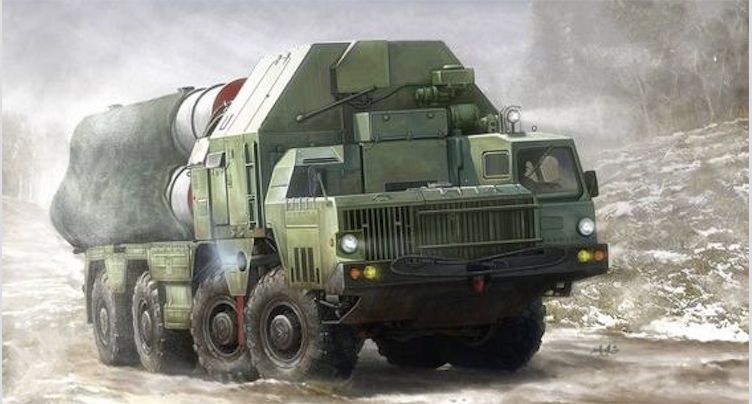
S-400 Surface to Air Missile System
On August 27th several members of the U.S. Congress paid a visit to Turkey seeking to lobby officials to abandon their contract with Moscow to acquire the S-400 surface to air missile system - a deal Western states have notably exerted considerably pressure on Ankara to terminate. With Turkey already threatened on a number of occasions with economic sanctions, a further threat has come in the form of termination of Turkish participation in the F-35 stealth fighter program. Turkey perviously planned to order over 100 of these costly next generation jets, though the deal is currently in an uncertain phase with deliveries frozen after just a single fighter was received - but Turkish fighter pilots nevertheless continuing their training to operate the jets in the United States. As Turkey has been a key partner in the F-35 program from its outset, and is a major producer of a number of the jet’s components, terminating the country from the deal is a far more complex procedure than it would be for external partners such as South Korea, Israel or Japan. Tacit threats to move to acquire the Russian Su-57 next generation air superiority fighter should the F-35 deal be cancelled, a platform arguably far better suited to the Turkish Air Force’s needs given its capabilities and the current composition of Turkey's fleet, have further complicated the matter.
On August 28th U.S. Defence Secretary James Mattis stated in a press briefing regarding Turkey’s acquisition of the S-400 that it was a highly concerning development - reiterating previous comments strongly opposing the arms deal. His tone was notably softer than previous statements threatening Turkey directly, though such threats were interpreted by many analysts as being implicit when he warned that the United States strongly recommended against the acquisition. The U.S. has singled out proliferation of the S-400 specifically as a major threat to its continued ability to project power globally, applying considerable pressure to a number of states to terminate acquisitions of the platform and threatening economic sanctions on those which have insisted on acquiring the Russian air defence system. Turkey’s response to pressure from the United States and to a large extent the wider Western Bloc was to rebuke Washington’s "language of threats" - with Turkish Foreign Minister Mevlut Cavusoglu reaffirming that his country remained committed to acquiring the S-400 - the first batches of which would be delivered in 2019. Russia itself pledged to bring the delivery date further forward, having already done so in response to pressure on Turkey to abandon the arms deal.
Regarding the acquisition of the S-400, Minister Cavusoglu further stated “We have to protect our airspace. This is a must for us. They should understand it. Can the U.S. give us a guarantee to sell Patriots?" While the United States may well be willing to offer Turkey the Patriot missile battery, an air defence platform with a similar role which Washington has previously been highly reluctant to provide, this too is unlikely to lead to the S-400’s cancellation. The U.S. platform is notably considerably more costly and less capable than the S-400, as demonstrated by a series of combat failures across the Middle East in American, Saudi and Israeli hands. Lacking the S-400’s versatility, its range, its precision, its counter stealth capabilities or the sophistication of its interceptor missiles - the Patriot is overall less capable than even the older S-300 - making it an easy choice for Turkey. Saudi Arabia’s recent decision to acquire the Russian S-400 despite already fielding the U.S. Patriot, the performance of which was underwhelming against even primitive and makeshift Yemeni missile attacks, further indicates that Turkey has chosen the far superior missile system. Minister Cavusoglu warned Washington to drop its “language of threats,” which had done much to alienate Turkey in the past, further stating: ”If they say they can do anything they want, like in cowboy movies, then they will get a response.” While the future of Turkish relations with NATO remains uncertain, its acquisition of the S-400 is highly unlikely to be cancelled given the system’s importance to the country's security. Whether this will prompt the United States to terminate Ankara’s participation in the F-35 program and impose economic sanctions, or whether Washington will make concessions to avoid alienating its critical strategic partner, remains to be seen.
