
Hypersonic Weapons on China's S-400 Missile Batteries; A Key Asset for Retaking Taiwan
Military Watch Magazine Editorial Staff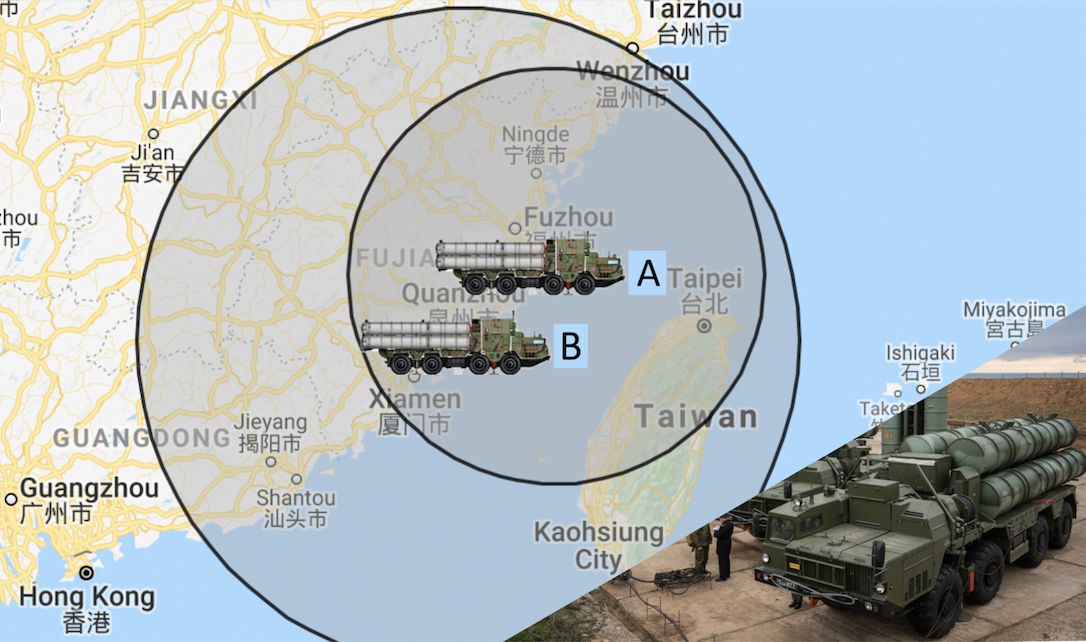
Engagement Range of Chinese S-400 Batteries Over Taiwan (A - 48N6DM) (B - 40N6E)
China’s People’s Liberation Army (PLA) Rocket Force had conducted a prolific test of one of its latest surface to air munitions - deploying a long range hypersonic missile from the recently acquired S-400 air defence system. While China has long had among the most capable air defence networks in the world, investing heavily from the 1990s in modernising its capabilities after observing the potential lethality of U.S. air campaigns against Iraq and Yugoslavia, the S-400 provides the PLA with a number of groundbreaking new capabilities. China’s existing long range systems included the HQ-9A, HQ-9B, and three advanced variants of the S-300P series (PMU, PMU-1 and PMU-2). The country previously deployed a number of older Soviet platforms including advanced variants of the long range S-200, but these have been retired from frontline service.
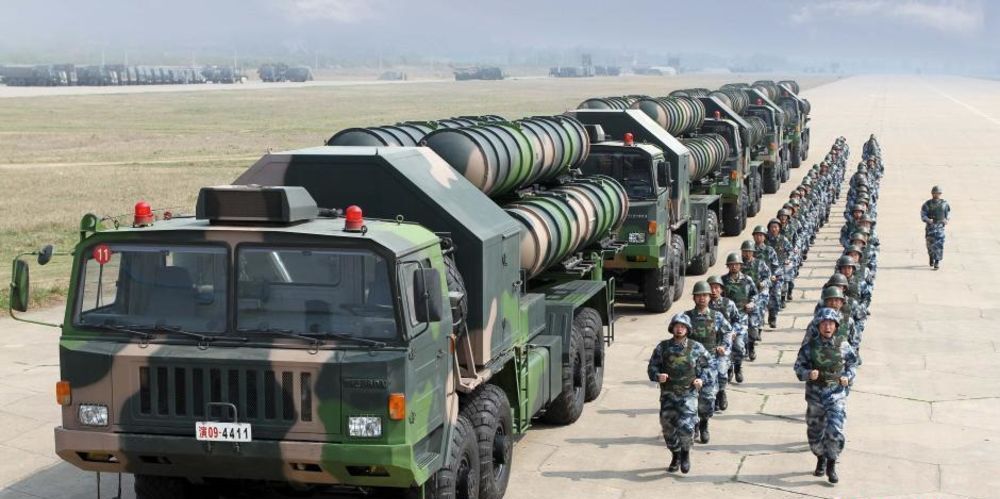
The S-400, initially classified as S-300PMU-3, retains sensors, electronic warfare systems and munitions far surpassing the capabilities of existing long range systems in Chinese service, and the latest test of the platform has provided one of the few public demonstrations of its capabilities. The weapons platform reportedly fired a single missile and successfully intercepted a simulated target at a range of 250km. What was particularly notable about the interception was not its range, but the speed at which it took place - with the missile intercepting its target at hypersonic speeds approaching Mach 9. This allows the missile to intercept high speed targets such as ballistic missiles, and makes it considerably more effective when engaging enemy aircraft.
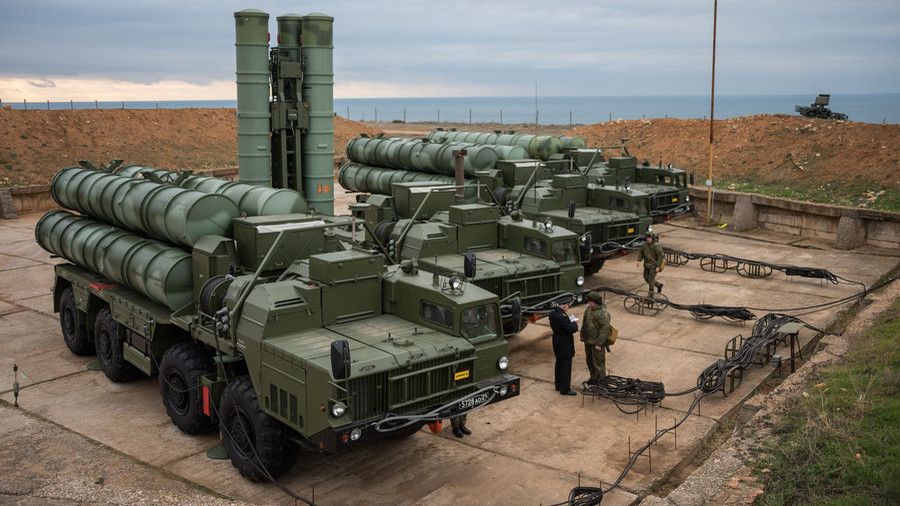
The S-400 deploys two missile types capable of hypersonic interception at ranges of 250km or more. These are the 48N6DM/48N6E3 and the 40N6E. The former retains a range of 250km and can intercept its target at speeds of up to Mach 14, with a semi active radar homing guidance system. The latter retains a considerably longer range of 400km, and climbs to the upper atmosphere before descending towards its target. This provides the 40N6E with excellent over the horizon capabilities and allows it to intercept targets at altitudes as low as 5 meters off the ground. The missile makes use of a combination of semi active and active radar homing, and its capabilities are a considerable game changer unparalleled by any other munition in the world. While China is confirmed to have received the full number of S-400 batteries ordered, whether or not the PLA has received the 40N6E and the number of these high end munitions it plans to deploy from its S-400 systems remains unknown. Given that the recent test was carried out at 250km, and that it was intended by the PLA largely as a show of force, it appears that China either does not possess or is not willing to demonstrate the full capabilities of the advanced munition - and instead tested the older and shorter ranged but still formidable 48N6DM/48N6E3.
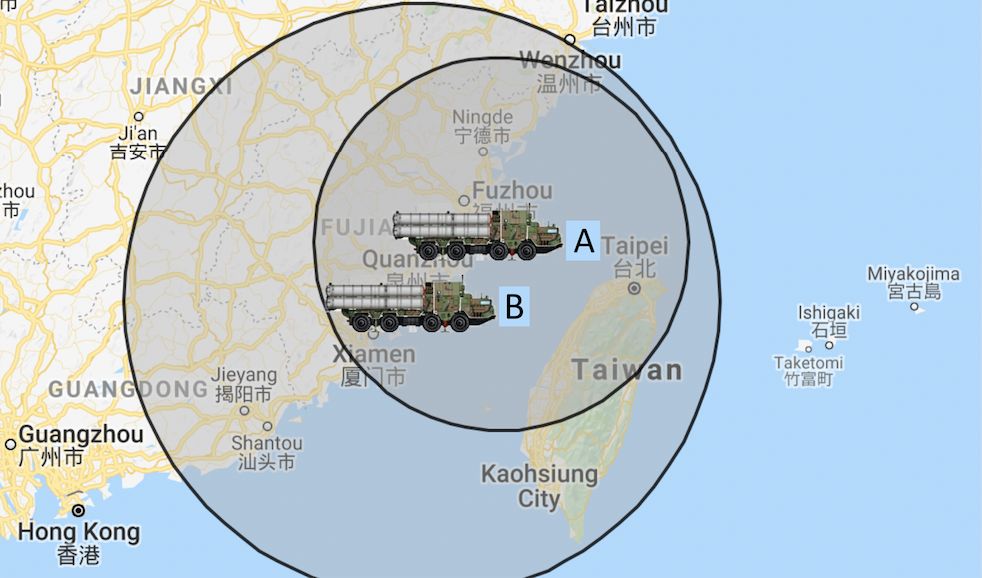
With the S-400 capable of being integrated alongside existing complementary systems such as the HQ-16 and HQ-17 and other long range platforms such as the HQ-9B, and fielding advanced sensors capable of detecting stealth aircraft and guiding up to 160 missiles simultaneously to their targets (more than twice the number of its predecessor the S-300PMU-2) the platform represents an invaluable asset to China’s defences. The system’s versatility, capable of firing over half a dozen types of missiles specialised to engage different types of targets at various ranges and its ability to engage both ballistic and cruise missiles as well as both fixed and rotary wing combat aircraft, further enhances its value. Deployment of the 40N6E in large numbers, which would allow the PLA to effectively seal off Taiwanese airspace and provide an invaluable complement to new long range air to air munitions deployed by the country’s new generation of fighter jets, would represent a significant addition to the already considerable asset which is the S-400.
