
Could Iran Buy Surplus Chinese and Russian Fighters? Five Cost Effective Jets to Upgrade the Iranian Fleet
Military Watch Magazine Editorial Staff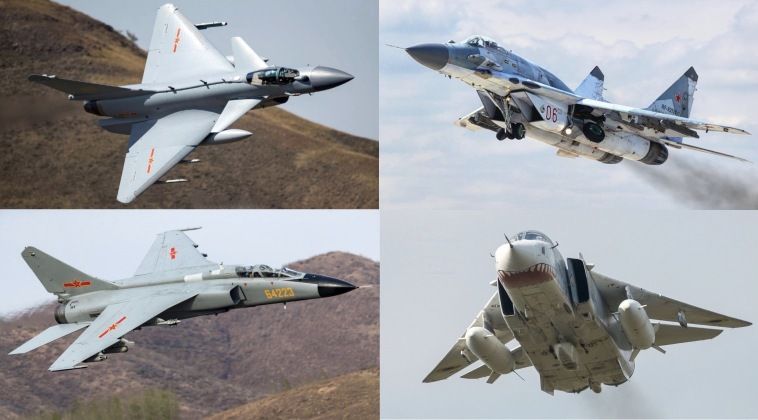
J-10, MiG-29SMT, Su-24M and JH-7 Fighters (clockwise from top left)
Following the expiry of a UN arms embargo on Iran in October 2020, the country has been expected to begin purchasing modern fighter aircraft from foreign sources to improve it air force’s combat fleet. The result of the embargo, which lasted well over a decade, and of Western pressure on post-Soviet Russia before then to deny Iran access to modern combat aircraft, has been an Iranian Air Force that remains overwhelmingly reliant on obsolete third generation aircraft acquired in the 1970s from the United States. A small number of fourth generation fighters in service including two indigenously upgraded American F-14A fighter squadrons, and two MiG-29A and one Su-24 squadrons acquire from the Soviet Union in the three years before its collapse, these are all very early fourth generation designs which make up a small portion of the Iranian fleet. Although Iran’s defence sector has become relatively self reliant, and has been able to acquire most of what it does not produce itself from North Korea which ignored the arms embargo, its inability to acquire modern fighter aircraft has been a notable weakness.
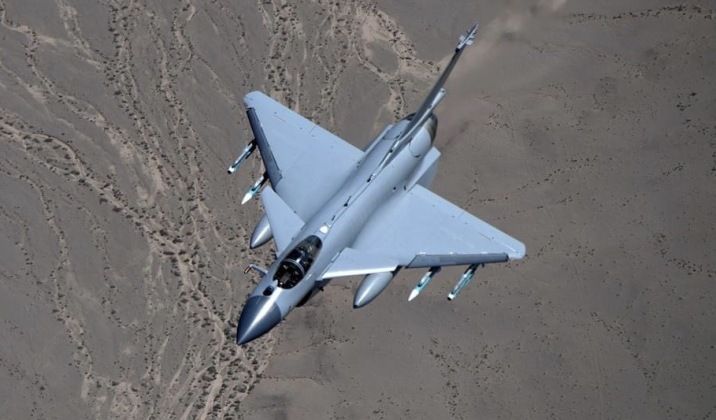
While both China and Russia are today willing to supply Iran with fighter aircraft, the Middle Eastern state has notably struggled to afford the acquisition of modern fighter aircraft from either country. A number of unverified reports from mid-April 2021 indicated that while Iran had shown an interest in acquiring J-10C ‘4++ generation’ fighter jets from China - a sophisticated design which due to its light weight and large scale of production has been offered at a relatively low cost - the country struggled to afford the Chinese fighters even in limited numbers. With the J-10C unaffordable, the possibility of acquiring heavier aircraft such as the Russian Su-30SM or Su-57, which the Iranian Military had reportedly also shown an interest in, was negligible in the near term. While Iran could potentially neglect to invest in new fighters - relying on sophisticated ground based air defences to guard its airspace and on drones and cruise missiles to project power - it could potentially seek to acquire older and cheaper fighter models from China or Russia to modernise its fleet. Although such aircraft are no longer in production, they are potentially available for purchase from active or reserve units or from storage, and can potentially be refurbished to meet Iranian requirements. These early fourth generation aircraft would still represent a very major capability upgrade over Iran’s existing fleet of third generation aircraft such as the Vietnam War-era F-4E, F-5E and J-7. A look at five early fourth generation aircraft which could be acquired second hand from China or Russia at a more modest cost is given below.
J-10A
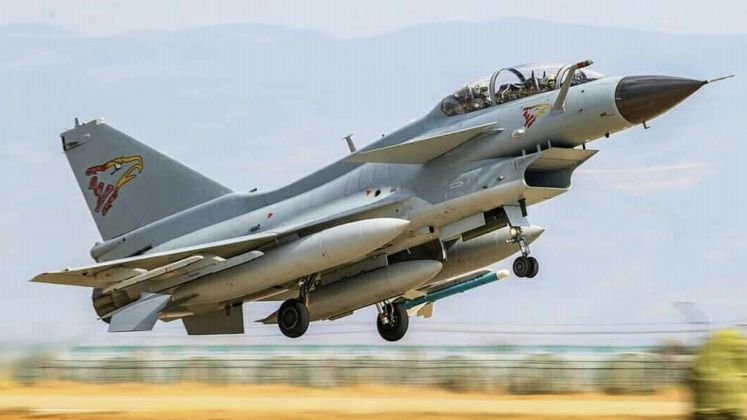
The oldest variant of China’s J-10 Firebird lightweight fighter design, the J-10A has been in service since 2006 with an estimated 320 in service today - approximately 75 of which are of the twin seat J-10A/S trainer variant. With the far more capable J-10C currently in serial production, China’s People’s Liberation Army Air Force may welcome the chance to retire these older aircraft and replace them with new J-10C units, while Iran could purchase the J-10A at a much lower cost than newer J-10 variants. The J-10A has several major drawbacks relative to the J-10C, including an older and much less powerful sensor suite, older engines, reliance on much shorter ranged PL-12 air to air missiles, and an airframe which makes less use of composite materials making it heavier and less durable. The J-10C also benefits from enhanced manoeuvrability using three dimensional thrust vectoring engines, and from superior avionics and electronic warfare systems and access to a number of advanced new munition types. The J-10A would still represent the most capable fighter in the Iranian fleet, with the possible exception of the F-14, and its PL-12 missiles would be the only ones built for fighter sized aircraft with active radar guidance. As an alternative to the J-10A, Iran may opt to purchase new ‘off the shelf’ JF-17 Block 2 fighters, which could come at a similar cost to second hand J-10A fighters but are overall less capable.
JH-7
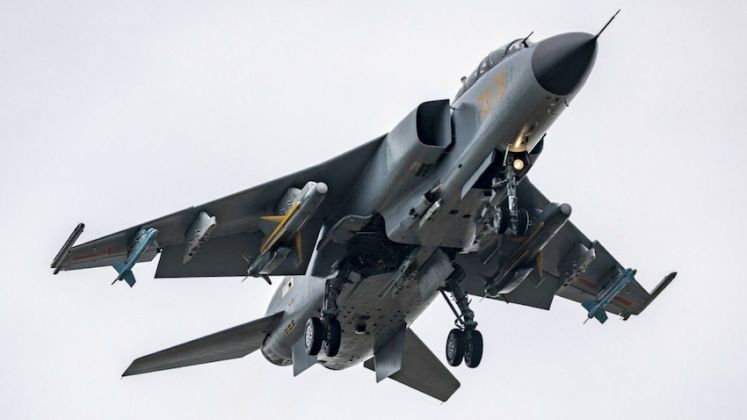
China’s first fourth generation fighter to enter service, the JH-7 is a dedicated strike fighter which is compatible with a wide range of standoff anti ship and air to ground munition types. Approximately 260 of the strike fighters are in service, and although no longer in production they have been offered for export in the past. With a fifth generation replacement under development, China may well be willing to retire a portion of its JH-7 fleet and sell the aircraft on to Iran - with the fighters potentially being replaced by newer J-16s. Since their introduction in 1992, JH-7s have been upgraded to the JH-7A standard and have integrated new features including helmet mounted sights, liquid crystal multi function displays, the BM/KJ-8605 nose jammer, the Type 271 radar altimeter and the JL-10A pulse doppler radar. The strike fighters can utilise both satellite and laser guided precision air to surface munitions, and will be Iran’s most capable strike aircraft if acquired - providing a significant improvement over the F-4E Phantoms which they would be likely to replace.
MiG-29A/S/SMT
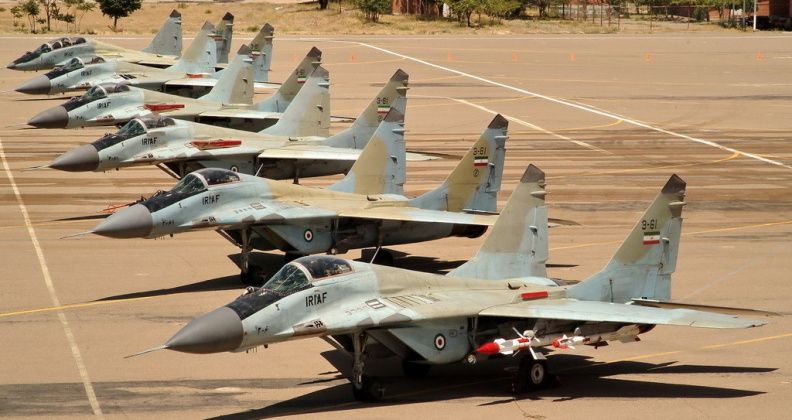
Before the collapse of the Soviet Union the superpower produced approximately 1000 MiG-29 fighter jets, of which around 700 had been built for the Soviet Air Force. Iran was one of several clients for the MiG-29 in the late 1980s, and currently operates two squadrons of MiG-29A jets. Russia was forced to retire hundreds of MiG-29s after its economy contracted sharply in the 1990s, and while it produces modernised MiG-29 airframes for export as the MiG-29M - which Egypt and Algeria both purchased - it also offers the original MiG-29A airframes of the Soviet era for foreign clients. These have been widely exported, most recently to Syria and India with the old airframes upgraded with modern avionics, new engines and larger fuel tanks as the MiG-29SMT and MiG-29UPG respectively. These are the cheapest Russian fourth generation fighters offered for export, and could potentially be acquired in large number by the Iranian Air Force for a modest price. The less upgrades are integrated onto the old airframes, the cheaper they will be, with Iran having the ability to apply relatively basic upgrades domestically. If equipped with modern R-77 active radar guided air to air missiles - an asset Iran’s existing MiGs notable lack - the MiG-29s will be a formidable presence air the air with overwhelming superiority over the country's current fleet of F-4s and F-5s.
Su-24M
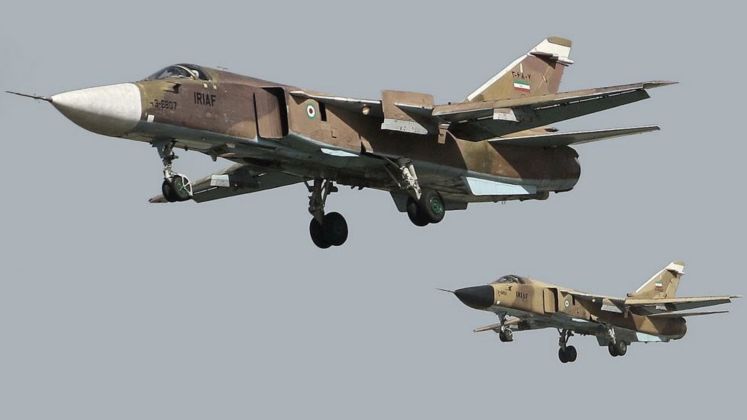
Russia retains a force of several hundred Su-24M heavyweight dedicated strike fighters in reserve, which other than heavy bombers are the heaviest combat jets the country has ever exported. A significant number were placed in storage after the collapse of the USSR, and dozens more have been retired as the more modern Su-34 strike fighters have replaced them since 2014. Iran operates a single Su-24M squadron, although the Soviet era jets acquired before the collapse of the USSR are much less capable than the enhanced variants currently in Russian service. Although Russia currently offers the Su-34 for export, with Algeria reportedly showing a strong interest in the design, it has offered Su-24s from its reserve units as a cheaper alternative. The Libyan National Army acquired an estimated twelve of the jets in 2020. The Su-24 provides a strike range across the Middle East, and enhanced variant of the jets may well be considered the most capable strike fighters in the region if acquired.
MiG-31
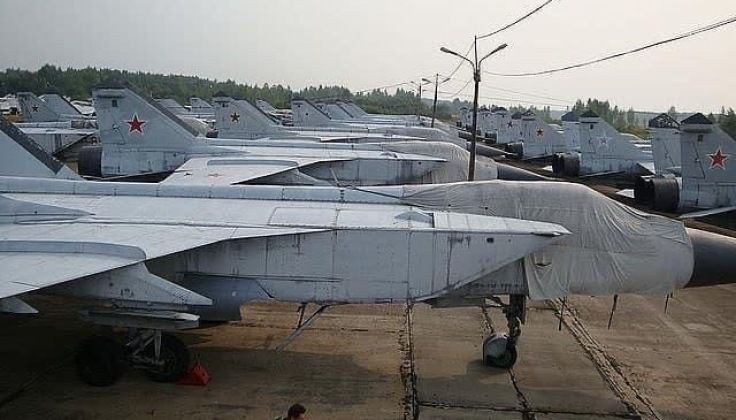
The MiG-31 Foxhound is the heaviest combat jet in service anywhere in the world that was designed for air to air combat, and enhanced variants in the Russian Air Force today are considered its most dangerous air superiority aircraft. The heavy interceptors deploy massive Zaslon-M phased array radars providing one of the highest levels of situational awareness in the world, as well as R-37 air to air missiles with an impressive 400km range, hypersonic speed and massive 60kg warhead. Over 100 of the airframes are currently in storage, with much of the fleet retired following the collapse of the Soviet Union, although some are thought to have been brought out of storage and modernised in the latter half of the 2020s. Iran reportedly showed an interest in the MiG-31 in the 1990s, but was unable to acquire them due to Western pressure on Moscow. The interceptors would be the most expensive option for Tehran among second hand aircraft, and would be more expensive than many newly built designs such as the MiG-29M particularly when factoring in the cost of modernising the airframes and the Foxhounds’ high operational costs. They would nevertheless provide a very high end air superiority capability, and have the potential to be used for anti satellite warfare and ballistic missile delivery as seen in the Russian Military itself. Several hundred Foxhounds are in reserve storage in Russia today - some of which may already integrate Zaslon-M radars.
