
Veteran J-16 Pilot Explains What Makes China’s Heavyweight Fighter a High Tech Combat Monster
Military Watch Magazine Editorial Staff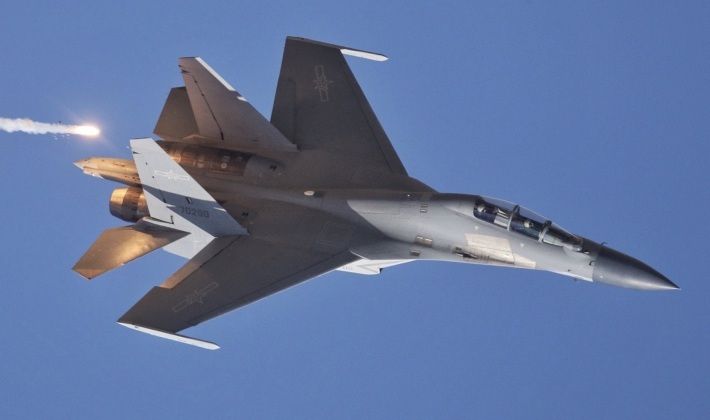
Chinese J-16 Heavy Fighter
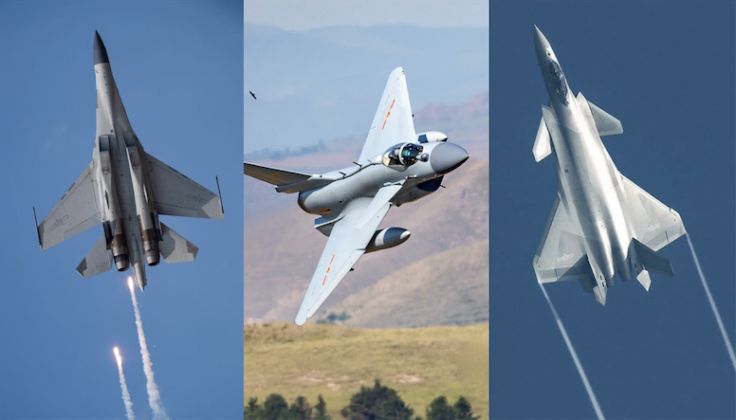
The China Central Television (CCTV) state news service has revealed a number of insights into the capabilities of the country’s J-16 heavyweight ‘4+ generation’ fighter, after publishing an interview with a flying instructor at the People's Liberation Army (PLA) Northern Theater Command Air Force named Wang Songxi. The J-16 is one of three fighters which currently form the elite of the PLA Air Force alongside the J-20 fifth generation stealth fighter, which is also a twin engine heavyweight design, and the J-10C which is a ‘4++ generation’ single engine lightweight aircraft. The J-16 has been in service since 2013, and was the first in Chinese service to make use of AESA radar technologies. The exact number in service remains uncertain, but it is estimated that over 150 have left production lines. Its airframe is based on the Soviet Su-27 Flanker design, but boasts very significant improvements which aside from its sensors include superior WS-10B engines, radar absorbent stealth coatings, a reduced radar cross section and a lighter more durable airframe which makes greater use of composite materials.
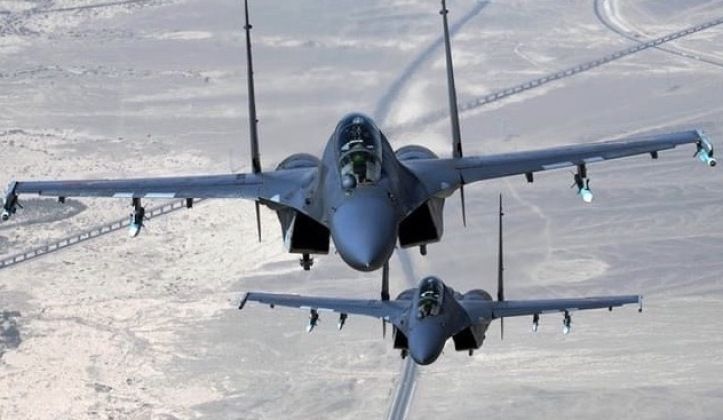
Although several derivatives of the Su-27 are currently in production, including the Su-30, Su-34 and Su-35 in Russia, the J-16 is considered the most sophisticated with its electronics, avionics and in particular its armaments contributing to its major advantage over rival designs. Wang Songxi state regarding the aircraft when interviewed by CCTV: “In terms of performance, the J-16 is a superior to all types of aircraft I have flown. Speaking of the control capacity of the aircraft, the J-16 is a 3.5 generation plane with huge breakthroughs in radar and fire control systems in comparison with previous aircraft.” He said that the J-16 was a near flawless aircraft which could operate under all weather conditions and was equipped with a very wide array of weapons for all combat situation.
Regarding how the J-16 compered with its most widely exported Russian competitor the Su-30, which China acquired in large numbers in the late 1990s and early 2000s when its own defence sector was much less advanced, Wang Songxi stated: “Normal people usually can't tell the difference between a J-16 and a Su-30 from their appearance, but many things are different from the inside,” noting that it was systems such as avionics and sensors which gave the J-16 a distinct advantage. The J-16 and Su-30 have been frequently compared as both are only available in twin seat configurations, and unlike other heavyweights such as the J-11B or Su-35 both are unspecialised and are considered equally capable in strike, anti shipping and air to air roles.
In 2020 China’s J-10C reportedly overwhelmingly outmatched a Su-35 in mock fights, with the lighter Chinese jet’s overwhelming advantage in weaponry and superior sensors, avionics and stealth features thought to have decided the outcome. According to Wang, the J-10C and J-16 were approximately evenly matched - although the J-16 had the advantage of twin engines and a second pilot which he indicated was advantageous. Both fighters have formed elite squadrons alongside J-20 stealth fighters, and are in serial production on a large scale to replace older fighters in squadrons all across China.
