
How Russia Tried to Sell More of Its Elite Su-35 Fighters to China - And Why China Refused
Military Watch Magazine Editorial Staff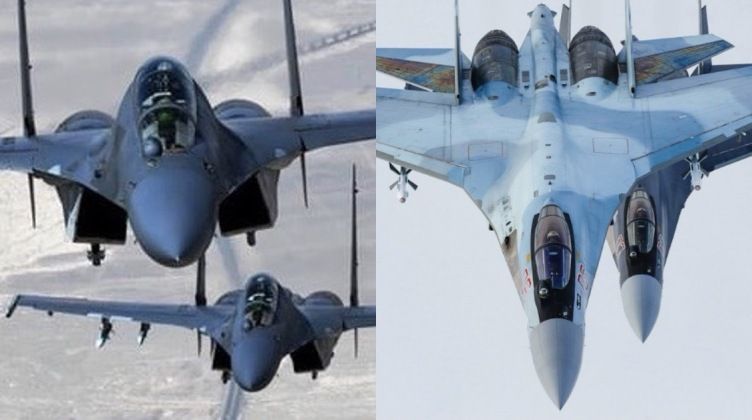
Chinese J-16 (left) and Russian Su-35 Heavy Fighters
Following the entry into service of the Su-35 ‘4++ generation’ fighter in the Russian Air Force in 2014, China emerged as the fighter’s first client the following year and remained the only party confirmed to have ordered the aircraft until an Egyptian order was confirmed in 2019. The Su-35 was a heavyweight fighter jet which had begun development in the late 1980s in the Soviet Union, and had the state not collapsed it would have likely entered service around the turn of the millennium approximately 15 years earlier than it did. The aircraft represented an extensive enhancement of the Su-27 Flanker design — what was widely considered the most capable fighter in the world in air to air combat from its entry into service in 1985 until the title was lost to the world’s first fifth generation fighter the American F-22 Raptor in December 2005. China had been the first client for the Su-27, providing it with an effective counter to the F-22’s predecessor the fourth generation F-15 Eagle fielded by the U.S. and Japan, and subsequently acquired its first Su-27 derivative the twin seat Su-30 from the late 1990s which was less specialised in air to air combat and purchased primarily for maritime strike missions. For the Su-30, too, China had been the first export client, and it subsequently heavily enhanced the Su-27 design and produced a derivative aircraft under license as the J-11B heavyweight fighter.
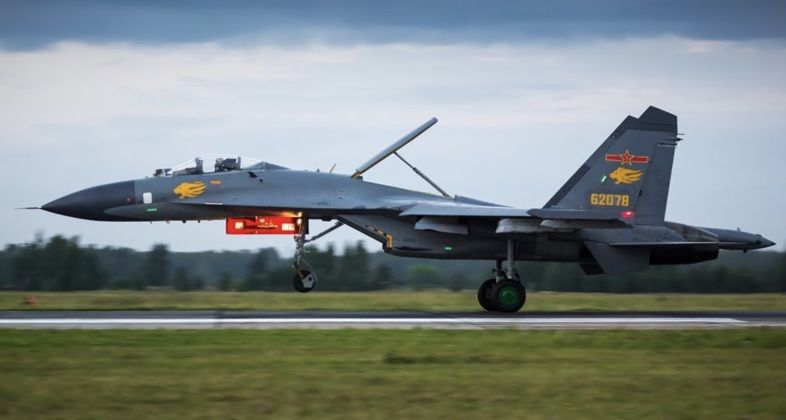
Although China had placed larger orders for the Su-27 and Su-30, it limited Su-35 purchases to just two dozen aircraft and has shown no interest in acquiring further units. Despite this, Russian officials have indicated in the past that the fighter continues to be marketed to the East Asian country with some hopes for followup orders — with no other aircraft in Chinese service fielded in numbers remotely approaching how few Su-35s were deployed. The possibility of a deal for China to produce the Su-35 under license was also raised by Russian experts - likely integrating multiple indigenous technologies - but ultimately the prospects of this remain slim with India potentially being a more likely candidate for a license production deal. The reasons for China’s lack of interest in the Su-35 are both the position of its own defence sector, which as of 2015 was already producing fighters more advanced than the Su-35, and the original rationale for purchasing two dozen of the Russian jets. China’s military aviation sector has surpassed that of Russia in a significant and fast growing number of fronts, from drone, stealth and air to air missile technologies where it already retains a very significant lead, to data links, AESA radars and even engines where it has begun to close the gap with the induction of the WS-10C turbofan.
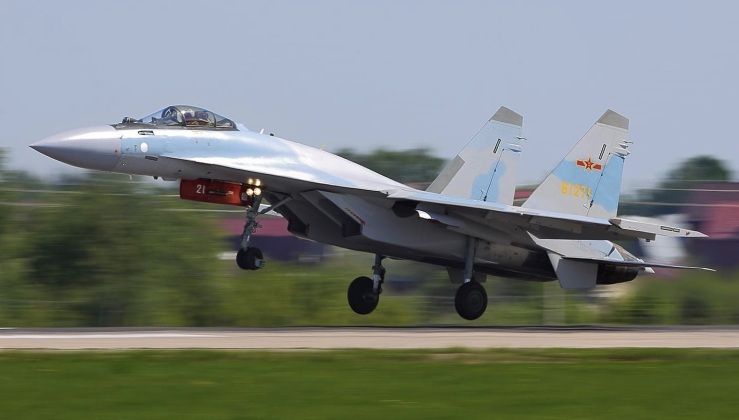
Purchasing the Su-35 did offer China three significant benefits, however. The first was to cultivate better ties with Moscow and show solidarity in the aftermath of the Crimean Criss and amid growing tensions between the country and NATO, with the $2 billion dollar arms deal and a second deal of similar value for S-400 air defence systems that year bolstering Russia’s economy. The second was to gain experience operating modern combat jets from a foreign country with one of the world’s leading arms industries, with operational experience with the Su-35 benefitting China’s own modernisation efforts. The third, and arguably the most important, was the transfer of technologies for three dimensional thrust vectoring engines — something only Russia had. These have since been applied to bolster the manoeuvrability of China’s J-10C lightweight fighters, and could soon benefit jets such as the J-15B carrier based fighter among others.
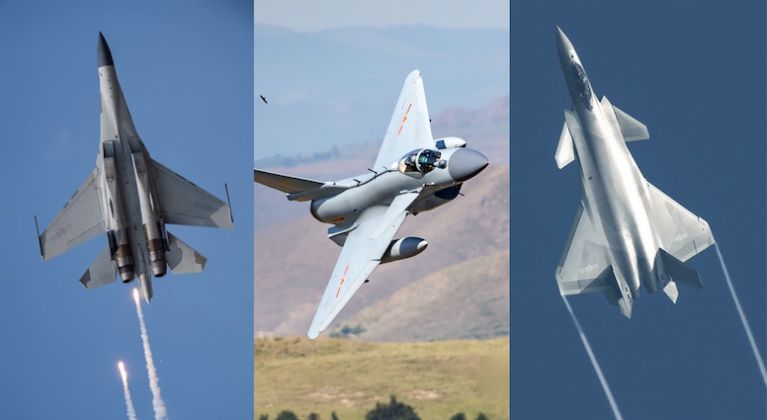
Russian efforts to market further Su-35 units have reportedly offered further technology transfers, but ultimately China’s development of the J-10C, J-16 and J-20 fighters with next generation capabilities domestically seriously reduces the appeal of the Russian jet. All of the new Chinese designs make use of PL-15 long range missiles with AESA radar guidance, as well as sensor suites which also make use of AESA radars which China has been deploying since 2013. In terms of electronics, network centric capabilities and most other features, the latest Chinese jets are already superior to the Su-35, which means that even with technology transfers a deal is unlikely. China’s J-10C, despite being the least costly of its new fighters and the lightest, reportedly defeated the Su-35 overwhelmingly in simulated engagements, with an evaluation of both aircrafts’ performance specifications indicating that such an outcome is far from unlikely. It is fortunate for Russia that China appears to have no plans to market heavyweight fighters such as the J-16 or upcoming J-11D abroad, which are direct competitors to the Su-35 and are overall both more sophisticated and very likely more price competitive. Should Russia seek to reenter China’s market for fighter jets, however, it will need to look either to a joint development program, or to a next generation fighter or interceptor with some sixth generation technologies such as the Su-57 or upcoming MiG-41.
