
Power of Three: China’s New J-20, J-16 and J-10C Fighters Demonstrate Lethal Synergy in Combat Drills
Military Watch Magazine Editorial Staff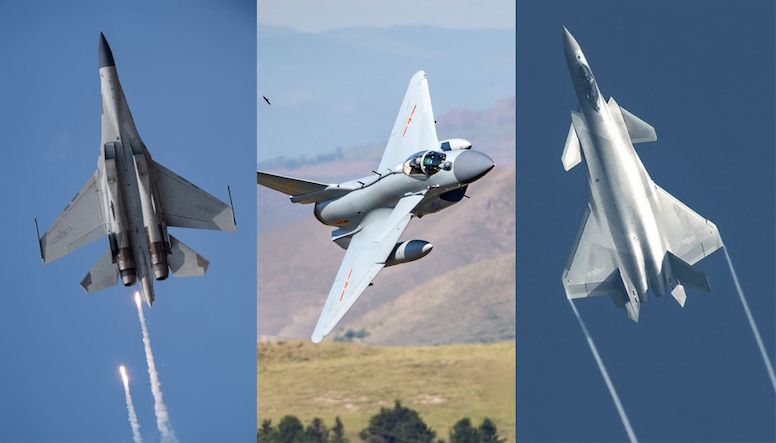
(from left) J-16, J-10C and J-20 Next Generation Fighters
China’s People’s Liberation Army (PLA) Air Force has deployed its three most advanced fighters, the J-10C, J-16 and J-20, for joint exercises. The aircraft were designed to fulfil highly complementary roles to one another, and entered service in 2018, 2013 and 2017 respectively. This follows a similar deployment of the three fighter classes in 2018, with the PLA placing a heavy emphasis on the synergy between the three designs for combatting next generation threats. The J-20, the heaviest of the three fighters, is a heavyweight fifth generation air superiority aircraft and currently the only active stealth fighter developed outside the United States. The J-16 is also a heavyweight twin engine design, but is designated a ‘4+ generation' jet. The aircraft was designed primarily as a strike platform, but is also highly capable in air to air combat with a powerful AESA radar, stealth coatings, an excellent flight performance and access to specialised ‘AWACS hunter’ long ranged air to air missiles. The J-10C is a complementary single engine light fighter, considered a ‘4++ generation’ aircraft, and integrates thrust vectoring engines for extreme manoeuvrability, a radar cross section reducing profile and stealth coatings, an AESA radar and the latest electronic warfare systems. The fighter is unspecialised, and has a shorter range, smaller weapons payload and smaller radar capacity the other two aircraft. It is prized for its low maintenance needs and high sortie rate as a capable support fighter.
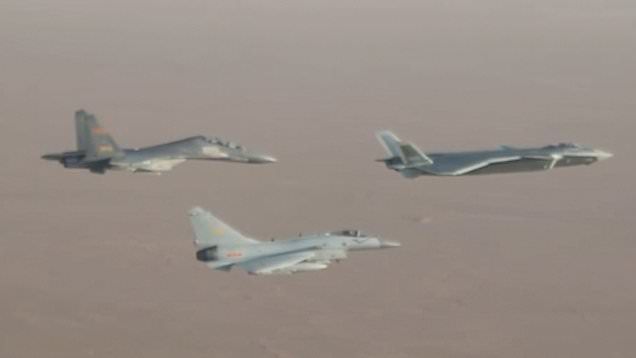
The PLA Air Force previously publicised the deployment of the three classes of new fighter for joint exercises in 2018, shortly after the J-10C entered service, and synergy between them is thought to have improved since as the Air Force gain more operational experience and as the capabilities of all three jets are further refined. Improvements have been wide ranging, from new sensors and engines for the J-20 to new stealth coatings for the J-16. According to Chinese media reports on these exercises, the J-20 was assigned during these drills with detecting incoming hostile aircraft using its powerful sensors suite, and eliminating these threats with its high end air to air combat capabilities. The J-16 meanwhile used its advanced air to ground capabilities to carry out precision strikes on land targets, while the J-10C meanwhile supported the J-16 in carrying out strikes. The light single engine platform could have been used equally capably to support the J-20 in air to air combat if needed.
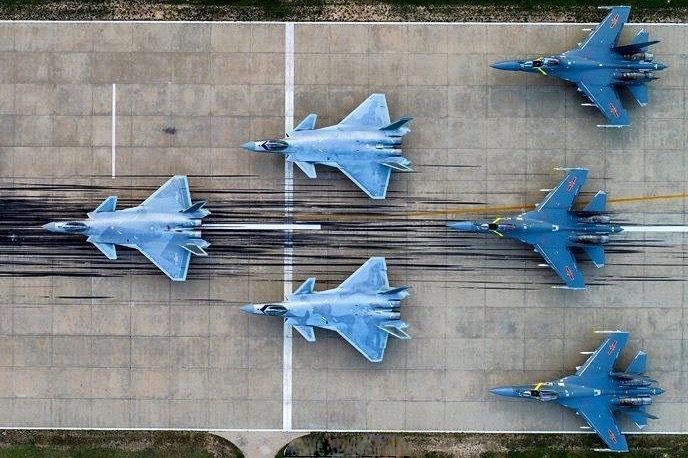
The J-20, J-16 and J-10C, when operating together, have been designated the ‘Three Sky Musketeers’ by a number of Chinese sources, and in recent exercises demonstrated the new formation dubbed the ‘battle box.’ This saw formations of two J-20s, two J-16s and one J-10C work in unison, with the J-20s tasked with launching surprise attacks on enemy aircraft which capitalises on their stealth capabilities while the J-10C, which with thrust vectoring engines was by far the most manoeuvrable, was tasked with providing cover against enemies at close range. The J-16, the least stealthy of the three aircraft, was reportedly tasked with baiting the enemy. Another scenario saw the J-20 assigned to seek and destroy “strategic nodes of the enemy’s defence,” in particular AWACS platforms such as the E-3 Sentry which the PLA expects to face in large numbers in a potential conflict over the Pacific. The J-16 was tasked with strikes on enemy ground forces, in particular mobile radar installations, while the J-10C was tasked with gaining air superiority and engaging enemy fighters. Although lighter than most potential enemy fighters, the J-10C’s flight performance and the sophistication of its sensors and air to air munitions makes it a very serious potential threat to much heavier aircraft such as the F-18E and F-15C which are at the high end of U.S. and allied fleets.
