
What New Stealth Capabilities Will Mean for China’s Elite J-16 Strike Fighters
Military Watch Magazine Editorial Staff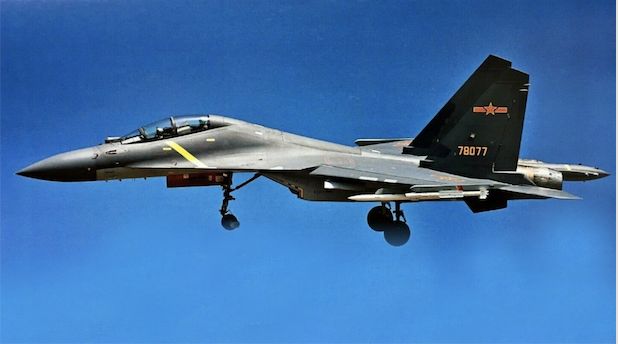
Shenyang J-16 Strike Fighter
China’s People’s Liberation Army (PLA) has reportedly claimed that its elite J-16 strike fighter has been upgraded with “near stealth” capabilities - allowing it to evade radar detection and thus enhancing its survivability in beyond visual range engagements. The fighters appeared for the first time with a new silver-grey paint, which reportedly has radar absorbent qualities similar to the stealth coatings of fifth generation fighters such as the J-20 and American F-22. The J-16 is a derivative of the Su-27 Flanker air superiority airframe design - and China has been manufacturing advanced combat jets based on the original airframe for over 20 years. The J-16 entered service with the PLA Air Force in 2013, and is one of three high end combat jets which currently comprise the service’s ‘next generation’ alongside the J-20 fifth generation air superiority fighter and J-10C single engine light fighter.
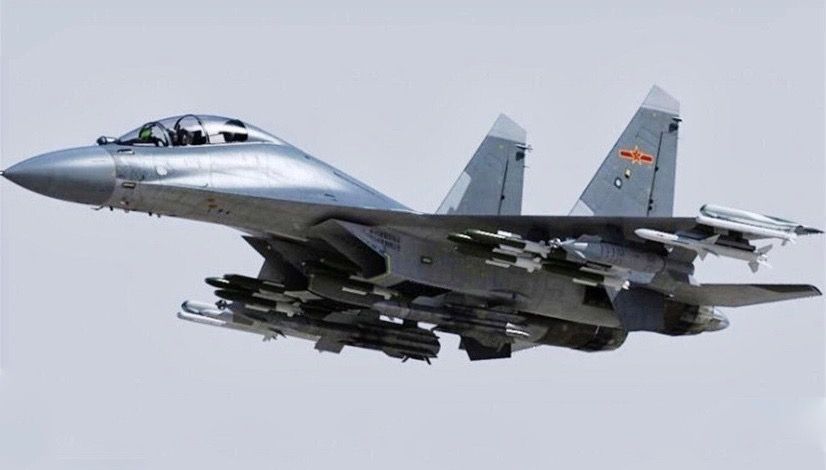
J-16 With Guided Bomb Payload (Artwork)
Applying stealth coatings to the J-16, previously considered a ‘4+ generation’ fighter, is part of a modernisation program to bring its capabilities closer in line with those of the ‘4++ generation’ J-10C and fifth generation J-20 - both of which have radar cross section reducing airframes and radar absorbent coatings to improve their survivability at range. Modifications to the Flanker airframe have previously been carried out on the Russian Su-35, and could potentially be applied to new production variants of the J-16 to complement its stealth coatings. This will in turn allow the long range heavy fighters to serve as a more effective complement to the J-20 and J-10C - with the three fighters having often deployed for joint training missions. In such operations the J-20 is tasked with gaining air superiority while the J-16 neutralises enemy ground and naval threats and the J-10C provides general support in either role as needed.
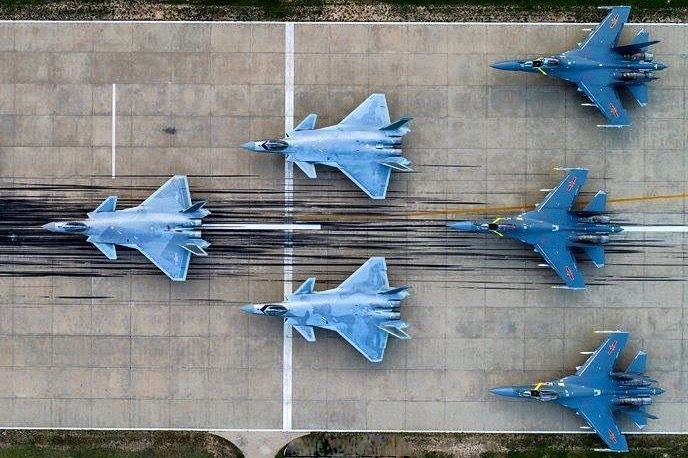
J-16 and J-20 Next Generation Fighters on Runway
While primarily designated a strike role, the J-16 is also highly capable in air to air combat - and is reportedly slated to be the primary launch platform for the PL-21/ PL-XX ramjet powered air to air missile. While the fighter already deploys the PL-15, a long range air to air missile designed for China’s next generation fighters, with some of the highest specifications of any munition of its kind in the world, the PL-21/PL-XX was designed to target enemy tankers, AWACS and other heavy high value support aircraft at extreme ranges of over 400km. With these support aircraft vital to Western plans for war over the Pacific, the J-16’s importance as a carrier of the missile designed to neutralise them cannot be overstated. For such a mission, which would likely make the J-16 a priority target for Western combat jets flying escort to respective tankers or AWACS, the ability to evade enemy radars at extreme ranges is extremely valuable. It is also highly possible that thrust vectoring technologies, currently being tested on the J-10 and set to be deployed on the J-11D - another ‘4++ generation’ Flanker derivative currently under development, could be applied to the J-16 airframe in future to further enhance its survivability at range.
