
Why Su-35? The Reason China Continues Acquiring Fourth Generation Fighters with its 5th Gen. J-20 Already in Service
Military Watch Magazine Editorial Staff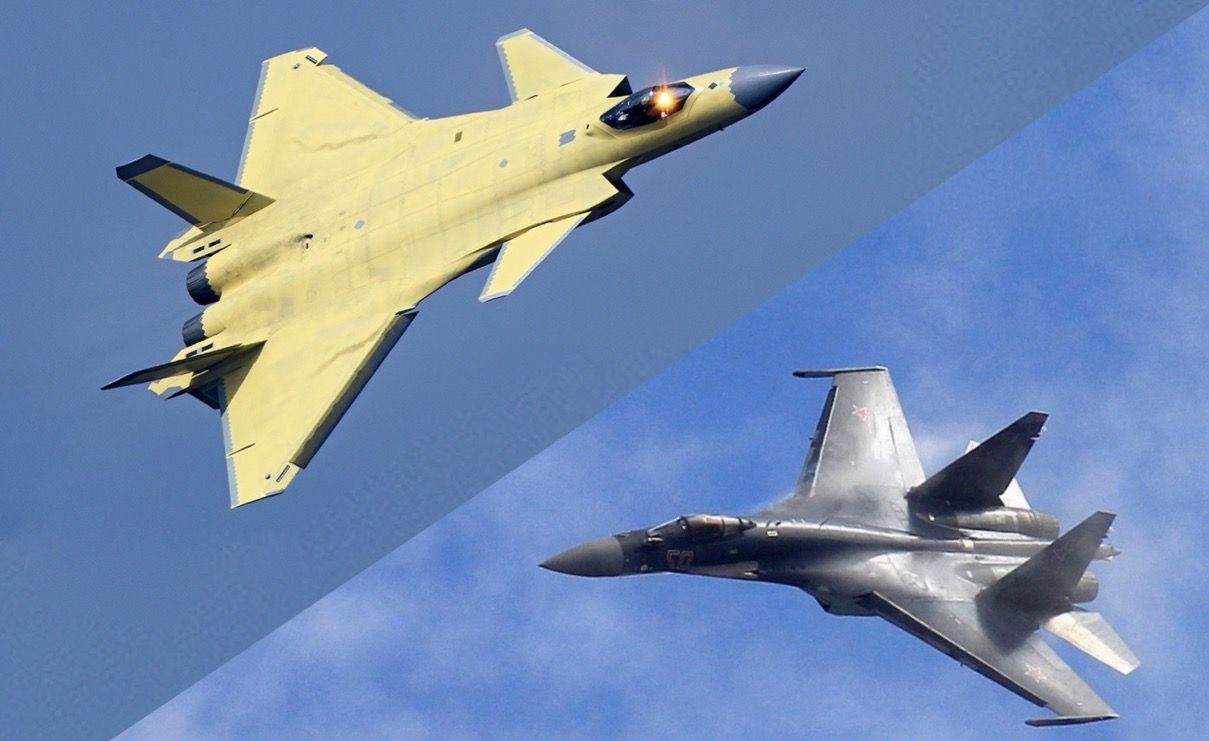
J-20 (top) and Su-35 Heavyweight Air Superiority Fighters
China’s People’s Liberation Army (PLA) today fields the largest fleet of heavyweight fighter jets in the world, the bulk of which are derivatives of the Soviet Su-27 Flanker design of which China today deploys more than Russia itself. These fighters are split between the PLA Air Force and PLA Navy, and other than the JH-7 strike fighter which is not optimised for air to air combat all are Flanker derivatives - including the Su-27, Su-30, Su-35, J-11B, J-15 and J-16. China's first heavyweight air superiority fighter which was not derived from the Flanker entered service in early 2017 - the Chengdu J-20 'Mighty Dragon' fifth generation stealth fighter. The J-20 was the first fifth generation fighter to complete development outside the United States, and to this day remains one of just three in service alongside its American analogue the F-22 Raptor and its lighter and cheaper counterpart the F-35. The new fighter revolutionised the PLA's aerial warfare capabilities and has seen its capabilities improved considerably in the three years since it entered service.
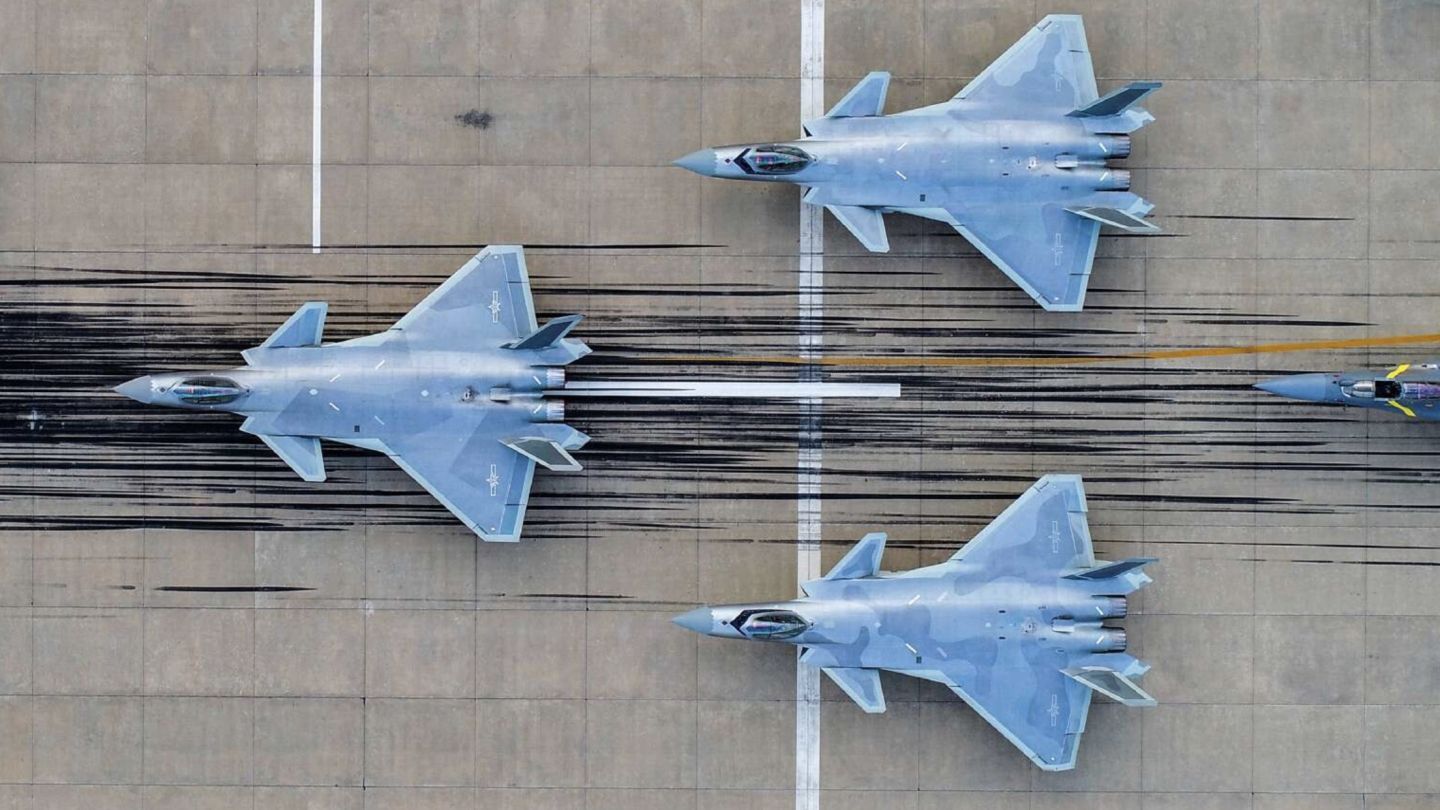
With China fielding a world leading fifth generation fighter design, a number of analysts have questioned not only why the bulk of new fighters being built for domestic use are still fourth generation designs - but also why the PLA, with the J-20's completion imminent, had ordered '4++ generation' Su-35 air superiority fighters from Russia in November 2015 under a $2 billion contract. The United States Air Force had not placed any orders for new F-15 or F-16 fighters since long before their fifth generation successors the F-22 and F-35 entered service - and it was widely expected that China would follow suit. The fact that the PLA took a different approach, and did not appear to be seeking to either phase out its fourth generation jets or even stop acquiring them, led many to speculate that this was due to a lack of faith in the J-20 design.
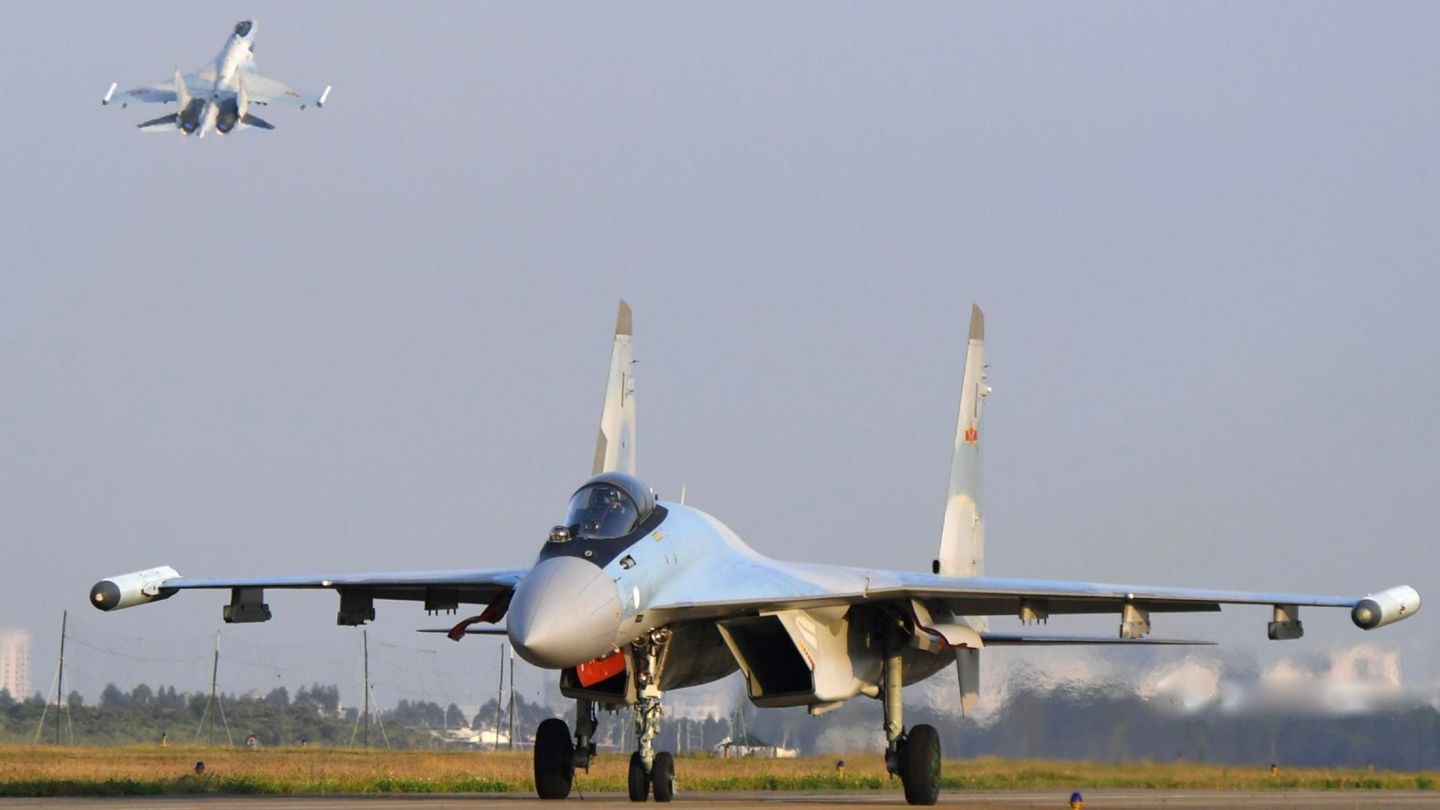
Although the term fifth generation indicates a fighter more capable than that of the fourth, just as fourth generation fighters such as the American F-15 were more capable than their third generation predecessors the F-4Es, advanced fourth generation fighters developed in the 2010s have integrated a number of next generation technologies which has provided some capability advantages over their next generation counterparts. With a fighter needing to be built around a radar cross section reducing stealth airframe to be considered fifth generation, this has excluded many very high end fourth generation designs - most notably the Su-35 Flanker-E and its lighter and newer counterpart the MiG-35, which fails to give credit to their high sophistication and their considerable performance advantages over rival jets. A prime example, comparing the Su-35 to the American F-22 and Chinese J-20, is that the Flanker benefits from a higher payload of fourteen air to air missiles, three dimensional thrust vectoring engines for 'supermaneouvrability,' and an infra red search and track system - capabilities which the J-20 and the F-22 both lack. The Su-35's electronic warfare systems are also thought to be superior - although this may not apply to variants built for export to China.
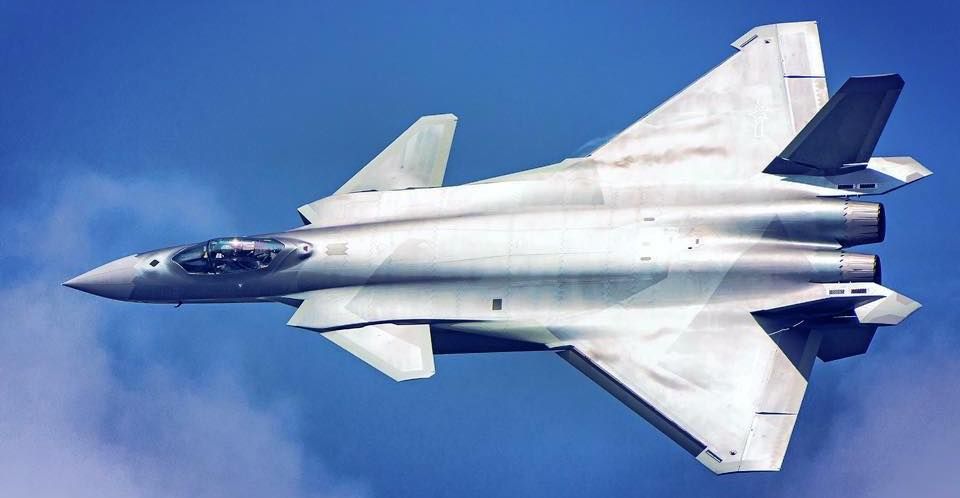
While the Su-35 retains a number of advantages over the J-20, this does not make it a superior fighter across the spectrum. The Chinese fighter's radar evading stealth profile, its capacity for larger sensors and its integration of a number of next generation technologies such as distributed aperture systems make it more than a match for the Flanker in long range engagements - an advantage which will only grow once the fighter integrates thrust vectoring WS-15 next generation engines which are currently under development. Even with the J-20 performing better than the Flanker however, the People's Liberation Army still has a strong reason to purchase the Russian jets. The Su-35 is lighter and cheaper to operate than the J-20 and provides the PLA with greater diversity in its fleet - including the types of electronic warfare systems, air to air missiles and cruise missiles it deploys which makes the fleet far more versatile difficult to counter.
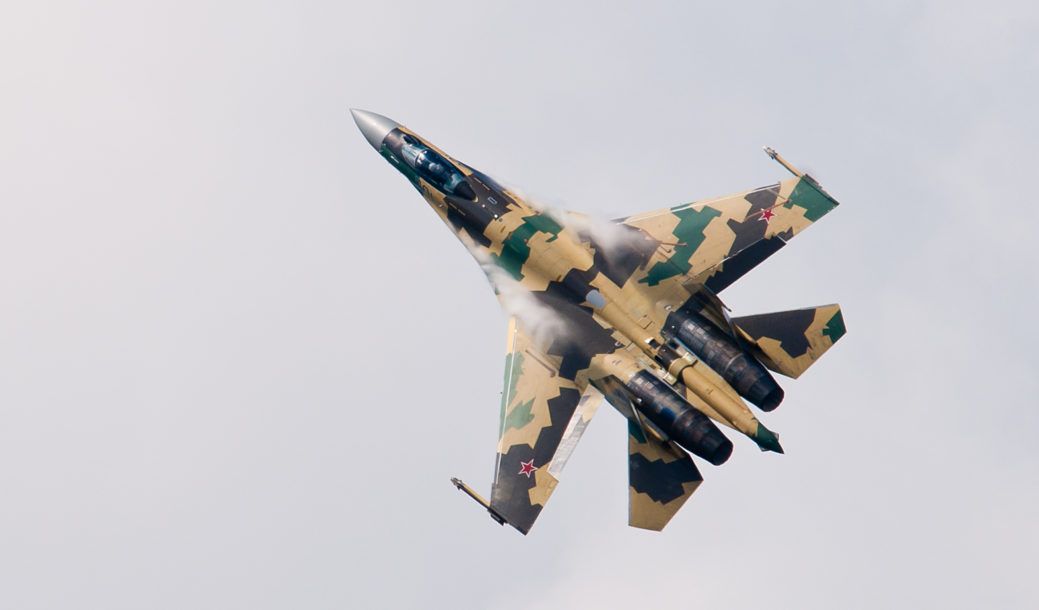
Acquiring the Su-35 can also facilitate technology transfers to China's defence sector for its own '4++ generation' fighter programs - most notably the J-10C and J-11D. The former is a lightweight single engine design which entered service in April 2018, while the latter is still under development. Both fighters use many similar technologies to the Su-35, most notably three dimensional thrust vectoring engines, which makes access to Russian technologies highly beneficial. This does not mean that Russian military aviation is overall more advanced than that of China - with the PLA deploying jets with AESA radars and stealth capabilities long before Russia's own armed forces could - but demonstrates the compatibility of their military aviation technologies. The fact that China can acquire technologies from two of the world's three leading military aviation sectors provides a major benefit to the PLA's fleet - a strength which neither Russia nor the United States can match.
The U.S. Air Force itself has increasingly seen the limitations of relying too heavily on high maintenance fifth generation jets, and in 2019 confirmed plans to restart acquisitions of high end fourth generation designs to complement its new stealth fighters in the form of the F-15EX program. This has done much to vindicate China's decision among critics who slammed its decision not to follow the American path of focusing almost entirely on fifth generation jets when making new acquisitions, as it was the U.S. which in the end amended its strategy of exclusively focusing on fifth generation jets to follow China's example. The F-15EX is expected to complement the U.S. Air Force's fifth generation F-22 in much the same way the Su-35 complements the PLA Air Force's J-20 - although without the benefits of technology transfers and a greater diversification of weapons and electronic warfare systems which purchasing a foreign design brings.
