
Evolution of Iranian Military Aviation: From the 1979 Revolution to the 2020 Arms Embargo - Part One
Military Watch Magazine Editorial Staff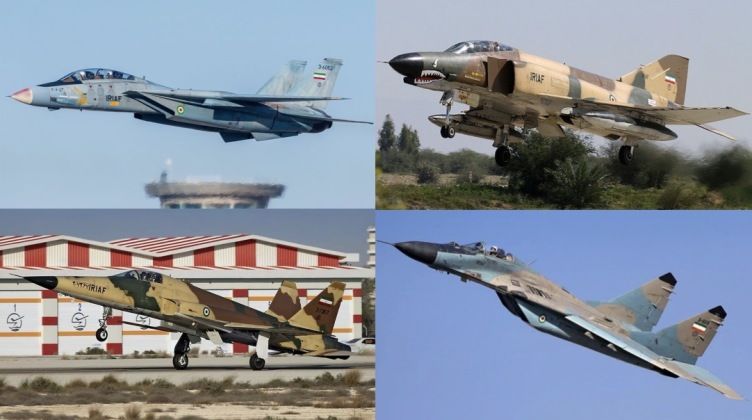
Iranian F-14A, F-4E, MiG-29A, Saeqeh (clockwise from top left)
Following Iran's 1979 Islamic Revolution, the overthrow of the Western aligned Pahlavi Dynasty, and Tehran’s foreign policy realignment away from the Western bloc, the country ceased purchases of U.S. made weapons systems and was prevented from acquiring parts to service existing platforms. For the Iranian Air Force, which relied exclusively on U.S. made fighters including the F-5E Tiger II light fighter, the F-4D/E Phantom II medium fighter and the very high end F-14A heavyweight fighter, this threatened to leave the large majority of the fleet grounded within five years - which was widely predicted by Western analysts. The newly declared Islamic Republic, facing a large scale invasion from neighbouring Iraq just months after its formation, was forced to invest heavily in its military aviation to protect its airspace from hostile aircraft and avoid losing air superiority entirely. These investments focused not only on developing a domestic capability to manufacture spare parts, which kept the fleet flying through the Iran-Iraq War, but also on allowing for domestic refurbishment and modernisation of older aircraft and equipping them with new indigenous sensors, electronic warfare systems and weaponry which continues to this day.
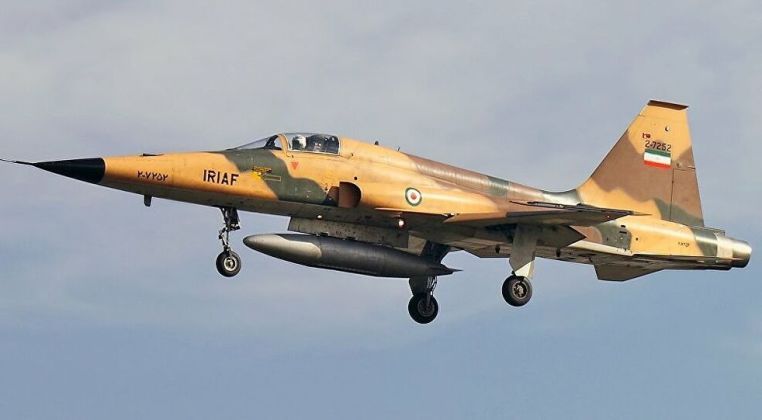
The considerable technological base Iran had developed to service older aircraft provided an invaluable stepping stone from which to further strengthen its military aviation industries. Even after the Iran-Iraq War ended in 1988, this was largely spurred by necessity as Iran failed to acquire new aircraft after 1991. During the three intermittent years the Islamic Republic had begun a transfer towards Soviet and Chinese arms, placing orders for two squadrons of MiG-29A and a single squadron of Su-24M fourth generation Soviet jets and one further squadron of third generation Chinese J-7 fighters. Attempts to place further orders from the Russia after the Soviet collapse, with Iran showing an interest in further MiG-29 and Su-24 units and reportedly also in MiG-31 Foxhound heavyweight interceptors, were notably prevented due to the nature of the new Russian government which was far more susceptible to Western pressure. The U.S. notably went as far as to pledge to pay Russia not to sell the weapons to Iran if needed, and the extent of the efforts ultimately left North Korea as Iran's only major arms supplier - with the Koreans having provided Iran's first revolution battle tanks, howitzers and ballistic missiles. Iran was able to acquire S-200 long range air defence systems and a production line for T-72 tanks from Russia, but higher end hardware including all classes of fourth generation combat aircraft were off limits.
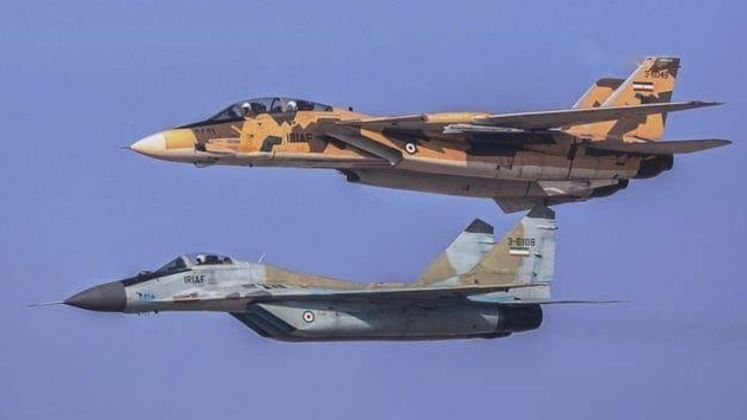
Iran would continue to invest in modernisation of its existing inventory, phasing the American AIM-54 long range air to air missile, the most capable in the world when acquired, out of service in favour of an enhanced indigenous derivative - the Fakour 90. New sensors and electronic warfare systems were fitted not only onto the F-14 fighters which deployed these missiles, but also onto its Soviet supplied MiG-29s which were the only other fourth generation jets in service with an air to air capability. Although Iran had little problem acquiring spare parts for its Soviet arms, much of the F-14 fleet remained in storage during the Iran-Iraq War and in the subsequent two decades. It was only afterwards that, due largely to advances in 3D printing technologies, Iran was able to bring more of its F-14 fleet into frontline service - a highly prized asset and the country's only class of heavyweight fighter with an air to air capability. F-14s were relied on to protect the most valued potential targets for enemy airstrikes including nuclear facilities and the capital Tehran, and deployments guarding the former led to reports of highly unusual incidents where the jets were allegedly challenged by advanced enemy surveillance aircraft.
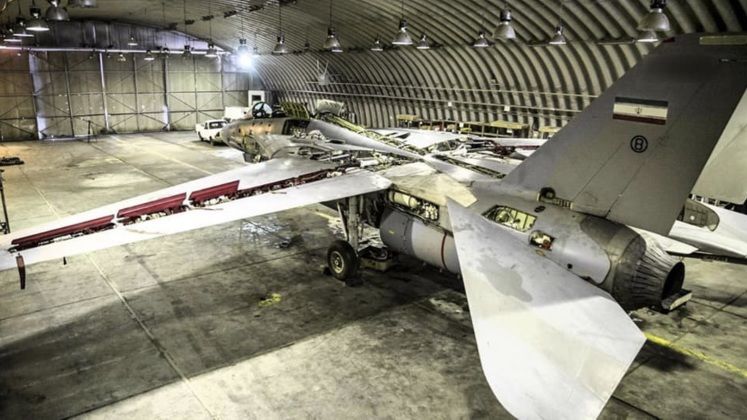
Iran would also convert a significant portion of its F-4 fleet, which were effectively obsolete in an air to air role, into maritime strike fighters equipped with licence produced derivatives of the Chinese C-802 sea skimming anti ship missile. Despite domestic improvements made however, by the early 2010s the qualitative gap between the Iranian fleet and those of its leading potential adversaries, particularly the United States, had grown considerably leaving the fleet with negligible offensive options. Iran would largely compensate for lagging air force capabilities with acquisition of more advanced North Korean missile designs such as the Musudan and Khorramshahr, and with a range of stealthy attack and reconnaissance drones developed from an American RQ-170 platform which was brought down by an Iranian electronic attack in 2011. China is reported to have assisted the Iranian drone program, with stealth drones proving highly survivable against American-made air defences and carrying out multiple operations beyond Iran's borders.
Continued in Part Two
